



En



Notes: All timings are represented in 12-hour notation in local time of Lancaster, United States with DST adjustment (if applicable).
Hours which are past midnight are suffixed with next day date. In Panchang day starts and ends with sunrise.
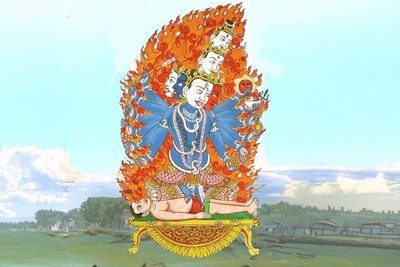
According to the Purnimanta Hindu Panchang, Kubjika Jayanti is observed on the Krishna Paksha Trayodashi Tithi of the Vaishakha month. In the Amanta Panchang, this Tithi falls during the Krishna Paksha of the Chaitra month. Kubjika Jayanti is a festival dedicated to Goddess Kubjika. In Hinduism, Goddess Kubjika is worshipped as one of the Dwadasha Siddhividya Goddesses.
Within the Shakta Sampradaya, Kubjikamat and Kaula Tantra, the worship of Goddess Kubjika holds special significance. She is also known by the names Vakreshwari, Vakrika and Chhinnini. The word Kubjika originates from Sanskrit and means "bent" or "curved."
Once, Lord Shiva embraced His divine consort Vakrika. Out of modesty, the Goddess bent Her body slightly to one side. Because of this divine act, She came to be known as Kubjika or Vakrika. According to the commentary of the Shatasahasra Samhita, the Goddess who, being bent, pervades all space in a contracted form is called Kubjika.
References to Goddess Kubjika are found in the Agni Purana, Matsya Purana and Garuda Purana, which were compiled between the 5th century and the early 9th century CE, during the Gupta period. From the 10th to the 12th century, the worship of Goddess Kubjika flourished in North India, reaching its peak, but gradually became obscure by the end of the 15th to 16th centuries.
In Nepal, evidence of the worship of Goddess Kubjika is found between 900 and 1600 CE. Manuscripts of texts such as the Manthana Bhairava Tantra, Shatasahasra Samhita, Kubjikamata Tantra, Amba Samhita and Shrimata Tantra have been discovered there. Even today, the Pashchimamnaya Kubjikakrama tradition continues to be practiced in Nepal.
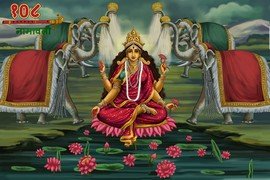
Mantras and Names of Goddess Kamala are given with meaning and recitation video. The collection of these names is also Ashtottara Shatanamavali of Goddess Kamala.
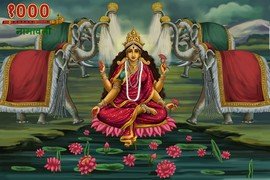
Mantras and Names of Goddess Kamala are given with meaning and recitation video. These names are also known as Sahasranamavali of Goddess Kamala.
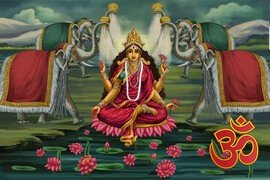
The collection of various Vedic Mantras of Goddess Kamala including Ekakshara Kamala Mantra, Dvyakshara Samrajya Lakshmi Mantra, Tryakshara Samrajya Lakshmi Mantra, Dashakshari Kamala Mantra etc is given. These Mantras are considered very important for doing the Sadhana of Goddess Kamala.
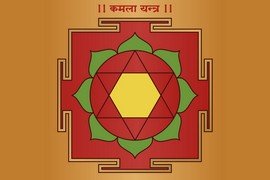
Vedic powerful Shri Kamala Yantra is provided with colorful picture. This Yantra is based on the Moola Mantra of Goddess Kamala and is used for Sadhana of Goddess Kamala. In Hinduism, Yantras are considered to be the form of the Gods and Goddesses associated with them.
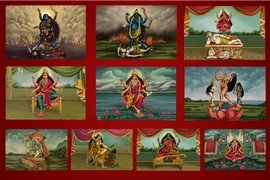
The 10 main forms of Goddess Shakti are worshipped as Dasha Mahavidya. The Dasha Mahavidyas are the presiding powers of different directions. Through the worship and Sadhana of Dasha Mahavidya, spiritual seekers attain various types of Siddhis.
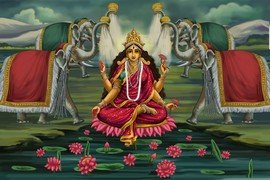
Goddess Kamala is the Tenth Mahavidya among the ten Mahavidyas described in Hinduism. Goddess Kamala provides both wealth and grain. Goddess Kamala is known as one of the forms of Goddess Lakshmi. Goddess Kamala is worshipped for wealth, prosperity and material comforts.