


En


According to the Srimad Bhagavata Mahapurana, Rishabha Deva is considered the eighth incarnation of Lord Vishnu. In His Rishabha Deva Avatara, Lord Vishnu has enlightened the world about the path of the Paramahamsas. Paramahamsa Dharma is held in high reverence by the adherents of all four Ashramas. According to the Linga Purana, Rishabha Deva is regarded as one of the twenty-eight incarnations of Lord Shiva.
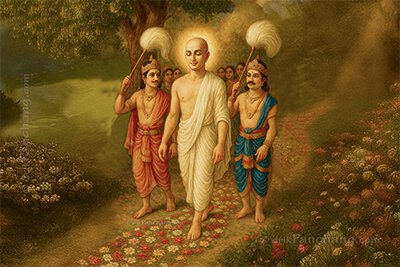
The description of Lord Vishnu's Rishabha Deva incarnation is mentioned in various religious scriptures, including the Yajurveda. According to some scholars, Rishabha Deva is regarded as Rishabhanatha, the first Tirthankara of Jainism. However, this view is disputed and remains a subject of scholarly research.
According to the account found in Srimad Bhagavata Mahapurana, Swayambhuva Manu had two sons, Priyavrata and Uttanapada. The son of Uttanapada was Dhruva. Priyavrata was married to Barhishmati, the daughter of Prajapati Vishvakarma, with whom he had ten sons, namely, Agnidhra, Idhmajihva, Yajnabahu, Mahavira, Hiranyareta, Ghritaprishtha, Savana, Medhatithi, Vitihotra and Kavi. Among these sons, Kavi, Mahavira and Savana were highly devoted to Yoga and were born with the complete knowledge of their previous births. King Priyavrata divided the Earth into seven continents and transferred the reign of each continent to his seven sons, Jambudwipa to Agnidhra, Plakshadwipa to Idhmajihva, Shalmaldwipa to Yajnabahu, Kushadwipa to Hiranyareta, Kraunchadwipa to Ghritaprishtha, Shakadwipa to Medhatithi and Pushkaradwipa to Vitihotra.
In due course, Agnidhra begot nine sons, Nabhi, Kimpurusha, Harivarsha, Ilavritta, Ramya, Hiranvana, Kuru, Bhadrashva and Ketumala. Agnidhra further divided Jambudwipa into nine kingdoms and bestowed them on his sons. After the demise of their father Agnidhra, Nabhi and his brothers married the nine daughters of Meru, namely, Meru Devi, Pratirupa, Ugradanshtri, Lata, Ramya, Shyama, Nari, Bhadra and Devaviti.
Agnidhra's son Nabhi was granted the kingdom of Himavarsha, which is known as Bharatavarsha in the present era. King Nabhi was married to Meru Devi, but they had no children of their own. Therefore, desiring a child, they performed a Yajna to propitiate the deity Yajnapurusha. Pleased with the Yajna, performed with reverence and in accordance with Vedic rituals, Lord Vishnu appeared in the sacrificial pavilion. The priests officiating the Yajna worshipped Lord Vishnu with various offerings and sang hymns in His praise. The priests thus said - "Our patron, King Nabhi, is performing this Yajna to beget a child as majestic as you. O Lord! You fulfill even the greatest desires of your devotees. We, mere simpletons and slaves to our desires, have invoked you for this minor cause. Kindly forgive us and grant our patron his heartfelt wish."
Pleased with the worship and pleading of King Nabhi's priests, Lord Vishnu compassionately said - "O venerable sages! This is a matter of great dilemma for me. You have asked for an exceedingly rare boon, for I am the only absolute being, none resembles me in attributes or form. However, I will not let the words of Brahmins go unfulfilled. Therefore, I shall incarnate as the son of Agnidhranandana Nabhi."
In the course of time, Lord Vishnu was born to Queen Meru Devi, as per His declaration, for the liberation of King Nabhi and the establishment of the religion of Digambara ascetics and Urdhvareta sages. King Nabhi's son was born with divine symbols, attributed to Lord Vishnu, the thunderbolt and the goad, marked on His body. Owing to His beauty, glory, strength and other noble qualities, the King named His son Rishabha, meaning "Supreme of All". Rishabha's inherent virtues, equanimity, peace, asceticism and majesty, caused His stature to grow with each passing day.
Once, Indra, overcame with jealousy toward Rishabha Deva because of His glory and nobility, devoid His kingdom of rain. Therefore, Lord Rishabha Deva derided Indra by causing torrential rain in His kingdom Ajanabhakhanda, through His Yogic powers.
Rishabha Deva was adored by all, His subjects, ministers, sages and saints alike. King Nabhi, having been blessed by a son as he had desired and raising Him with love, was filled with immense joy. He performed Rishabha Deva's coronation and entrusted Him to the guidance of Brahmins. Then, along with his wife Meru Devi, he retired to Badrikashrama to live the life of an ascetic. Through intense penance and deep meditation, they entered the state of Samadhi, and while contemplating the divine form of Lord Nara-Narayana, they ultimately attained oneness with that very form at the end of their mortal journey.
In Ajanabhakhanda, Lord Rishabha Deva resided in Gurukula for a period of time. Thereafter, He took permission from His Guru to enter into the Grihastha Ashrama, and married Jayanti, the daughter of Indra. Devi Jayanti gave birth to one hundred sons who were as virtuous as their father. Among those hundred sons, their eldest son Bharata was the most honorable. It was after King Bharata that the land of Ajanabhakhanda came to be known as Bharatavarsha.
Although Lord Rishabha Deva Himself was an incarnation of Lord Vishnu, He performed a number of Yajnas, each a hundred times, in accordance with the instructions of the Brahmins, and endowed with offerings such as matter, space, time, lifespan, faith and priests, to propitiate various deities. During the rule of Lord Rishabha Deva, the people of His kingdom harboured no desire in their hearts other than the love and devotion for the Lord. No one would cast an eye upon the possessions of another.
Once, Lord Rishabha Deva landed in the country of Brahmavarta and appeared in the court where Brahma Rishis were gathered. There, in their presence, He imparted supreme knowledge to His sons. Thereafter, Lord Rishabha Deva transferred the reign of the Earth to His eldest son, Bharata and embraced the path of asceticism to enlighten the world about the teachings of Paramahamsa Dharma, which is the harmonious blend of devotion, knowledge and renunciation. He renounced all worldly possessions, including His clothing, retaining only His physical body, and thus became silent and Digambara for the remainder of His life. He adopted the appearance of a mystic and wandered in a state of spiritual madness through forests, mountains and villages. When He realised that the citizens of His kingdom were causing disruption in His spiritual practice and meditation, He concluded that the only way to safeguard His path was to embrace the life of absolute renunciation, a mode of existence that deliberately discarded the norms of socially acceptable conduct. Afterward, He embraced the lifestyle of python, remaining in a reclining position while eating food as well as performing other bodily functions like excreting bodily waste. Subsequently, He performed His daily duties in a manner similar to creatures like cow, deer and crow, that is, while standing, walking, sitting and reclining. Thus, Rishabha Deva practiced and adhered to such extreme austere disciplines to impart the wisdom of complete detachment to the Paramahamsas.
Ultimately, in order to impart the knowledge of departure from the material world to ascetics, Lord Rishabha Deva decided to relinquish His physical form. He became detached from all the worldly desires and transcended egoic-consciousness, thus entered the state of complete renunciation. Placing a stone in His mouth, in His Digambara form, He wandered the regions of Konk, Venk as well as the southern regions of Kutaka Karnataka. There, He entered the forest of Kutakachala, and at that very moment, by divine coincidence, a powerful gust of wind caused friction among the bamboo trees triggering a terrible wildfire that swept through the entire forest, reducing everything, including Rishabha Deva, to ashes. Thus, He attained oneness with the Supreme Being. In this way, the sacred life story of Lord Rishabha Deva comes to a close.
The father of Lord Rishabha Deva was King Nabhi and His mother was Meru Devi. He was married to Jayanti, the daughter of Indra. They had one hundred virtuous sons. His eldest son was Bharata, while the next nine sons, Kavi, Hari, Antariksha, Prabuddha, Pippalayana, Avirhotra, Durmil, Chamas and Karabhajan, were honorable than the rest ninety.
Lord Rishabha Deva is depicted as Avadhuta, the One Who has attained complete renunciation from worldly attachments and transcended egoic-consciousness. He is shown with unkempt hair but gentle and uniform features. His eyes resembled the petals of a lotus flower, while His arms were long.
The given Shri Vishnu Dashavatara Stotram is a very melodious and effective Stotram dedicated to the ten incarnations of Lord Vishnu.
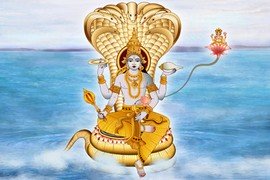
Lord Vishnu is the protector of the entire universe and one of the Trimurti. It is believed that, this visible world is the dream of Lord Vishnu sleeping in Kshirsagar. On this page you can get many information related to Lord Vishnu.
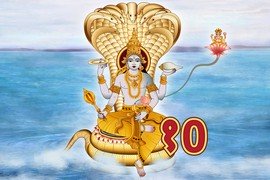
The list of the ten major incarnations of Lord Vishnu and the dates of their birth anniversaries are given on this page. From this page you can also get interesting information about all the incarnations.
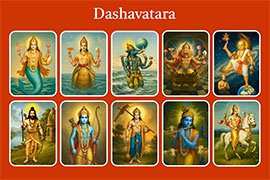
Lord Vishnu keeps taking various incarnations forms from for the welfare of the universe. Here is the ten main incarnations of Lord Vishnu have been described in the religious scriptures as Dashavatara. According to religious scriptures, Kalki incarnation, one of the Dashavatars, is going to appear at the end of the present Kaliyuga.
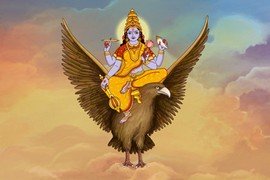
A complete list of Ekadashi dates is given here. Go through the Ekadashi fasting dates list here so that you never miss fasting on Ekadashi. Ekadashi fast is observed with great enthusiasm by the devotees of Lord Vishnu.
ISKCON devotees can get the complete list of ISKCON Ekadashi fasting dates here. This list will prove highly informative and useful to those who observe the fast of Ekadashi as per the ISKCON.
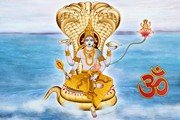
The list of Mantras used in the worship and chanting of Lord Vishnu is available on this page. Some of these Mantras are legendary and some are Vedic. Along with this, the powerful Yantra of Lord Vishnu can also be seen from this page.