



En


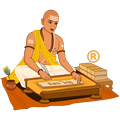



In Vedic astrology, Shani is considered an extremely important planet. Shani's role is that of the dispenser of Karmic results, i.e., Karma Phaladata, and therefore He directly influences both favorable and unfavorable circumstances in the lives of living beings. However, in general, negative perceptions about Shani are more prevalent in society. The very mention of Sadesati often creates a wave of fear in the mind. Yet, Shani does not always give negative results. In Vedic literature, Shani is described as "Shani Shamayate Papam," meaning the planet that destroys sins. Shani remains in one Rashi for approximately two and a half years. According to astrology, Shani not only affects the Rashi it occupies but also influences the preceding and the following Rashis. In this way, Shani delivers auspicious and inauspicious results for a total of seven and a half years.
For example, if Shani is transiting through Meena Rashi, then Meena, Kumbha, and Mesha Rashis will also be under the influence of Sadesati. Similarly, Dhanu Rashi and Simha Rashi will be under the influence of Shani's Dhaiya. In other words, when Shani transits the fourth or eighth house from any Rashi, it creates a two-and-a-half-year period known as Laghu Kalyani Dhaiya. Likewise, when Shani transits the fourth, eighth, or tenth house from the Rashi, i.e., the Moon sign, it is not considered especially favorable. This transit of Shani is called Kantak Shani. Such a transit may indicate family disputes, unrest, and loss of livelihood. During Sadesati, Shani influences three Rashis in three phases, which may be understood as three Dhaiya periods.
During this period, Shani is believed to reside over the head. While transiting the twelfth house, Shani aspects the second, sixth, and ninth houses. During this time, the native may face expenses, financial difficulties, illness, and family-related stress. These are general results; to understand the actual effects, a detailed study of the birth chart is essential. The native should remain extremely patient during this period.
In the second Dhaiya, Shani transits the same Rashi. During this time, feelings of disappointment and distress may increase. This phase is considered to affect the stomach, or according to some opinions, the heart region. Shani aspects the third, seventh, and tenth houses during this transit, which may result in business losses, marital discord, and emotional pain due to separation from a relative.
When Shani transits the second house from the Chandra Kundali, it marks the final phase of Sadesati. In this stage, Shani is believed to reside below the knees. During this transit, Shani aspects the fourth, eighth, and eleventh houses. The native may face domestic conflicts, illness, and financial loss. However, the final phase of Sadesati is considered comparatively less harmful, as by this time the native becomes accustomed to Shani's influence.
During Sadesati, Shani grants results according to the good and bad deeds performed by the native. It has been observed that during Sadesati, Shani not only causes hardships but can also bestow great success. Shani is a slow-moving planet, and therefore its results are long-lasting and enduring. For this reason, public perception of Sadesati has generally remained negative. During this period, the native should maintain purity and discipline in his or her actions. To determine whether Sadesati will be auspicious or inauspicious, the individual's Janma Kundali, i.e., birth chart, must be carefully examined. If Shani in the chart is afflicted by malefic influences, debilitated, Maraka, or Vakri, Sadesati often produces unfavorable results. On the other hand, if Shani is a Yogakaraka, Shubhakshetri, i.e., placed in a favorable sign, and well positioned in the Navamsha, it can also yield positive outcomes.
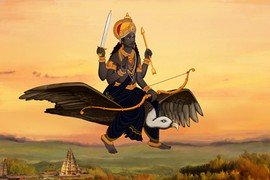
Shani Sadesati Calculator is given on this page. With the help of this calculator, one can determine the Sadesati phases in one's life according to Vedic astrology. In Vedic astrology, the 7.5 years of Shani's Dasha is known as Sadesati.

In Vedic astrology, Kalasarpa Dosha is described as a very Inauspicious Yoga. Kalasarpa Dosha is divided into twelve categories such as Ananta, Kulika, Vasuki, Shankhapala, etc. Find out the status of Kala Sarpa Dosha in the Kundali through this Calculator.
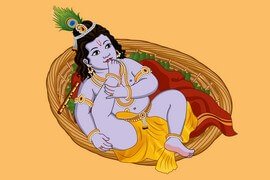
Namakarana is an important Sanskara in Hinduism. Namakarana based on the Swara Siddhanta can be done with the help of Drik Panchang Hindu Name Calculator. Naming as per Swara Siddhanta can give positive results in the development of the child.

The Nakshatra prevalent at the time of Birth of the native can be found out through this Janma Nakshatra calculator. Birthstar known as Janma Nakshatra is the name of the constellation in which the Moon was located at the time of the birth. Each nakshatra has four Padas.
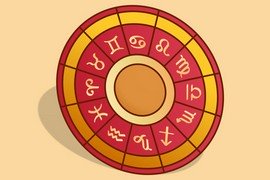
With the help of Rashi Calculator, the Moon Sign of a person can be determined. Moonsign at the time of birth is known as Rashi or Janma Rashi. Various facts about a person can learned through the Moon Sign.

Use the Sun Sign Calculator to find out the Sun Sign of a native. Sunsign at the time of the birth is known as Surya Rashi. In Western astrology, the Sun Sign is given more importance than the Moon Sign.

Janma Lagna is the zodiac sign rising at the Eastern horizon at the time of birth. Out of the twelve houses of the birth chart, the First house is called Lagna. The planet situated in the Lagna house is called Lagnesh.
Use the Horoscope Matching Calculator to do Horoscope Matching based on the Ashta Kuta method. Horoscope Matching is also known as Kundali Matching or Kundali Milan. In Indian culture, Kundali Matching is considered very important before Marriage.
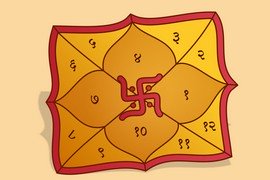
Prepare a Janma Patrika as per Vedic Astrology. Janma Patrika is also known as Kundali, Janam Kundali and Birth chart. Through Kundali, one can learn about the various auspicious and inauspicious Yogas that occur in life.
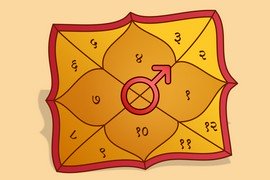
Find out the Mangal Dosha in Kundali through this calculator. Mangal Dosha is formed when Mars is situated in the First, Second, Fourth, Seventh, Eighth or Twelfth house of the Kundali. Mangal Dosha is also known as Kuja Dosha and Bhauma Dosha.
Hindu Name Initials based on 27 Nakshatras and 108 Pada Swars have been listed. For naming a child, a list of Swars, Names with Meanings are also given as per the Nakshatra. A suitable name for the child can be decided with the help of this list.