




Notes: All timings are represented in 12-hour notation in local time of New Delhi, India with DST adjustment (if applicable).
Hours which are past midnight are suffixed with next day date. In Panchang day starts and ends with sunrise.
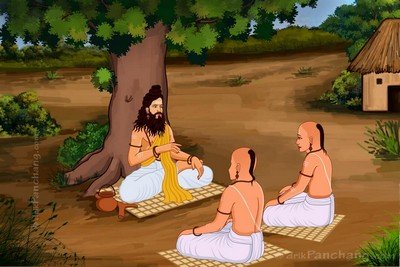
Full moon day during Ashadha month is known as Vyasa Puja day. Traditionally this day is reserved for Guru Puja or Guru Worship. On this day disciples offer Puja or pay respect to their Gurus. Guru refers to spiritual guide who enlighten disciples by his knowledge and teachings.
Vyasa Puja is also known as Vyasa Purnima> and this day is commemorated as birth anniversary of Maharshi Krishnadvaipayana Veda Vyasa. Veda Vyasa was the author as well as a character in the Hindu epic Mahabharata.
First of all, on the morning of Ashadha Shukla Purnima, after completing the morning purification rites such as bathing, one should take the following Sankalpa along with Brahmins -
गुरुपरम्परासिद्ध्यर्थं व्यासपूजां करिष्ये।
Guruparamparasiddhyartham Vyasapujam Karishye।
Meaning - "For the attainment of success in the Guru tradition, I shall perform the worship of Vyasa."
Thereafter, on a wooden platform made of the Shriparni tree, spread a clean, washed cloth. Then, on the platform, draw twelve lines each in Praga, i.e., the east–west direction and Udaga, i.e., the north–south direction using sandal paste or similar substances, and establish the Vyasa Peetha, i.e., seat of Vyasa. Perform Digbandhana, i.e., securing the directions by offering Akshata, i.e., unbroken rice in all ten directions.
After this, invoke and worship Brahman, Brahma, Para-Apara Shakti, Vyasa, Shukadeva, Gaudapada, Govindaswami, and Shankaracharya with appropriate Mantras. Then, worship one’s Diksha Guru as well as one’s father, grandfather, brother, and others with reverence equal to that offered to deities. For a more detailed procedure, one may refer to the Vyasa Puja Vidhi composed by Shankaracharya.