


En



Purushottam Maas is extra lunar month in Hindu calendar and it is also known as Mal Maas, Adhik Maas, Malimmacha and Londa Maas (लोंद मास). Adhik Maas concept is similar to leap day in English calendar. However, during Adhik Maas whole month in leaped in Hindu calendar. Adhik Maas occurs approximately every three years in Hindu calendar.
In the fixed cycle of Hindu months, the position of Adhik Maas is not fixed and it occurs randomly between any two months. In Hindu calendar, each Lunar month has single Sankranti point. During Sankranti, the sun moves from one zodiac to another and it happen only once during the entire span on the lunar month. However, those lunar months which are devoid of Sankranti are marked as Adhik Maas.
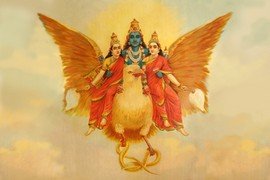
Adhik Maas is highly significant to perform austerity and it is dedicated to Lord Purushottam which is another form of Lord Vishnu. According to the Purushottam Maas Mahatmya described in the Brihannaradiya Purana, this month is desireless and grants Moksha. A person who worships Lord Vishnu with devotion during this month becomes free from all Karmas and attains the very form of Shri Vishnu. By observing worship and Vrat for just one month, a being becomes free from old age and death and attains Parama Pada, i.e., the supreme state.
While describing the glory of Purushottam Maas, Lord Krishna says, "By performing the Chaturmasika Yajna, one attains heaven, and after enjoying various pleasures there, one has to take birth again on Earth. However, whoever worships this Purushottam Maas with proper procedure and devotion will certainly attain Me along with his family. Upon attaining Me, he becomes free from birth and death, mental and physical afflictions, and various other sufferings, and will never again take birth in this world."
According to Padma Purana, the Ekadashi that falls at the beginning of Adhika Maas is known as Padmini Ekadashi. Observing the Vrat of this supreme Ekadashi among all Tithis bestows the grace of Goddess Lakshmi. The Ekadashi of the second Paksha of Purushottam Maas is known as Parama Ekadashi. By observing this Vrat, a person attains desired fruits in both this world and the next.
Similarly, the Sankashti that falls during the Krishna Paksha of Adhika Maas is known as Vibhuvana Sankashti. This Sankashti is considered extremely rare and important. On this day, Lord Ganapati is worshipped in His Vibhuvana Ganesha form, and special Naivedya of coconut Laddus is offered.
If the month of Jyeshtha becomes an Adhika Maas, then the festival of Ganga Dussehra is observed during that Adhika Maas itself instead of the regular month. The same rule also applies to Durva Ashtami.
Adhik Maas is not good to perform any auspicious works. All auspicious works, including marriage ceremonies, housewarming ceremonies, purchasing vehicles and other new items, etc. are avoided during Adhik Maas in Hindu calendar.
According to the Dharma Sindhu, Upakarma and Utsarga, Ashtaka Shraddha, Mundana, Mauji-Bandhana, Upanayana, pilgrimage, Vastu-related works, etc., are prohibited during Mal Maas. In addition to these, Deva-Pratishtha, Utsarga, i.e., donation of wells and gardens, wearing new clothes, Tula-Purusha Dana, i.e., donating materials equal to a person's weight, Yajna rituals, Adhana, i.e., Garbhadhana, Agnyadhana, etc., first Darshan of a deity, Sannyasa, Kamya Vrishotsarga, i.e., releasing a bull in the name of a deceased person, and Rajyabhisheka, i.e., coronation are also forbidden.
Vrats and those rites which are not immediately compulsory, such as Annaprashana, Samavartana, Atikranta Namakarana, i.e., delayed naming ceremony and other Samskara, Pavitropana, Damanarpana, Shravana Karma rituals, Sarpa Bali, ritual cooking arrangements, the Shayana and Parivartana festivals of the God, vows, ordeals, and similar rites should also not be performed during Mal Maas.
However, if the rites are Naimittika Karmas, such as remedies for Rajodosha, Agni Adhana, i.e., restoration of extinguished sacred fire, Punah Pratishtha, i.e., re-establishment rituals, etc., then if they are performed immediately after the cause arises, there is no inauspicious effect or ritual restriction of Mal Maas. However, if the proper time related to the cause has already passed, then they should only be performed during a Shuddha Maas. Agrayana Ishti may be performed during Mal Maas only in times of famine or severe scarcity; otherwise, it should be performed during a regular month. Yugadi, Manvadi, and Shraddha rites are repeated in both months.
The commencement and conclusion of a new Vrat should not take place during Mal Maas. When months such as Vaishakha become Adhika Maas, then those bathing-related Vrats of Vaishakha which began on Chaitra Purnima conclude on the Purnima of the regular Vaishakha month. In this way, such observances continue across two months.