



En





According to the Hindu Panchang, the period from Ashadha Shukla Ekadashi to Kartika Shukla Ekadashi is known as Chaturmasa. However, according to the Dharma Sindhu, the Sankalpa for the Chaturmasa Vrat should be taken after performing the evening worship on Dwadashi. Therefore, in Drik Panchang as well, Chaturmasa is considered to begin from the Dwadashi Tithi. Chaturmasa is also known by names such as Chaturmasya, Chaumasa, and Devashayana. During this period, sages and saints do not undertake journeys throughout these four months and remain at one place for Varshavasa. For common people as well, Mauna, i.e., silence, Japa, Tapa, and charity performed during Chaturmasa are said to yield special spiritual merit for the welfare of the devotee.
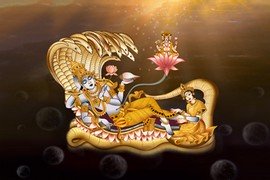
According to Puranic beliefs, during this four-month period, Lord Vishnu remains absorbed in Yogic sleep upon the bed of Sheshanaga in the Kshira Sagara. Therefore, certain activities are considered prohibited during Chaturmasa. According to the Nirnaya Sindhu, during Chaturmasa, there is no Sutaka for works that have already been commenced, whereas Sutaka applies to works that have not yet been initiated.
1. First Chaturmasa (Shaka Vrat) 🥗 - In Hindu scriptures, the observance of the first Chaturmasa includes the renunciation of Shaka, i.e., green leafy vegetables. Therefore, during the period of the first Chaturmasa, the devotee should refrain from consuming any kind of leafy green vegetables. Scholars believe that at the beginning of the rainy season, insects and worms begin to increase in the soil, due to which there is a possibility of microscopic organisms developing in leafy vegetables. Hence, the consumption of spinach, fenugreek, Bathua, amaranth, and other leafy vegetables is considered prohibited during this month.
2. Second Chaturmasa (Dadhi Vrat) 🐄 - During the second month of Chaturmasa, Dadhi, i.e., curd, along with all dishes prepared from it such as Kadhi, Pachadi, Raita, buttermilk, and Lassi, etc. are completely renounced. This rule applies to both uncooked and cooked foods prepared using curd. During the rainy season, curd can spoil quickly and may cause digestive disorders. Therefore, curd should not be consumed during this month.
3. Third Chaturmasa (Dugdha Vrat) 🥛 - Scriptures such as the Dharma Sindhu mention the observance of the Dugdha Vrat during the third Chaturmasa. During this month, Dugdha, i.e., milk and all products prepared from it, are completely renounced. Prohibited milk products include Kheer, Thandai, milk-based beverages, and milk in any form whatsoever. According to traditional beliefs, the nature of milk is considered to be affected during the rainy season due to changes in the diet and health of animals. Therefore, milk is avoided during this month.
4. Fourth Chaturmasa (Dvidala Vrat) 🫘 - During the fourth month of Chaturmasa, the consumption of Dvidala, i.e., all types of pulses such as Moong, Masoor, Urad, Chana, Moth beans and lentils, are considered prohibited. The literal meaning of Dvidala is grains that are divided into two identical parts, which in simple language are known as legumes or pulses. In Jainism as well, all types of pulses and those substances from which oil is extracted by grinding are considered prohibited during the fourth Chaturmasa. One possible reason behind this practice may be that during the final phase of the rainy season, the consumption of urad and similar lentils is not considered suitable from a health perspective, as they are regarded as Kapha-increasing in Ayurveda.
According to the description found in the Dharma Sindhu, the Sankalpa for the Chaturmasa Vrat should be taken after performing the evening worship on the day of Dwadashi Vrat. In the Hemadri, Bharata says, "A person should observe all four types of Chaturmasya Vrats and conclude the Vrat on the Dwadashi Tithi of Kartika Shukla Paksha."
To begin the Chaturmasa Vrat, one should first worship Lord Vishnu with Jati Pushpa, i.e., Bela flowers, and then recite the following prayer -
त्वयि सुप्ते जगन्नाथे जगत्सुप्तं भवेदिदम्।
विबुद्धे च विबुध्येत प्रसन्नो मे भवाच्युत॥
Tvayi Supte Jagannathe Jagatsuptam Bhavedidam।
Vibuddhe Cha Vibudhyeta Prasanno Me Bhavachyuta॥
Meaning - "O Jagannatha! When You enter divine sleep, this entire moving and non-moving universe also becomes dormant, and when You awaken, the universe too awakens. O Achyuta! Kindly be pleased with me."
Thereafter, with folded hands, one should take the following Sankalpa -
चतुरो वार्षिकान्मासान्देवस्योत्थापनावधि।
श्रावणे वर्जयेच्छाकं दधि भाद्रपदे तथा॥
दुग्धमाश्वयुजे मासि कार्तिके द्विदलं तथा।
इमं करिष्ये नियमं निर्विघ्नं कुरु मेऽच्युत॥
इदं व्रतं मया देव गृहीतं पुरतस्तव।
निर्विघ्नं सिद्धिमायातु प्रसादात्ते रमापते॥
गृहीतेऽस्मिन्व्रते देव पञ्चत्वं यदि मे भवेत्।
तदा भवतु सम्पूर्ण प्रसादात्ते जनार्दन॥
Chaturo Varshikanmasandevasyotthapanavadhi।
Shravane Varjayechchhakam Dadhi Bhadrapade Tatha॥
Dugdhamashvayuje Masi Kartike Dvidalam Tatha।
Imam Karishye Niyamam Nirvighnam Kuru Meachyuta॥
Idam Vratam Maya Deva Grihitam Puratastava।
Nirvighnam Siddhimayatu Prasadatte Ramapate॥
Grihiteasminvrate Deva Panchatvam Yadi Me Bhavet।
Tada Bhavatu Sampurna Prasadatte Janardana॥
Meaning - "O Lord! During these four months until the awakening of the Devas, I renounce leafy vegetables in Shravana, curd in Bhadrapada, milk in Ashwina, and Dvidala, i.e., Urad Dal, in Kartika. O Achyuta! Kindly ensure that my Vrat is completed without obstacles. O Lord! I have undertaken this Vrat in Your presence. O Shripati! By Your grace, may this Vrat be accomplished without hindrance. O Janardana! Even if death comes to me after undertaking this Vrat, may it still be considered complete by Your mercy."
After taking the above Sankalpa, one should offer Arghya to Lord Vishnu using a Shankha, i.e., conch shell. In this manner, the Sankalpa for the Chaturmasa Vrat should be undertaken according to the prescribed procedure.
According to the Dharma Sindhu, during Chaturmasa a person should renounce powdered substances made from animal body parts, water kept in leather containers, Jambhiri and Bijora, i.e., special varieties of lemons, any food other than that remaining from a Yajna, food that has not been offered to Lord Vishnu, burnt food, Masoor Dal, and meat, because these have been described in the scriptures as eight types of meat. In addition to these, one should also avoid consuming Nishpava and Rajamasha, i.e., two types of grains known as Lobia, Lavana Shaka, i.e., the leafy vegetable called noni, brinjal, Kalinga fruit, i.e., watermelon, fruits containing many seeds, seedless fruits, radish, Kushmanda, sugarcane, fresh Ber, Amla, tamarind, and similar substances.
According to scholars, during Chaturmasa one should not sleep on a cot or bed, nor approach a woman outside the proper marital period. Vaishnavas should avoid others' food, Sahata, Patola, i.e., pointed gourd, Urad Dal, horse gram, and white mustard. Brinjal, bael fruit, and Bhisa, i.e., lotus stem, should be renounced during all months.
Various religious scriptures also consider the milk of animals other than cows, goats, and buffaloes, stale food, juices purchased from a Brahmin, ordinary salt obtained from the earth, and cow's milk, curd, and Ghee kept in copper vessels to be prohibited like meat. Similarly, the water of a small pond or puddle, collyrium, and food prepared solely for oneself are also regarded as impure like meat.
One who consumes Havishya food during all four months does not become a sharer in sin. Rice, barley, sesame seeds, Moong, Kangni, Kalaya, i.e., peas, Samak rice, wheat, white radish, Surana, i.e., elephant foot yam and similar tubers, rock salt and sea salt, cow's curd, milk and Ghee, Panasa, i.e., jackfruit, mango, coconut, Harad, peepal, cumin, dry ginger, tamarind, banana, Lavali, i.e., a type of plant, Amla, and sugarcane products made from sugarcane other than jaggery, along with all foods cooked without oil, have been described as Havishyanna. In some traditions, cow's buttermilk and buffalo Ghee are also considered suitable as Havishya.
Ekadashi Vrat Chaturmasya Vidhan