



En



Lord Vishnu is one of the most popular and widely worshipped deities in Hinduism. His various epithets include Narayana, Shri Hari, Janardana and Achyuta. According to beliefs, whenever the Gods, humans and other living beings of the world face any impending crisis, Lord Vishnu incarnates to protect them. In the same series of events, once Lord Vishnu incarnated as Kurma Avatara. Kurma or Kacchapa means Tortoise in Sanskrit. Because Lord Vishnu incarnated in the form of a tortoise, His Avatara is called Kurma Avatara.
According to the description found in religious texts, Lord Vishnu incarnated as Kurma Avatara on the Purnima Tithi of Vaishakha month. This Tithi is celebrated as Kurma Jayanti by the devotees of Lord Vishnu. Various religious texts provide different accounts related to the Kurma Avatara.
According to a description found in Srimad Bhagavatam, Kurma Avatara is the eleventh incarnation of Lord Vishnu. Although, according to Narasimha Purana, Kurma Avatara is described as the second incarnation of Lord Vishnu. Lord Vishnu's Kurma Avatara finds mention in various texts such as, Shatapatha Brahmin, Mahabharata, Linga Purana and Kurma Purana. Kurma Avatara is also known as Kacchapavatara.
According to the earliest account of Kurma Avatara, Shukracharya, the Guru of demons, propitiated Lord Shiva with intense penance, and received the mastery over Sanjivani Vidya as boon. Thereafter, whenever a demon would die or get injured in the battlefield, Shukracharya would revive the dead and heal the injured by using Sanjivani Vidya.
After seeing the miracle of Sanjivani Vidya, demon king Bali attacked Gods with his huge demon army. Whenever a demon got killed by a God, Shukracharya would revive the dead. Because of the Sanjivani Vidya, demons overthrew Gods and dethroned Indra from the Kingdom of Swarga. Later, King Bali established his kingdom in Swarga Loka.
In wake of such crisis without anyone to guide, Gods went to Lord Vishnu and entreated Him to protect them from the wrath of demons. Lord Vishnu suggested Gods to perform Samudra Manthana, that is, to churn the ocean with demons to retrieve the pot of elixir that would make them immortal. In the beginning, demons refused to take part in Samudra Manthana, but when Devarshi Narada persuaded them, they agreed.
To churn the vast ocean, Mount Mandrachala was made the churning rod, and Vasuki, the great snake, was made the rope. But, when Mount Mandrachala was brought in to churn the ocean, it began to sink in absence of any concrete base. This occurrence hindered the act of Samudra Manthana. Once again, all the Gods prayed to Lord Vishnu for help, as a result, Lord Vishnu manifested in the form of Kacchapa, also called Kurma, and held the Mount Mandarachal on his back to ensure the accomplishment of Samudra Manthana and attainment of immortality to the Gods. Lord Vishnu's incarnation as Kacchapa is known as Kurma Avatara in the entire universe.
In an account found in Padma Purana about the Kurma Avatara of Lord Vishnu, once the great sage Durvasa gifted a beautiful garland of Parijat flowers to the king of Gods Indra. But Indra, in his arrogance, put that garland on Airavata's head, and Airavata threw it on the ground with his trunk. Sage Durvasa felt humiliated by Indra's arrogance. Feeling utterly humiliated, Durvasa cursed Gods that - "All your majesty will diminish and Lakshmi will leave you." Due to the effect of sage Durvasa's curse, Goddess Lakshmi dissolved in the ocean. As soon as the Goddess Lakshmi vanished, the splendour of the entire universe, including Deva Loka and Asura Loka waned and the Gods became powerless. Thereafter, Indra and all other Gods went to Lord Vishnu and made a plea for help.
Lord Vishnu advised the Gods and demons to perform Samudra Manthana to regain the Goddess Lakshmi. When the Mount Mandarachala was immersed in ocean as churning rod, it began to sink in absence of any base to support it. To address this problem, Lord Vishnu took the form of tortoise and appeared in His Kurma Avatara to support the Mount Mandara on His back, thus assisting in completion of the onerous task of Samudra Manthana. Goddess Lakshmi was one of the fourteen jewels emerged from the churning of the ocean. She accepted Lord Vishnu as Her divine consort and bestowed the Gods with their lost majesty and grandeur.
According to an account found in Linga Purana regarding Lord Vishnu's Kurma Avatara, at one point in time, the Earth was sinking in the abyss of netherworld. In order to protect all living beings, Lord Vishnu, the preserver of the universe, incarnated in the form of tortoise. As per the religious texts, the expanse of Lord Kurma's back was one lakh Yojanas.
Lord Kurma is the second incarnation of Lord Vishnu. In this incarnation, Lord Vishnu himself appeared in the form of a tortoise and there is no description of His parents or wife. Hence, He does not have a separate family.
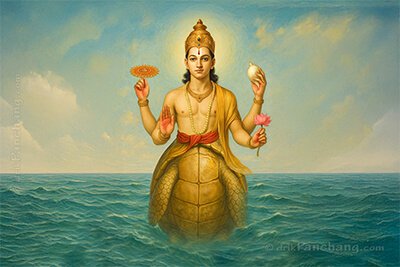
Lord Kurma is depicted in a four-armed form adorned with various golden ornaments. He is portrayed with His lower body having the form of tortoise and upper body that of human. In His four arms, He carries a conch Shankha (shell), Chakra (a discuss), Gada (a mace) and Padma (a lotus). Lord Kurma is portrayed seated blissfully in the midst of a vast ocean.
General Mantra -
ॐ कूर्माय नमः।
Om Kurmaya Namah।
Kurma Vishnu Mantra -
ॐ आं ह्रीं कौं कूर्मासनाय नमः।
Om Am Hrim Kaum Kurmasanaya Namah।
Kurma Gayatri Mantra -
ॐ कच्छपेसाय विद्महे महाबलाय धीमहि।
तन्नो कूर्मः प्रचोदयात्॥
Om Kachchhapesaya Vidmahe Mahabalaya Dhimahi।
Tanno Kurmah Prachodayat॥
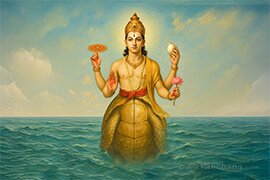
Kurma Jayanti Muhurat is given on this page. Kurma Jayanti is the birth anniversary of Kurma Avatara of Lord Vishnu. Kurma was the second of the ten incarnations of Lord Vishnu.
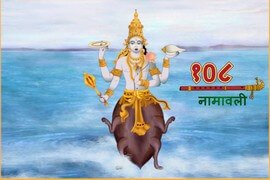
108 Names of Lord Kurma, also called Ashtottara Shatanamavali with video are given on this page.
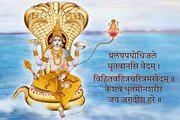
The given Shri Vishnu Dashavatara Stotram is a very melodious and effective Stotram dedicated to the ten incarnations of Lord Vishnu.
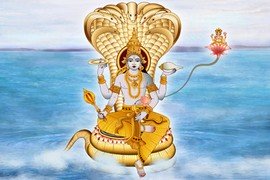
Lord Vishnu is the protector of the entire universe and one of the Trimurti. It is believed that, this visible world is the dream of Lord Vishnu sleeping in Kshirsagar. On this page you can get many information related to Lord Vishnu.
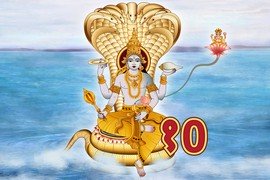
The list of the ten major incarnations of Lord Vishnu and the dates of their birth anniversaries are given on this page. From this page you can also get interesting information about all the incarnations.
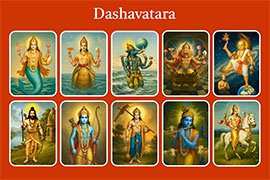
Lord Vishnu keeps taking various incarnations forms from for the welfare of the universe. Here is the ten main incarnations of Lord Vishnu have been described in the religious scriptures as Dashavatara. According to religious scriptures, Kalki incarnation, one of the Dashavatars, is going to appear at the end of the present Kaliyuga.
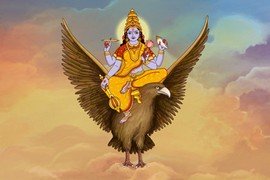
A complete list of Ekadashi dates is given here. Go through the Ekadashi fasting dates list here so that you never miss fasting on Ekadashi. Ekadashi fast is observed with great enthusiasm by the devotees of Lord Vishnu.
ISKCON devotees can get the complete list of ISKCON Ekadashi fasting dates here. This list will prove highly informative and useful to those who observe the fast of Ekadashi as per the ISKCON.
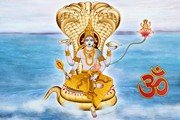
The list of Mantras used in the worship and chanting of Lord Vishnu is available on this page. Some of these Mantras are legendary and some are Vedic. Along with this, the powerful Yantra of Lord Vishnu can also be seen from this page.