



En



Notes: All timings are represented in 12-hour notation in local time of Lancaster, United States with DST adjustment (if applicable).
Hours which are past midnight are suffixed with next day date. In Panchang day starts and ends with sunrise.
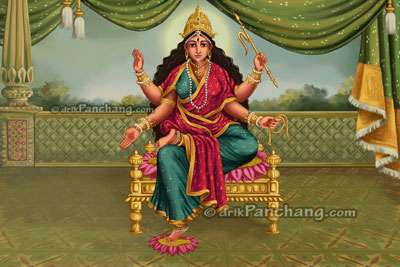
According to the Hindu Panchang, Dakshinamurti Jayanti is celebrated on the Purnima Tithi of the Ashadha month. On this day, Goddess Dakshinamurti, one of the Dwadasha Siddhividya Goddesses, is worshipped with devotion. Scholars believe that without the worship of Goddess Dakshinamurti, the practice of the twelve Siddhividya Sadhana remains incomplete.
On Dakshinamurti Jayanti, a devotee should observe Mauna, i.e., silence as much as possible, engaging in introspection, meditation and Mantra chanting, because the essence of Dakshinamurti worship lies in Mauna. Through the worship of Goddess Dakshinamurti, the ignorance hidden within the devotee's inner self is dispelled and the light of self-realization arises.
वन्दितां सकलैर्देविः सर्वशक्ति शिखामणिम्।
वरं दास्यामि ते कृष्ण प्रसन्नवदनो भाव॥
Vanditam Sakalairdevih Sarvashakti Shikhamanim।
Varam Dasyami Te Krishna Prasannavadano Bhava॥
Hindu scriptures also describe Dakshinamurti form of Lord Shiva. In ancient times, Lord Shiva manifested as Dakshinamurti to impart the silent knowledge of Brahman to the Sanakadi Rishi and others. Therefore, according to scholars, the Siddhividya Goddess Dakshinamurti is also worshipped as the divine power, i.e., Shakti of Lord Shiva. The worship of Goddess Dakshinamurti bestows spiritual enlightenment, progress and success in all aspects of life.
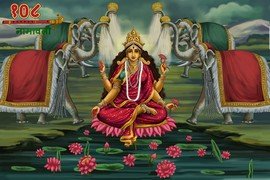
Mantras and Names of Goddess Kamala are given with meaning and recitation video. The collection of these names is also Ashtottara Shatanamavali of Goddess Kamala.
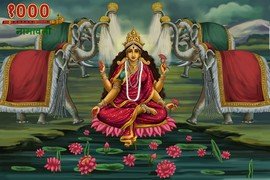
Mantras and Names of Goddess Kamala are given with meaning and recitation video. These names are also known as Sahasranamavali of Goddess Kamala.
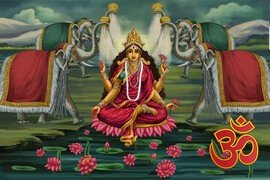
The collection of various Vedic Mantras of Goddess Kamala including Ekakshara Kamala Mantra, Dvyakshara Samrajya Lakshmi Mantra, Tryakshara Samrajya Lakshmi Mantra, Dashakshari Kamala Mantra etc is given. These Mantras are considered very important for doing the Sadhana of Goddess Kamala.
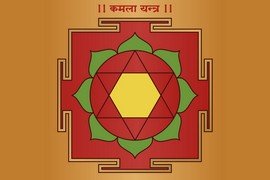
Vedic powerful Shri Kamala Yantra is provided with colorful picture. This Yantra is based on the Moola Mantra of Goddess Kamala and is used for Sadhana of Goddess Kamala. In Hinduism, Yantras are considered to be the form of the Gods and Goddesses associated with them.
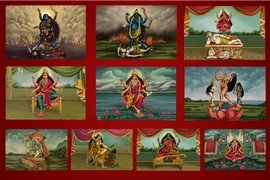
The 10 main forms of Goddess Shakti are worshipped as Dasha Mahavidya. The Dasha Mahavidyas are the presiding powers of different directions. Through the worship and Sadhana of Dasha Mahavidya, spiritual seekers attain various types of Siddhis.
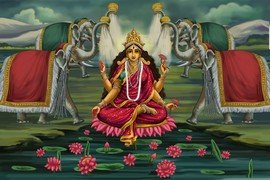
Goddess Kamala is the Tenth Mahavidya among the ten Mahavidyas described in Hinduism. Goddess Kamala provides both wealth and grain. Goddess Kamala is known as one of the forms of Goddess Lakshmi. Goddess Kamala is worshipped for wealth, prosperity and material comforts.