



En


The Srimad Bhagavata Mahapurana describes various incarnations of Lord Vishnu, wherein it is stated that Lord Vishnu first incarnated as Sanaka, Sanandana, Sanatana and Sanatkumara. These four young Brahmins are collectively called Sanatkumara, Sanakadi Rishis and Sanakadi Muni. They are the mind-born sons of Lord Brahma. During His incarnation as Sanaka, Sanandana, Sanatana and Sanatkumara, Lord Vishnu observed the vow of absolute lifelong celibacy.
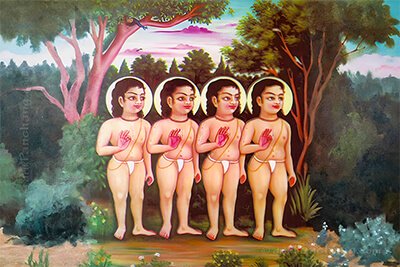
Sanatkumara composed a treatise called Sanatkumara Samhita, in which they enlightened the world about Lord Vishnu's Ashtayama Lila and Gopi Bhava Upasana, a devotional practice within Vaishnavism, referring to the intense love that cowherd women of Vrindavan felt toward Lord Krishna. They travel and spread the teachings of Bhakti, knowledge and ascetism among the inhabitants of three worlds. These four sages are always seen reciting the Mantra "Harih Sharanam". They are extremely fond of the recital of Bhagavata Purana. Hence, among the four, one always recites the Bhagavata Purana and the other three listen to the recital with great devotion.
According to the account of Lord Vishnu's incarnations found in the third canto of Srimad Bhagavata Mahapurana, Shri Sutaji says - "At the beginning of the creation, the Lord expressed the wish to create various Lokas. As soon as this desire arose, He assumed His Purna Purusha form, the primordial manifestation, complete with the sixteen elements of creation which comprises ten senses, one mind, and Pancha Bhuta, the five fundamental elements of all creation. In this primordial form, reposing upon the divine ocean, He entered the deep stillness of Yoganidra. At that moment, a lotus flower manifested from His navel and from that lotus, Brahma, the Lord of Prajapatis, was born.
Seated on the central part of the lotus, Lord Brahma, upon finding Himself alone, rotated His head in all four directions to locate any sign of life around Him, and as a result come to possess four faces. While seated upon the lotus which was floating above the apocalyptic waves of that divine ocean, Lord Brahma could neither decipher the mystery of that divine lotus nor of His birth. He began contemplating thus - 'Sitting on this lotus, who am I? Without any foundation, where has this lotus manifested from in these horrific waters? There must be a foundation from which it is originated.' Thinking thus, Lord Brahma entered the water through the pores of the lotus stem. Following the stem of the lotus, He reached near the navel region, but He still could not trace the mystery of its origin.
Unable to locate the origin of the lotus, Lord Brahma returned to His position and entered a meditative state by controlling His breath and focusing His mind into nothingness. Thereafter, remaining in the state of deep meditation for one hundred divine years, Lord Brahma attained self-realization and saw a divine vision in His subconscious mind about Lord Narayana reposing on a great serpent Shesha Naga with ten thousand heads. Afterwards, Lords Brahma sang hymns in praise of Lord Narayana and earnestly expressed desire to commence the creation of the universe. Pleased by His devotion, Lord Narayana imparted to Lord Brahma the knowledge of creation and then vanished from sight.
Thereafter, with Lord Narayana's inspiration, Brahma initiated the process of cosmic creation. At first, He created the five instincts of ignorance - Tamas (nescience), Moha (egoism), Mahamoha (attachment), Tamistra (enmity) and Andhatamistra (fear of death). Yet, He was still displeased with such a dark creation, marred by ignorance. Afterwards, He meditated upon Lord Narayana to sanctify His mind and initiated the creation of another cosmos, thus creating four ascetics namely - Sanaka, Sanandana, Sanatana and Sanatkumara. Lord Brahma ordained the four ascetics to effectuate the creation of the universe. But they refused to follow His command, for they had chosen the path of liberation through renunciation right from birth itself, and meditating upon Supreme Lord day and night.
Sanakadi Rishis said to Lord Brahma - 'O Father! Kindly, forgive us. For us, Maya is inconsequential and nothing is more important than the worship of the Supreme Lord and thus we will devote our lives to His worship alone.' Saying thus, Sanakadi Rishis departed from there. They would appear wherever the devotional singing was heard. Having listened to the recital of Bhagavata Purana from Shesha, They narrated it to the Sage Narada. The four ascetics remain eternally as five-year-olds yet endowed with knowledge far beyond Their age.
When Sanakadi Rishis refused to take part in the creation of the universe, Lord Brahma was enraged with Their disobedience. However, when He tried to withhold His anger, it emanated from between His eyebrows in the form of a blue-red complexioned child. The wailing child entreated to Lord Brahma thus - 'O father of the Universe! Please tell me my name and the place of my dwelling.'
Lord Brahma said - 'As you began to wail like a small child as soon as you were born, you will be addressed in the world as Rudra. Your abodes will be the heart, the soul, the sky, air, fire, water, Earth, the Sun, the Moon, and austerity. Dhi, Vritti, Ushna, Uma, Niyut, Sarpi, Ila, Ambika, Iravati, Sudha and Diksha, these eleven women will be your wives. Now, you shall accept your name, abodes and wives, and generate abundant progeny, for you are a Prajapati.' In this way, Lord Brahma manifested Sanakadi Rishis.
Sanakadi Rishis were always immersed in the devotion of Supreme Lord with a sense of profound detachment, thus founding the path of Udasin Bhakti, detached devotion which is preserved and followed by Udasin Akhara. Sanakadi Rishis received Brahma Gnana, the profound knowledge of Brahman from the Hamsa Avatara of Lord Vishnu and first imparted that knowledge upon their disciple Sage Narada. In religious texts, these four sages are regarded as the personification of four Vedas. During Pralaya, i.e., dissolution of the previous Chakshusha Manavantara, the Vedas were lost and later recovered by Sanakadi Rishis from the Hamsa Avatara of Lord Vishnu."
Sanatkumara or Sanakadi Rishis are the first mind-born sons of Lord Brahma, therefore Lord Brahma is Their father. Sage Narada and Daksha Prajapati are the younger brothers of Sanakadi Rishis.
Sanakadi Rishis are depicted as four young ascetic Brahmins. In visual renditions related to them, They are shown as five-year-old Vaishnava children, wearing only a loincloth and a sacred thread across Their chest. According to the descriptions found in religious texts, Sanakadi Rishis remain five years of age eternally.
Sanatkumara Stuti -
यदीयपादाब्जयुगाश्रयेण भक्तिर्वरिष्ठात्ववती विशुद्धा।
उदञ्चती श्रीभगवत्यजस्त्र नमाम्यहं श्रीसनकादिकं तम्॥
जय जय सनक, सनन्दन, सनातन, सनत्कुमार।
रुप चतुष्टय पद कमल, वन्दौ बारम्बार॥
Yadiyapadabjayugashrayena Bhaktirvarishthatvavati Vishuddha।
Udanchati Shribhagavatyajastra Namamyaham Shrisanakadikam Tam॥
Jaya Jaya Sanaka, Sanandana, Sanatana, Sanatkumara।
Rupa Chatushtaya Pada Kamala, Vandau Barambara॥
The given Shri Vishnu Dashavatara Stotram is a very melodious and effective Stotram dedicated to the ten incarnations of Lord Vishnu.
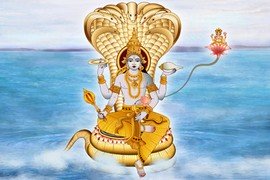
Lord Vishnu is the protector of the entire universe and one of the Trimurti. It is believed that, this visible world is the dream of Lord Vishnu sleeping in Kshirsagar. On this page you can get many information related to Lord Vishnu.
The list of the ten major incarnations of Lord Vishnu and the dates of their birth anniversaries are given on this page. From this page you can also get interesting information about all the incarnations.
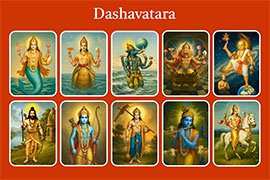
Lord Vishnu keeps taking various incarnations forms from for the welfare of the universe. Here is the ten main incarnations of Lord Vishnu have been described in the religious scriptures as Dashavatara. According to religious scriptures, Kalki incarnation, one of the Dashavatars, is going to appear at the end of the present Kaliyuga.
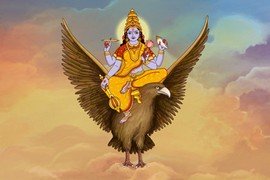
A complete list of Ekadashi dates is given here. Go through the Ekadashi fasting dates list here so that you never miss fasting on Ekadashi. Ekadashi fast is observed with great enthusiasm by the devotees of Lord Vishnu.
ISKCON devotees can get the complete list of ISKCON Ekadashi fasting dates here. This list will prove highly informative and useful to those who observe the fast of Ekadashi as per the ISKCON.
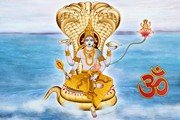
The list of Mantras used in the worship and chanting of Lord Vishnu is available on this page. Some of these Mantras are legendary and some are Vedic. Along with this, the powerful Yantra of Lord Vishnu can also be seen from this page.