



En


Notes: All timings are represented in 24+ hour notation in local time of Lancaster, United States with DST adjustment (if applicable).
Hours past midnight are higher than 24:00 and fall on next day. In Panchang day starts and ends with sunrise.
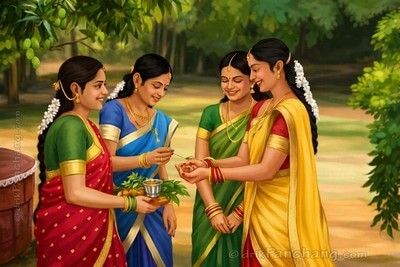
Ugadi is celebrated as the first day of the year by people of southern Indian regions such as Andhra Pradesh and Telangana. On this day new Samvatsara, which is cycle of sixty years, starts. All sixty Samvatsara are identified by unique name.
In Karnataka, Ugadi is celebrated by the name Yugadi. Ugadi is celebrated as Gudi Padwa by the people of Maharashtra. Both Ugadi and Gudi Padwa are celebrated on the same day.
Ugadi is New Year according to Luni-Solar calendar. Luni-Solar calendars consider the position of the Moon and the position of the Sun to divide the year into months and days. The counter-part of Luni-Solar calendar is Solar calendar which considers only position of the Sun to divide the year into months and days. Because of that Hindu New Year is celebrated twice in the year with different names and at two different times of the year. The Hindu New Year based on Solar calendar is known as Puthandu in Tamil Nadu, Bihu in Assam, Vaisakhi in Punjab, Pana Sankranti in Orissa and Naba Barsha in West Bengal.
The day begins with ritual oil-bath followed by prayers. Oil bath and eating Neem leaves are must rituals suggested by scriptures. North Indians don't celebrate Ugadi but start nine days Chaitra Navratri Puja on the same day and also eat Neem with Mishri on the very first day of Navratri.
In a village named Medapuram, located in the Sri Sathya Sai district of Andhra Pradesh, the Ugadi festival is celebrated in a memorable manner by the Madiga community . On the night before Ugadi, a grand procession is taken out from a cave to the temple, carrying the idol of the deity. At the temple, eight guardian families belonging to the Scheduled Caste community remain present as representatives.
On the day of Ugadi, traditionally decorated vehicles such as chariots and bullock carts, adorned with colorful items, move through the village. These chariots circumambulate the temple as a symbol of the festival. During this time, devotees distribute Prasadam. After the procession of vehicles is completed, Panju Seva is performed at midday. Under Panju Seva, devotees clean and purify the path along which the procession had passed the previous night. Thereafter, the festival concludes with the performance of Aarti in the temple.
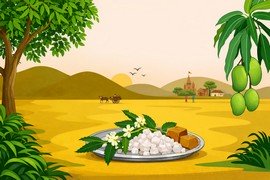
According to the Hindu Panchang, the Shukla Paksha Pratipada of the Chaitra month is celebrated as the first day of the Hindu New Year. In Karnataka and Andhra Pradesh, this day is observed as Ugadi, while in Maharashtra, the festival is popularly known as Gudi Padwa.
Detailed Telugu Month Panchangam with list of Telugu festivals and detailed Daily Panchangam is given on this page. With the help of this Telugu Panchangam, you can know about the day and time of all major Telugu festivals.
Detailed daily Telugu Panchangam is given with various daily auspicious and inauspicious Muhurat including Tithi, Nakshatra, Yoga etc. Various astrological changes occurring throughout the day can be observed through this Daily Panchangam.
A list of all major Telugu festivals celebrated throughout the year is given including Atla Tadde, Nagula Chavithi, etc. Through this list, you can learn about the upcoming festivals and be prepared for the rituals related to them.
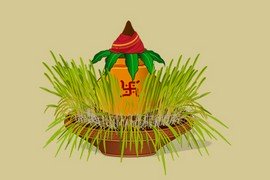
The Auspicious time and Abhijit Muhurat is given for performing Ghatasthapana on Chaitra Navratri. Ghatasthapana is one of the significant rituals during Chaitra Navratri. It marks the beginning of nine days festivity. Ghatasthapana is also known as Kalash Sthapana.
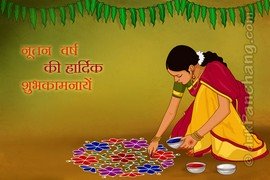
Ugadi, Gudi Padwa and Hindi New Year Greetings are given on this page. These greetings have been presented with beautiful and colorful pictures, through which you can send New Year wishes to your loved ones.
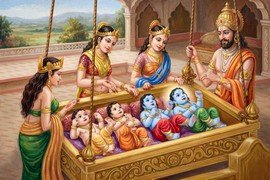
Hindu devotees celebrate the birth anniversary of Lord Rama on Rama Navami. On this day, Lord Ram was born to King Dasharatha and Queen Kaushalya of Ayodhya. Visit this page to know the date and time of the upcoming Rama Navami.
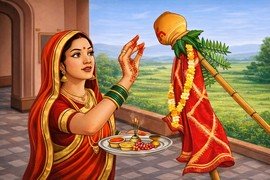
Gudi Padwa or Samvatsar Padvo is celebrated as the first day of the year by Maharashtrians and Konkanis according to Luni-Solar calendar. Gudi Padwa is celebrated as Ugadi by the people of Karnataka and Andhra Pradesh.