



En







Notes: All timings are represented in 12-hour notation in local time of Lancaster, United States with DST adjustment (if applicable).
Hours which are past midnight are suffixed with next day date. In Panchang day starts and ends with sunrise.
According to the Purnimanta Hindu calendar, the Pithori Amavasya Vrat is observed on the Amavasya Tithi of the Bhadrapada month. In regions such as Maharashtra and Gujarat, which follow the Amanta Hindu calendar, this fast is observed on the Amavasya of the Shravana month. Pithori Amavasya is also known as Pithori Amavas or Bhadrapada Amavasya. In some regions, it is referred to as Pola Amavasya, Pithori Amavasya or Matru Amavasya.
This fast is highly popular among Hindu women. According to many ancient folk beliefs, Hindu mothers observe this fast to protect their children from untimely death, planetary afflictions, ancestral issues and obstacles in the family lineage. As described in religious scriptures, performing this fast brings protection for children, progress in the family line, expansion of lineage and peace within the household. The word Pithori is derived from the Sanskrit word Pishtaka, which refers to images, idols or figures made from wheat flour or grain powder. In this fast, mothers create idols of Goddess Pithori, 64 Yoginis and the Sapta Matrika Goddesses using flour and worship them with devotion.
This fast is specifically observed by mothers for the health, prosperity and longevity of their children and for the protection of the family lineage. Since the worship of 64 Yoginis, Sapta Matrika and Goddess Pithori is performed during this fast, it is known as Pithori Vrat. The primary purpose of this fast is to protect children from evil dreams, negative influences and planetary Doshas, to ensure peace and prosperity at home and to receive the blessings of ancestors.
According to the description found in the Vratraja, the Pithori Vrat should ideally be observed on the Pradosha Vyapini Tithi, i.e., Tithi coincides with Pradosh Kaal. If Pradosh Vyapini Tithi is not available, the fast should be observed on the following day. Begin by waking up early, taking a bath and completing all daily morning rituals. Then wear clean clothes and proceed to the Puja area, sitting facing either the east or North direction. While mentioning the month, Paksha and Tithi, take water, flowers and Akshata in hand and recite the following Sankalpa -
"मम इह जन्मनि जन्मान्तरे व सौभाग्यपुत्र पौत्रफलावाप्त्यर्थं पिठोरीव्रतं करिष्ये"
"Mama Iha Janmani Janmantare Va Saubhagyaputra
Pautraphalavaptyartham Pithorivratam Karishye"
Meaning - "For the attainment of happiness, good fortune, children and grandchildren in this life and future births, I undertake the Pithori Vrat."
After taking the Sankalpa, observe a complete day-long fast. In the evening, during Pradosh Kaal, perform the Shodashopachara Puja of the Goddess. Following the Puja, serve food to a Brahmin and a Married Woman. Only after that, the fasting woman may partake in the meal herself. With this, the procedure of the Pithori Vrat as described in the Vratraja is completed.
The traditional and regionally practiced method of observing Pithori Amavasya Vrat is as follows -
In this way, the traditional method of observing the Pithori Amavasya Vrat is fulfilled.
Generally, scriptures like the Vratraja don't specifically mention a Udyapan for this fast, as Pithori Vrat is traditionally observed annually. However, in some regions, women perform Udyapan after observing the fast continuously for 5 or 7 years.

The story of Videha, who was the daughter-in-law of a wealthy Brahmin named Shridhara's and the revival of her eight deceased sons is narrated. For some reason, each of Videha's eight newborn children dies one after another, but by the grace of the 64 Yoginis, they are brought back to life.

A description is given about all the Sapta Matrika Goddesses including Brahmani, Vaishnavi, Maheshvari, and Indrani. In addition to these, two other Matrikas worshipped in Nepal and nearby regions, namely Narasimhi and Vinayaki, are also listed on this page.
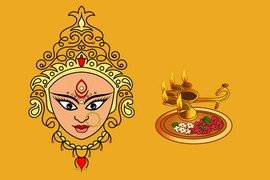
Ambe Tu Hai Jagadambe Kali is the most prevalent and popular aarti dedicated to Goddess Durga. This aarti is also sung in daily worship including on various occasions related to Mother Goddess. This aarti is very sweet and melodious and its singing pleases the Mother Goddess.

All the Amavasya Dates during a year are listed. Amavasya dates are considered very important for performing rituals like Shraddha, Tarpan, etc. for the ancestors. The Moon is not visible in the sky on Amavasya. Many special rituals are performed on Amavasya day.