



En


Notes: All timings are represented in 12-hour notation in local time of New Delhi, India with DST adjustment (if applicable).
Hours which are past midnight are suffixed with next day date. In Panchang day starts and ends with sunrise.
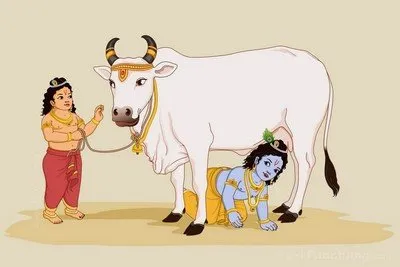
According to the Hindu calendar, Gopashtami is observed on Ashtami Tithi during Kartika Shukla Paksha. On this day, the worship of cows is prescribed. It is famous festival in Mathura, Vrindavan and other Braj areas. Gopashtami is also known as Gopa Ashtami and Goshtha Ashtami.
According to Hindu mythology Lord Krishna lifted Gowardhan hill on His Kanishtha, that is, smaller finger on Gowardhan Puja day to save Braj people from fury of Indra. After seven days of unrelenting flooding of Braj region God Indra accepted his defeat on Gopashtami.
Lord Krishna suggested Braj people to stop annual offering made to God Indra. This angered Indra and he decided to flood Braj region. God Indra was failed in his mission as Braj people and their livestock were protected under the vast cover of Gowardhan hill.
On Gopashtami, cows and their calf are decorated and worshipped. The ritual of worshipping cows and calf is similar to Govatsa Dwadashi in Maharashtra.
Descriptions of Gopashtami are found in texts such as the Kurma Purana, Nirnayamrita and Vrata Parichaya. According to the Kurma Purana, on the morning of Kartika Shukla Ashtami, one should first complete the daily rituals, including bathing, and thereafter bathe the cows.
The cows should then be worshipped with Gandha, Pushpa, Dhupa, Deepa and Naivedya, and should be adorned with various garments and ornaments. Along with the cows, their Gopalas, that is, cowherds, should also be worshipped. Thereafter, Gograsa (गोग्रास) should be offered to the cows, followed by their Pradakshina. One should also walk behind them for some distance according to one's capacity. By doing so, all desired wishes are fulfilled.
Thereafter, in the evening, when the cows return from grazing, they should once again be respectfully welcomed and honored. They should then be worshipped with Panchopachara Puja and offered food. The Charana Raja, i.e., sacred dust from the feet of the cows should be respectfully touched to the head while bowing, and thereafter a Tilak should be applied to the forehead with the same sacred dust. Doing so is believed to increase happiness and good fortune.
One who wishes for the fulfilment of all desires should perform Gau Puja on Kartika Shukla Ashtami according to the above-mentioned Vidhi.
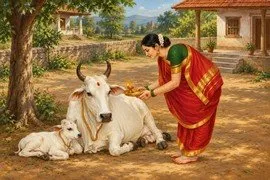
According to the Hindu Panchang, Govatsa Dwadashi is celebrated one day before Dhanteras. On this sacred occasion, cows and their calves are worshipped with devotion. Govatsa Dwadashi Vrat is also known as the Nandini Vrat. On this day, the use of cow's milk-based products is strictly prohibited.
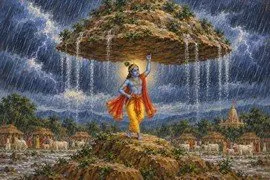
The day, when Lord Krishna defeated Indra, is celebrated as Govardhan Puja or Annakut Puja. This day is also celebrated as Bali Pratipada and New Year day. Pratahkala and Sayankala Govardhan Puja Muhurat is given on this page.
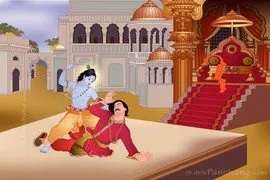
On Kansa Vadha day Kansa was killed by Lord Krishna. Ugrasena was reinstated as the King of Mathura. The event of Kansa Vadh is considered very important day by Chaturvedi community and mainly celebrated in city of Mathura.
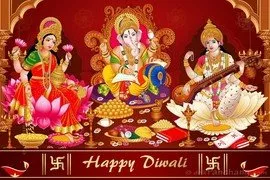
Diwali is the five days festivity period which begins on Dhanteras and ends on Bhaiya Dooj. Diwali Puja Calendar is given on this page, through which you can get detailed information about the Diwali rituals and their auspicious timings.