



En


Notes: All timings are represented in 12-hour notation in local time of Lancaster, United States with DST adjustment (if applicable).
Hours which are past midnight are suffixed with next day date. In Panchang day starts and ends with sunrise.
According to the Hindu Panchang, the New Year begins on Chaitra Shukla Pratipada. This day is celebrated by followers of Hindu Dharma as the first day of the year. On this day, a new Samvatsara commences. A Samvatsara is part of a sixty-year cycle, in which each year has a distinct name. In North India, this day is observed as the Nava Samvatsara or Hindu New Year. In Karnataka and Andhra Pradesh, it is celebrated as Ugadi, while in Maharashtra it is observed as Gudi Padwa.
Generally, it is believed that the New Year begins as soon as the month of Chaitra commences. However, for the purpose of maintaining consistency between the Amanta and Purnimanta Hindu Panchang systems, the New Samvatsara is considered to begin 15 days after the start of Chaitra. In other words, 15 days of the Chaitra month fall in the previous Samvat, and the remaining 15 days fall in the New Samvat.
According to the Hindu Panchang, Chaitra Shukla Pratipada marks the beginning of the New Samvatsara. On this day, householders should install a Dharma Dhvaja, i.e., a religious flag at home according to their tradition. Homes should be decorated with flowers, Toranas and auspicious items. Afterward, one should perform a ceremonial bath using fragrant water, turmeric and sacred substances. Following the bath, worship should be offered to the deities, Brahmin, Guru and the Dharma Dhvaja. Sitting beneath the flag, family members should sing the Dharma Dhvaja song together. Women and children should wear new clothes and ornaments and celebrate joyfully.
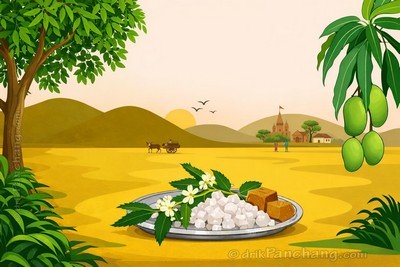
Jyotishacharya Ji, i.e., an astrologer, should be respectfully welcomed, and predictions for the New Samvatsara should be heard from him, including the Raja, Mantri, Senadhipati, etc. In the morning, tender neem leaves and flowers should be brought. These should be mixed with black pepper, Hing, rock salt, Ajwain, cumin, sugar, and a little tamarind, and consumed as Churan. According to tradition, consuming this mixture helps pacify various diseases.
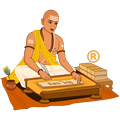
The images of Lord Ganesha, the Brahmin, and the astrologer represented in the Panchang should be worshipped. After the worship, they should be offered sweets and food, along with Dakshina. Charity should be given to the needy according to capacity. Arrangements for drinking water or water stalls should be made if possible. The entire day should be spent joyfully in singing, music, and listening to sacred stories. It is commonly believed that beginning the year with happiness and enthusiasm ensures that the entire year passes in joy and prosperity.
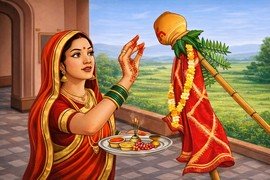
Gudi Padwa or Samvatsar Padvo is celebrated as the first day of the year by Maharashtrians and Konkanis according to Luni-Solar calendar. Gudi Padwa is celebrated as Ugadi by the people of Karnataka and Andhra Pradesh.
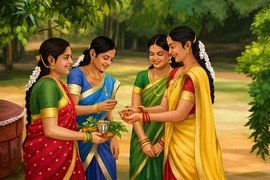
Ugadi marks the beginning of the New Year according to the lunisolar calendar. This festival is also known as Yugadi. In Andhra Pradesh and Telangana, Ugadi is celebrated as a festival on the first day of the year. On this day, a new Samvatsara begins.
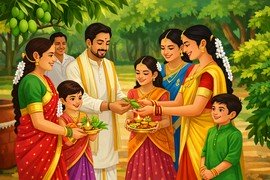
Yugadi is celebrated as the first day of the year by people of Karnataka. On this day the new Samvatsara begins. In Maharashtra, Yugadi festival is celebrated as Gudi Padwa.
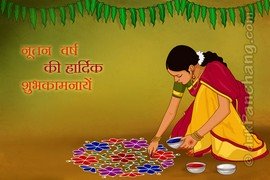
Ugadi, Gudi Padwa and Hindi New Year Greetings are given on this page. These greetings have been presented with beautiful and colorful pictures, through which you can send New Year wishes to your loved ones.
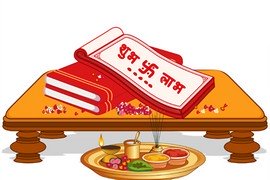
Shukla Paksha Pratipada in the Hindu month of Kartik is celebrated as Nutan Varsh or New Year by Gujarati community. On this occasion, old Chopda, i.e. account books are closed and new account books are worshipped, which is known as Chopda Pujan.
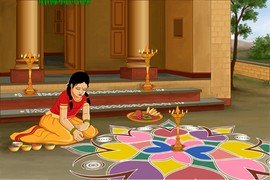
Puthandu is also known as the Tamil New Year or Varusha Pirappu. It is observed on first day of Tamil month Chithirai.
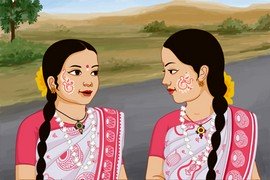
Mesha Sankranti is celebrated as Naba Barsha or Pohela Boishakh in West Bengal
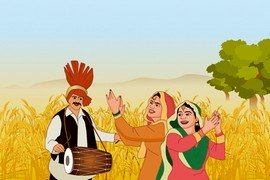
Location based Vaisakhi Sankranti Timings are provided. It's an ancient religious and harvest festival celebrated mainly in Punjab. In the Hindu Solar Calendar, Vaisakhi is also celebrated as the Sikh New Year. Sikh community also celebrate this festival as the foundation day of the Khalsa Panth.
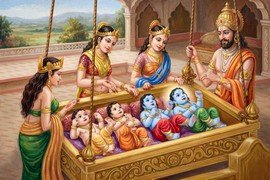
Hindu devotees celebrate the birth anniversary of Lord Rama on Rama Navami. On this day, Lord Ram was born to King Dasharatha and Queen Kaushalya of Ayodhya. Visit this page to know the date and time of the upcoming Rama Navami.
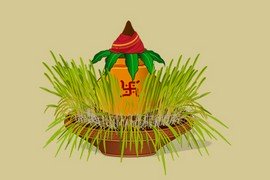
According to Hindu calendar, there are four Navratri festivals yearly. Navratri falls in the Shukla Paksha of Chaitra month is known as Chaitra Rama Navratri. For nine days of Navratri, nine different forms of Mother Goddess, who are called Navadurga, are worshipped.
The Auspicious time and Abhijit Muhurat is given for performing Ghatasthapana on Chaitra Navratri. Ghatasthapana is one of the significant rituals during Chaitra Navratri. It marks the beginning of nine days festivity. Ghatasthapana is also known as Kalash Sthapana.