



En


Notes: All timings are represented in 12-hour notation in local time of Lancaster, United States with DST adjustment (if applicable).
Hours which are past midnight are suffixed with next day date. In Panchang day starts and ends with sunrise.
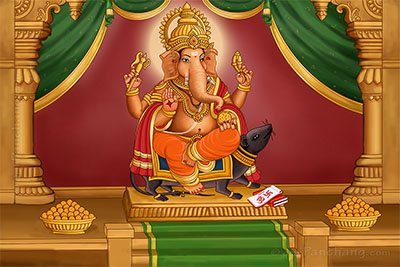
Shukla Paksha Chaturthi of the Margashirsha month is observed as Krichchhra Chaturthi. According to the Skanda Purana, this Vrat should be observed continuously for four years, beginning from Krichchhra Chaturthi and then concluded with a formal Udyapana, i.e., completion ritual. During this observance, Lord Ganesha is worshipped with full devotion. This sacred Vrat of Lord Ganesha is said to be highly powerful, and by observing it faithfully, one attains success and accomplishment in every sphere of life. As Lord Ganesha is the remover of all obstacles, His blessings dispel every form of difficulty and hindrance.
In the first year of the observance, devotees observing the fast should eat once during the day on each Chaturthi. In the second year, they should eat once at night. In the third year, the Vrat should be observed by eating only unsolicited food, known as Ayachita Anna. In the fourth year, complete fasting should be observed, spending the day in the remembrance and chanting of Lord Ganesha's name. After completing the observance for four consecutive years, the Udyapana should be performed. The remaining procedure is similar to that of other Chaturthi fasts.
A simple method of fasting on the day of Margashirsha Shukla Chaturthi has been described. However, there may be minor variations based on regional or family traditions.
This concludes the worship procedure for the Margashirsha Shukla Chaturthi Vrat.
For the Udyapana, an idol of Lord Ganesha made of gold should ideally be used. If this is not possible, an idol may be made from Haridra Churna, i.e., turmeric powder. Draw a lotus design on the ground using colored powders and perform Kalash Sthapana. Place a pot filled with rice over the Kalasha, cover it with two cloths and install the idol of Lord Ganesha upon it. Then perform Shodashopachara Pujan of Lord Ganesha using Dhupa, Dipa, Naivedya, sandal paste, rice grains, flowers, fruits, circumambulation, prostration, and prayers. Offer Modaka or Laddus as Naivedya and keep Jagarana while singing hymns in praise of Lord Ganesha.
The next morning, after bathing and wearing clean clothes, invite a qualified Acharya to perform the Havan. Under the guidance of the Acharya or independently offer Ahuti, i.e., oblations using sesame seeds, rice, barley, yellow mustard seeds, ghee and sugar. Invoke the following sixteen divine names during the Havan - Gana, Ganadhipa, Kushmanda, Tripurantaka, Lambodara, Ekadanta, Rukmadanshtra, Vighnapa, Brahma, Yama, Varuna, Soma, Surya, Hutashana, Gandhamadi and Parameshthi. Precede each name with the sacred syllable Om and the fourth case ending - aya Namah e.g., Om Yamaya Namah।, Om Varunaya Namah।, etc., offering one oblation for each name. Complete the ritual with a final oblation, called Purnahuti.
Afterward, worship the Dikpalas known as guardians of the directions. Offer Laddu and Kheer to 24 Brahmins. As per your capacity, donate a cow and calf to the Acharya and give Dakshina to other Brahmins. Bow to them, circumambulate and respectfully bid them farewell. Finally, partake of sacred food with your family and friends. By performing this Vrat with proper rituals and devotion, the devotee is blessed by Lord Ganesha with prosperity and success in this world and ultimately attains Moksha or liberation.
The story describes how King Ajatashatru attained Yoga Shanti. The Krichchhra Vinayaka Chaturthi Vrat is observed on the Margashirsha Shukla Chaturthi. It is customary to read and listen to the Krichchhra Vinayaka Chaturthi Vrat Katha to receive the complete benefits of this fast.
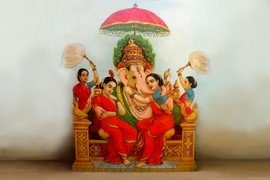
Lord Ganesha is one of the most popular deities in Hindu Dharma. He is revered as Pratham Pujya i.e. He is worshipped first among all the deities. He is worshipped to remove all kinds of obstacles.
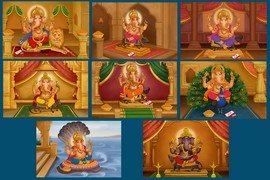
The divine eight incarnations of Lord Ganesha are collectively known as Ashta Vinayaka. Vakratunda, Ekadanta, Mahodara and Gajanana are some popular forms of Ashta Vinayaka.
Ashtottara Shatanamavali of Ganesha is a collection of 108 divine names of Lord Ganesha. One can recite these names to seek the blessings of Lord Ganesha.
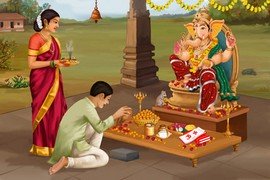
A brief summary on Ganesha Chaturthi is given of this page. It is also known as Vinayaka Chavithi or Vinayagar Chaturthi. Lord Ganesha's devotees keep fast on this day.
Learn how to do Ganesha Murti Sthapana on this page. Chaturthi and Chaturdashi Tithi are considered auspicious to perform the Ganesha Sthapana.
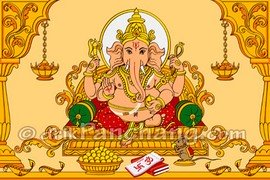
Learn here complete detailed Ganesha Chaturthi Puja Vidhi. It's a Shodashopachara Vinayaka Chaturthi Puja Vidhi with step by step explanation.
Ganesha Anga Puja is usually performed on Ganesha Chaturthi and other festivals related to the Lord Ganesha. Each vital body part of God Ganesha is worshipped with Mantras in Anga Puja.
Ganesha Twenty One Names Puja is also known as Eka-Vimshati Name Puja which is dedicated to the Lord Ganesha who is lord of knowledge and wisdom.
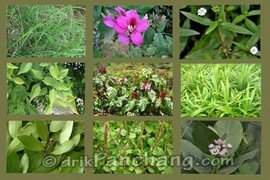
List of 21 Patra for Ganesha Chaturthi Puja is given here. There are 21 types of Patras i.e. leaves which are used for worshipping Lord Ganesha on special occasions.
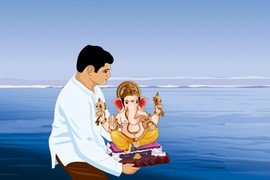
On Ganesha Visarjana day the idol of Lord Ganesha is immersed in water body, usually in lakes or ponds after a large procession. Ananta Chaturdashi is considered the most important day for Ganesha Visarjana.
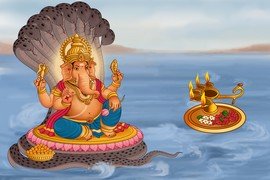
Most popular Aarti dedicated to Lord Ganesha is given with lyrics and recitation video. Devotees sing this Aarti to please Lord Ganesha and seek his blessings.
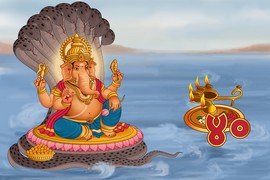
'Ganesha Chalisa' is a hymn composed of 40 Chaupais in the praise of Lord Ganesha. One can get rid of all the obstacles by reciting Ganesha Chalisa.
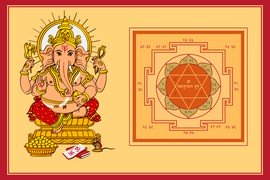
Some of the most important Ganesha Mantras are listed here. A powerful Ganesha Yantra is also given which one can keep at one's home or office at the place of worship.
'Vakratunda Mahakaya' Mantra is one of the most significant and popular Mantras of Lord Ganesha. Lord Ganesha gets easily pleased by chanting this Mantra.
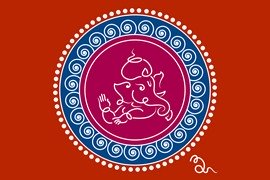
Simple and beautiful Ganesha Rangoli designs are given on this page. These Rangoli can be used on various special occasions related to Lord Ganesha.
Here you can send E-cards of Lord Ganesha to your loved ones. There are so many beautiful and artistic E-cards which are available on this page.
Share these amazing Ganesha Chaturthi Messages with your friends and family on the auspicious occasions of Ganesha Chaturthi.
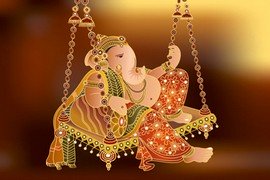
Kerala Ganesha Chaturthi is celebrated on Shukla Paksha Chaturthi in Chingam Masam as per the Malayalam Calendar. People worship Lord Ganesha on this day.