



En



In Hinduism, the River Ganga is regarded as extremely sacred and meritorious, and She is worshipped in the form of Goddess Ganga. Her devotees lovingly address Her as Maa Ganga. According to descriptions found in Hindu scriptures, Ganga is known as Mandakini in the heavenly realms and as Bhagirathi in the netherworld. The earliest reference to Goddess Ganga is found in the Rigveda, where She is described as the most sacred of rivers. The glory of Goddess Ganga is elaborated upon in various ancient texts, including the Ramayana and the Mahabharata. Among the general populace as well, many beliefs and traditions associated with Goddess Ganga are widely prevalent.
Followers of Hinduism customarily immerse the remaining ashes of their deceased relatives into the River Ganga after performing the final rites. According to prevailing beliefs, immersing the ashes in the Ganga grants Moksha, i.e., liberation to the departed soul, freeing it from the cycle of birth and death and allowing it to merge into the divine feet of the Supreme Lord.
Hindus believe that bathing in the sacred waters of the Ganga washes away all sins and renders a person completely pure. Throughout the year, there are many auspicious occasions when bathing in the Ganga yields immeasurable spiritual merit. Even acts such as charity, sacrificial rituals, Yajnas, chanting and penance performed on the banks of the Ganga bear manifold results. The Ganga is an inseparable part of Indian civilization, culture and society. Many sacred cities, such as Haridwar, Prayagraj and Varanasi, are situated on the banks of the holy Ganga.
According to the Ramayana, Goddess Ganga was born to the King of Mountains, Himavana, as his first daughter and She is described as the sister of Goddess Parvati. Some other religious texts state that Goddess Ganga manifested from the sacred feet of Lord Vishnu.
According to ancient legends related to the descent of Goddess Ganga, there once lived a king named Sagara, who had sixty thousand sons. One day, King Sagara organized a great Yajna, i.e., sacrificial ritual to establish his supremacy over the celestial realms. A sacrificial horse was required for the ritual. Devaraja Indra, the king of the Gods, stole the horse meant for the Yajna and hid it. King Sagara sent all his sons in search of the horse. Eventually, they found the horse in the netherworld, tied near the hermitage of Sage Kapila. Seeing the horse there, Sagara's sons concluded that the sage had stolen it and began insulting him with harsh words. Sage Kapila had been deeply immersed in penance for thousands of years. As soon as he opened his eyes, a fierce divine fire emanated from them, instantly reducing all sixty thousand sons of King Sagara to ashes.
Because they were incinerated by the divine fire of Sage Kapila, the sons of King Sagara could not receive proper funerary rites according to sacred injunctions. As a result, their souls wandered in restless states such as spirits. Sagara's grandson Anshuman performed severe penance for the liberation of his ancestors' souls. After him, his son King Dilipa also undertook intense austerities, but without success. Later, Bhagiratha, the son of King Dilipa's second wife, vowed to bring Maa Ganga down to the earth for the salvation of his ancestors and immersed himself in deep penance.
Bhagiratha performed austerities for many years to please Lord Brahma so that Goddess Ganga might descend to Earth. Pleased by his devotion, Lord Brahma appeared before him and asked him to seek a boon. Upon beholding Lord Brahma, Bhagiratha requested that Goddess Ganga be sent to Earth to liberate his ancestors. Goddess Ganga then expressed Her concern that if She descended directly from such a great height, the Earth would not be able to withstand Her immense force, potentially causing imbalance in nature.
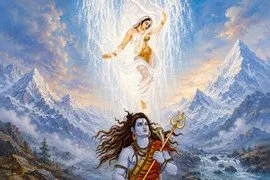
To resolve this dilemma, Bhagiratha prayed to Lord Shiva and requested Him to provide a solution. Lord Shiva held Goddess Ganga in His matted locks, restraining Her immense force and then released Her gently through a single lock of hair. Thus, the pure, sacred and uninterrupted stream of the Ganga began to flow continuously on Earth. Bhagiratha proceeded onward and the river followed him all the way to the confluence at Ganga Sagara. There, the sons of King Sagara and the ancestors of Bhagiratha attained liberation. By the divine touch of Lord Shiva, Goddess Ganga became even more sacred and began eradicating the sins of all living beings.
The father of Goddess Ganga was the King of Mountains, Himavana, and Her mother was Menavati. However, She was nurtured under the protection of Lord Brahma. Thus, Goddess Parvati is the sister of Goddess Ganga and She also has a brother who is renowned throughout the worlds as Mount Mainaka. According to descriptions in the Hindu epic Mahabharata, Goddess Ganga married King Shantanu, with whom She had a son named Devavrata. Later, due to his vow of lifelong celibacy, Devavrata became famously known as Bhishma.
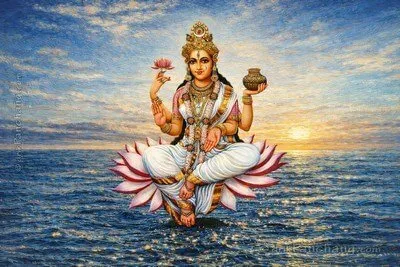
Goddess Ganga is fair-complexioned and is depicted wearing white garments. She is shown seated upon a beautiful Makara, i.e., mythical aquatic creature or crocodile, with a serene and peaceful expression on Her face.
देवी सुरेश्वरी भगवती गंगे त्रिभुवनतारिणि तरलतरङ्गे।
शंकरमौलिविहारिणी विमले मम मतिरास्तां तव पदकले॥1॥
Devi Sureshvari Bhagavati Gange Tribhuvanatarini Taralatarange।
Shankaramauliviharini Vimale Mama Matirastam Tava Padakale॥1॥
Meaning, Salutations to Goddess Ganga. O Divine Mother, supreme among Goddesses, your compassionate waves liberate the three worlds. O pure, stainless, supremely sacred one who adorns the crown of Lord Shiva, may my mind remain firmly devoted to your lotus feet forever.
ॐ नमो गंगायै विश्वरुपिणी नारायणी नमो नमः॥
गंगागंगेति योब्रूयाद् योजनानां शतैरपि।
मच्यते सर्व पापेभ्यो विष्णुलोकं स गच्छति॥
Om Namo Gangayai Vishvarupini Narayani Namo Namah॥
Gangagangeti Yobruyad Yojananam Shatairapi।
Machyate Sarva Papebhyo Vishnulokam Sa Gachchhati॥
(स्कन्दपुराणान्तर्गत, धर्मारण्य खण्ड)
(From Skanda Purana, Dharmaranya Khanda)
गांङ्गं वारि मनोहारि मुरारिचरणच्युतम्॥
त्रिपुरारिशिरश्चारि पापहारि पुनातु माम्॥
Ganngam Vari Manohari Muraricharanachyutam॥
Tripurarishirashchari Papahari Punatu Mam॥
(महर्षि वाल्मीकि कृत गंगाशतकम् से उद्धृत)
(From Maharshi Valmiki Krita Gangashatakam)
Ganga Gayatri Mantra -
ॐ भगीरथी च विद्महे विष्णुपत्न्यै च धीमहि।
तन्नो गङ्गा प्रचोदयात॥
Om Bhagirathi Cha Vidmahe Vishnupatnyai Cha Dhimahi।
Tanno Ganga Prachodayata॥
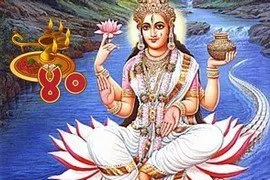
Ganga Chalisa is an emotional prayer written in 40 verses. Reading it increases the feeling of devotion and gratitude towards Mother Ganga. According to Hindu religion, bathing in Ganga destroys even the biggest sins.
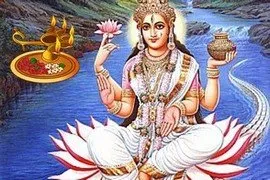
The Aarti of Goddess Ganga is given with Hindi lyrics and recitation video. This is a popular Aarti that is sung daily during Aarti on the banks of Gangaji. This Aarti is sung to please Gangaji.
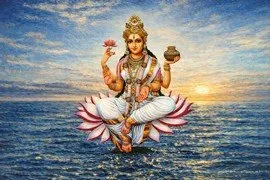
Ashtottara Shatanamavali of Goddess Ganga, containing the above names and Mantras, is given on this page. These Mantras are chanted to obtain the grace and blessings of Goddess Ganga and to please Her.

Sahasranamavali of Goddess Ganga, containing the above names and Mantras, is given on this page. These Mantras are chanted on various occasions related to Goddess Ganga as well as during daily worship.

Shri Gangashtakam, dedicated to Goddess Ganga, is given along with Sanskrit lyrics and recitation video. Devotees of Goddess Ganga recite this Ashtakam to attain Her divine grace and blessings.
Ganga Mata Stotram, dedicated to Goddess Ganga, is given with Sanskrit lyrics and recitation video. This Stotram is extremely melodious and is prominently recited during the worship of Goddess Ganga.

Ganga Dussehra Stotram dedicated to Goddess Ganga is given with Sanskrit lyrics and recitation video. Reciting this Stotram during Ganga Dussehra is considered highly meritorious.