



En


Sankatahara Ganapati is the thirty-second and final form among the 32 forms of Lord Ganesha described in Hindu scriptures. In the sacred text Tattvanidhi, this form is referred to as Sankashtahara Ganapati. Descriptions of the 32 forms of Lord Ganesha are also found in the Ganesha Purana and Mudgala Purana. Devotees worship these different forms of Lord Ganesha with devotion for the fulfillment of their specific wishes and aspirations.
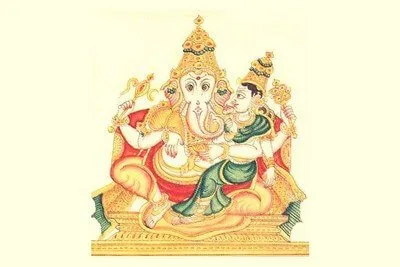
The word Sankata means crisis, distress or adversity, while Hara means the one who removes or destroys. Thus, Sankatahara Ganapati is the form of Lord Ganesha who removes all kinds of difficulties and troubles from the lives of His devotees. In times of hardship, Lord Sankatahara Ganapati grants strength, protects His devotees and blesses them with happiness and prosperity.
According to Hindu Vedic astrology, Revati Nakshatra is associated with the Sankatahara Ganapati form of Lord Ganesha. Therefore, worship of Sankatahara Ganapati is recommended for the removal of afflictions related to Revati Nakshatra and for the attainment of auspicious results.
Sankatahara Ganapati is described as having a complexion like that of Lord Surya, radiating a deep red glow. He is adorned with rare golden ornaments and wears blue garments. He is seated on a red lotus in Chaturbhuja Rupa, i.e., a four-armed form. His divine Shakti, depicted as a green-complexioned Goddess, is seated on His lap. In three of His hands, Lord Sankatahara Ganapati holds Pasha, i.e., a noose, Ankusha, i.e., a goad and a vessel filled with Payasa, i.e., Kheer, while His fourth hand is shown in Varada Mudra, granting boons to His devotees.
Shri Sankatahara Ganapati is another form of Lord Ganesha, and therefore His family is the same as that of Lord Ganesha. His father is Lord Shiva and His mother is Goddess Parvati. Lord Kartikeya is His brother and Ashoka Sundari is His sister.
Mula Mantra -
ॐ सङ्कटहर गणपतये नमः।
Om Sankatahara Ganapataye Namah।
Dhyana Mantra -
अथ संकष्टहरगणपतिध्यानम् -
बालार्कारुणकांतिर्वामेबालांवहन्नंके॥
लसदिंदीवरहस्तांगौरांगींरत्नशोभाढ्याम्॥1॥
दक्षेंकुशवरदानंवामेपाशंचपायसंपात्रम्॥
नीलांशुकलसमानः पीठेपद्मारुणेतिष्ठन्॥2॥
संकटहरणःपायात्संकटपूगाद्गजाननोनित्यम्॥ रक्तवर्णः॥
Atha Sankashtaharaganapatidhyanam -
Balarkarunakantirvamebalamvahannanke॥
Lasadindivarahastangauranginratnashobhadhyam॥1॥
Dakshemkushavaradanamvamepashanchapayasampatram॥
Nilanshukalasamanah Pithepadmarunetishthan॥2॥
Sankataharanahpayatsankatapugadgajananonityam॥ Raktavarnah॥
Padachchheda -
बालार्कारुणकांतिर्वामे बालां वहन्नंके
लसदिंदीवरहस्तां गौरांगीं रत्नशोभाढ्याम्।
दक्षेंकुशवरदानं वामे पाशं च पायसं पात्रं
नीलांशुकलसमानः पीठे पद्मारुणे तिष्ठन्॥
संकटहरणः पायात् संकटपूगाद्गजाननो नित्यम्।
Balarkarunakantirvame Balam Vahannanke
Lasadindivarahastam Gaurangim Ratnashobhadhyam।
Dakshemkushavaradanam Vame Pasham Cha Payasam Patram
Nilanshukalasamanah Pithe Padmarune Tishthan॥
Sankataharanah Payat Sankatapugadgajanano Nityam।
Meaning - "May the red-complexioned Sankatahara Ganapati, who shines with the radiance of the rising sun, who bears a fair-complexioned Goddess seated on His left side, whose hands resemble blue lotuses and who is adorned with precious jewels, who holds a goad and displays Varada Mudra in His right hands, and who holds a noose and a vessel of Payasa in His left hands, who is clad in blue garments and seated upon a red lotus throne, always protect us and remove all troubles and hardships from our lives."
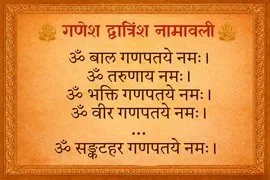
Dwatrinsha Namavali of Lord Ganesha is provided with Hindi meanings. These names are chanted to seek the blessings of Lord Ganesha.
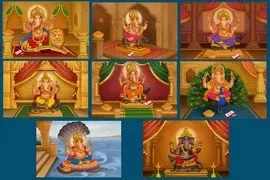
The divine eight incarnations of Lord Ganesha are collectively known as Ashta Vinayaka. Vakratunda, Ekadanta, Mahodara and Gajanana are some popular forms of Ashta Vinayaka.
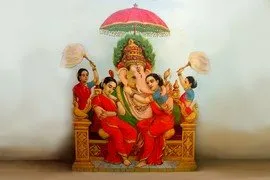
Lord Ganesha is one of the most popular deities in Hindu Dharma. He is revered as Pratham Pujya i.e. He is worshipped first among all the deities. He is worshipped to remove all kinds of obstacles.
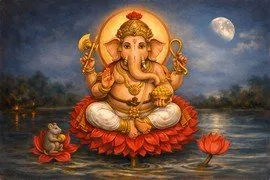
In the Hindu calendar, there are two Chaturthi in every lunar month, out of which the Chaturthi of Krishna Paksha that comes after the full moon is called Sankashti Chaturthi. The fast of Sankashti Chaturthi is more popular in western and southern region of India, especially in Maharashtra and Tamil Nadu.
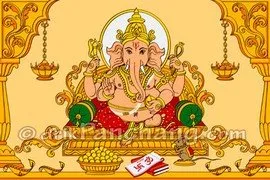
In the Hindu calendar, there are two Chaturthi in every lunar month. The Chaturthi of Shukla Paksha that comes after Amavasya is called Ganesha Chaturthi. In Kerala, Ganesha Chaturthi is celebrated in Chingam Masam during Shukla Paksha Chaturthi and might fall in Shravana month.
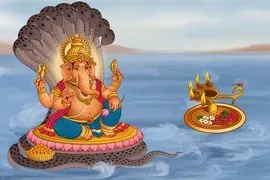
Most popular Aarti dedicated to Lord Ganesha is given with lyrics and recitation video. Devotees sing this Aarti to please Lord Ganesha and seek his blessings.
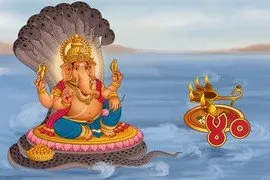
'Ganesha Chalisa' is a hymn composed of 40 Chaupais in the praise of Lord Ganesha. One can get rid of all the obstacles by reciting Ganesha Chalisa.
This is a very melodious and popular Aarti dedicated to the Vinayaka form of Lord Ganesha. This Aarti is sung on various occasions related to Lord Ganesha.
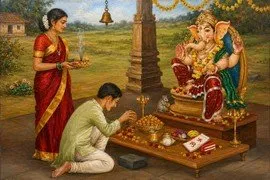
According to Hindu calendar, Shukla Paksha Vinayaka Chaturthi of the Bhadrapada month is known as Ganesha Chaturthi. The birth anniversary of Lord Ganesha is celebrated as Ganesha Chaturthi. Lord Ganesha is worshipped as the God of wisdom, prosperity and good fortune.
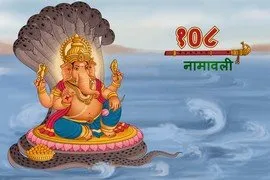
Ashtottara Shatanamavali of Ganesha is a collection of 108 divine names of Lord Ganesha. One can recite these names to seek the blessings of Lord Ganesha.