



En




Notes: All timings are represented in 12-hour notation in local time of Lancaster, United States with DST adjustment (if applicable).
Hours which are past midnight are suffixed with next day date. In Panchang day starts and ends with sunrise.
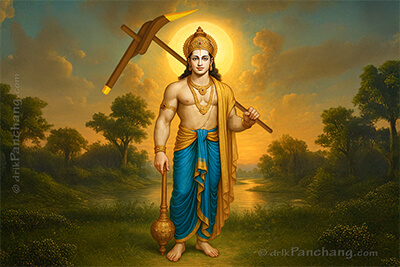
According to the ISKCON calendar, the Appearance Day of Lord Balarama is observed on the Purnima Tithi of Shridhara Masa, i.e. the month of Shravana. The birth anniversary of Lord Balarama is celebrated as Balarama Appearance Day or Balarama Jayanti. Among the followers of ISKCON, Balarama Appearance Day is also known as Balarama Purnima.
However, according to the description found in Garga Samhita, Lord Balarama was born on Bhadrapada Shukla Shashthi, under Swati Nakshatra, on a Wednesday. At the ancient Shri Dauji Maharaj Temple situated in Baladeva village of Mathura district, Balarama Jayanti is celebrated on Bhadrapada Shukla Shashthi.
According to one of the prevalent traditions concerning the incarnations of Lord Vishnu, Lord Balarama is worshipped as the eighth incarnation of Lord Vishnu. Hence, this auspicious day is celebrated with great joy by the followers of the Vaishnava Sampradaya.
Lord Balarama is also worshipped as an Avatar of Adishesha, the serpent on which Lord Vishnu rests. Lord Balarama is also known by various names such as Baladeva, Balabhadra and Halayudha.
Lord Balarama carries Hala, i.e., a plough as His divine weapon. Hence, He is known by names such as Halayudha and Haladhara. In Bihar, Nepal and various other regions, a festival known as Hala Shashthi is observed two days before Krishna Janmashtami. This festival is also considered associated with Lord Balarama. On the day of Hala Shashthi, mothers observe Vrat for the well-being, prosperity and good fortune of their children. During this Vrat, the consumption of grains and other food items obtained from land ploughed with a Hala is considered strictly prohibited.
The festival of Balarama Purnima holds great religious significance in the ISKCON tradition. On this occasion, a divine Abhisheka of Lord Balarama and Shri Krishna is performed in ISKCON temples during the morning with Panchamrita, Panchagavya, coconut water and various sacred herbs.
Thereafter, while reciting the verses of Purusha Suktam, Shri Krishna-Balarama are again ceremonially bathed with pure water from 108 Kalasha. Subsequently, various fragrant flowers are showered upon both the Lords and Maha Aarti is performed.
In addition, Chhappan Bhoga, consisting of fifty-six varieties of delicacies, is offered to the Lord. Special Jhankis of Lord Balarama are arranged along with Bhajan and Kirtan. Followers of ISKCON also observe a day-long Vrat on this occasion.
According to Gaudiya Vaishnava philosophy, Lord Balarama is regarded as the original spiritual master and the source of spiritual strength. At Shri Jagannatha Puri, Lord Balarama is worshipped as one of the three principal Deities. In the Jagannath tradition, Lord Balabhadra, Goddess Subhadra and Lord Jagannatha are worshipped together.
Lord Balarama was the elder brother of Lord Shri Krishna. During their childhood, Kansa repeatedly sent various demons with the intention of killing Lord Krishna. While protecting Krishna Ji from such demons, Lord Balarama slew the demons Dhenukasura and Pralambasura. On various occasions, Lord Balarama displayed His immense strength, courage and valour.
In ancient times, when Shamba, the son of Shri Krishna, was captured by the Kaurava army while abducting Lakshmana, the daughter of Duryodhana, Lord Balarama Himself secured his release. Lord Balarama also accompanied Shri Krishna during the search for the Syamantaka Mani.
According to Pauranic references, when the time approached for the conclusion of Lord Balarama's earthly Leela, a huge serpent emerged from His divine mouth and entered the ocean at Prabhasa Kshetra. Thus, Lord Balarama concluded His earthly Leela and departed for Goloka Dhama.
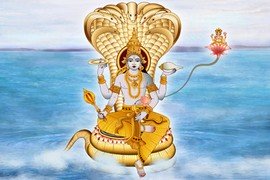
ISKCON devotees can get the complete list of ISKCON Ekadashi fasting dates here. This list will prove highly informative and useful to those who observe the fast of Ekadashi as per the ISKCON.

Vaishnava & ISKCON Day Panchang is given here. Various important information like sunrise, sunset, moonrise, moonset, Nakshatra, Yoga, Tithi, Paksha and month etc. are listed in the given Dainika Panchang.
List of ISKCON Festivals is given in this ISKCON Festivals Calendar. One can know about the each and every important festival fall during the year with the help of this calendar. Appearance and Disappearance Days of various saints are also listed.
ISKCON Calendar and Vaishnava Monthly Calendar created by Drik Panchang Software is given on this page. The ISKCON Monthly Calendar presented here contains a detailed Panchang with important festivals and days month wise.
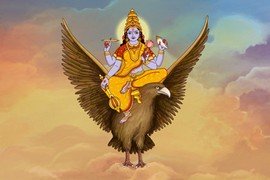
Aarti is one of the most important rituals of worshipping any deity. Ekadashi Aarti is a prayer dedicated to Goddess Ekadashi. This Aarti can be sung during Ekadashi fasting and on various occasions related to Ekadashi.

Learn about the food during Ekadashi Fasting. Being careful while eating anything during the Ekadashi fast is highly important. Devotees can know here what they can eat and what they should avoid eating during Ekadashi fasting.
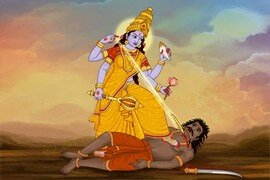
Goddess Ekadashi is considered as the Yoga Maya of Lord Vishnu. Utpanna Ekadashi is the greatest Ekadashi of all. On this day, Goddess Ekadashi was manifested to kill demon named Mura.

It is believed that Vaikuntha Dwaram is opened on this day and devotees who observe fast on Vaikuntha Ekadashi attain salvation. This is a popular Ekadashi in Tamil calendar. Vaikuntha Ekadashi is also known as Mukkoti Ekadashi.
ISKCON Pandava Nirjala Ekadashi Vrat Day and the Parana Time to break the fast is given on this page. ISKCON and its followers use Gaurabda calendar to calculate the Ekadashi days and the time to break the fast.
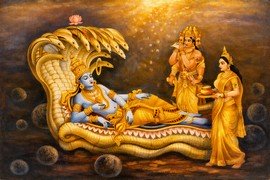
The date and time of fasting for ISKCON Utthana Ekadashi Vrat is given. All the temples associated with ISKCON organization and their devotees determine the day of Ekadashi according to the Gaurabda calendar.
Date of ISKCON Utpanna Ekadashi fast and the Parana Time is given. Ekadashi fast is considered very important in ISKCON. Utpanna Ekadashi day is also considered best for beginning Ekadashi fast for the first time.