







Notes: All timings are represented in 12-hour notation in local time of Lancaster, United States with DST adjustment (if applicable).
Hours which are past midnight are suffixed with next day date. In Panchang day starts and ends with sunrise.
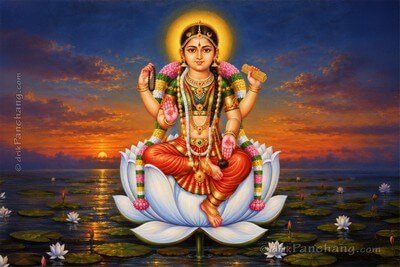
Lalita Panchami is a fasting day for Goddess Lalita and also known as Upang Lalita Vrat. Upang Lalita Vrat is observed on the fifth day of Sharad Navratri. Goddess Lalita is also known as Tripura Sundari and Shodashi and one of the 10 Mahavidya. Fasting on Lalita Panchami is more famous in Gujarat and some parts of Maharashtra.
According to the description found in the Vrataraja, Upang Lalita Vrat should be observed on the Panchami Tithi of the Shukla Paksha in the Ashwina month. This Vrat should be observed when the Panchami Tithi prevails during midday, i.e., Madhyahnavyapini. If Panchami prevails during Madhyahna on both days, or if it does not prevail during Madhyahna on either day, then the Vrat should be observed on the first day. However, Bhurijanma states that Upang Lalita is a Shakti Goddess; therefore, the Panchami prevailing during the night, i.e., Ratrivyapini should be preferred for Her worship. Nevertheless, no specific mention regarding the time of worship is found in the Upang Lalita Vrat Katha.
A detailed analysis on this subject is given in the Vrataraja, but its conclusion is that a Tithi prevailing during the night is accepted for observances in which Jagarana, i.e., night vigil is the primary ritual. Since Upang Lalita Vrat is not principally associated with night vigil, it should be observed on the Madhyahnavyapini Panchami Tithi. Furthermore, the book Vrat Parichaya, citing the Krityaratnavali, states that the Panchami prevailing during the night is accepted for Upang Lalita Vrat. On this occasion, Arghya is offered at moonrise during the night, and the Goddess is ceremonially immersed on the following day.
In the Skanda Purana, Lord Kartikeya describes the procedure of Upang Lalita Vrat and says - "O Tapodhana! I will now explain the procedure of Upang Lalita Vrat. Please listen attentively -
This Vrat should be observed on the Shukla Panchami of the Ashwina month. However, it should not be performed if there is thunder during twilight or if there is an increase or decrease in the duration of the day. After becoming pure, free from attachment, and completing the daily rituals, one should go to a forest and offer the following prayer to the Apamarga plant -
आयुर्बलं यशो वर्चः प्रजाः पशुवसूनि च।
ब्रह्म प्रज्ञां च मेधां च त्वं नो देहि वनस्पते॥
Ayurbalam Yasho Varchah Prajah Pashuvasuni Cha।
Brahma Prajnam Cha Medham Cha Tvam No Dehi Vanaspate॥
Meaning - "O Vanaspati! O divine plant! Grant us longevity, strength, fame, brilliance, progeny, cattle, and wealth. Bestow upon us Brahma Jnana, Prajna, i.e., wisdom and discernment, and Medha, i.e., retentive power and sharp intellect."
Thereafter, do Prarthana, i.e., pray to Goddess Upang Lalita by reciting the following Mantra -
अपामार्गसमुद्भव तैर्दन्तकाष्ठैः करोम्यहम्।
दन्तानां धावनं मातः प्रसन्ना भव सर्वदा॥
Apamargasamudbhava Tairdantakashthaih Karomyaham।
Dantanam Dhavanam Matah Prasanna Bhava Sarvada॥
Meaning - "O Divine Mother! With the sacred tooth-sticks obtained from the Apamarga tree, I cleanse my teeth. Kindly remain ever gracious and pleased with me."
After offering this prayer, one should prepare 48 or 8 Datuna, i.e., tooth-sticks according to the prescribed procedure and take them to a pond or river. Thereafter, brush the teeth while reciting the following Danta Dhavana Mantra -
मुखदुर्गन्धिनाशाय दन्तानां च विशुद्धये।
ष्ठीवनाय च गात्राणां कुर्वेऽहं दन्तधावनम्॥
Mukhadurgandhinashaya Dantanam Cha Vishuddhaye।
Shthivanaya Cha Gatranam Kurveaham Dantadhavanam॥
Meaning - "I perform Dantadhavana, i.e., cleaning of the teeth to eliminate bad breath, purify the teeth, and maintain the cleanliness and health of the body."
After brushing, one should perform ablutions and then bathe. Thereafter, wear Ahata Vastra, that is, an unstitched garment, and return home. At home, a small and beautiful Madapika, i.e., pavilion should be prepared at a sacred place, and an image of the Goddess made of gold should be installed therein with proper Mantras according to one's capacity. With one-pointed devotion, worship the Divine Mother through Shodashopachara Puja accompanied by the recitation of Mantras.
The Goddess should especially be worshipped with Durva grass. Twenty Vadas should be offered as Bayana to the Acharya. Thereafter, after listening to the Upang Lalita Vrat Katha, one should silently partake of food with relatives and kinsmen, in a number corresponding to the Vadas offered in the Bayana. A Jagarana, i.e., night vigil should be observed with dance, singing, and musical instruments. In the morning, after worshipping the Goddess, She should be ceremonially immersed with Visarjana while praying - "O Mother! Kindly bless me and return to Your abode." Thereafter, the officiating Acharya and Guru should be offered Dakshina according to one's capacity.
According to the descriptions found in the Skanda Purana and the Vrataraja, one should first formally appoint an Acharya and then appoint twenty Ritvija, i.e., Vedic priests who perform Yajnas. Thereafter, the place of worship should be plastered with cow dung and a sacred Mandala should be drawn. Then, Brahma and other Deities should be invoked and worshipped with the proper recitation of Mantras. Goddess Lalita should be installed upon an unbroken and pure Kalasha and worshipped according to the prescribed procedure. After observing a night vigil, a Homa should be performed in the morning.
Thereafter, the observer of the Vrat should offer one hundred and eight oblations using pieces of pure sugarcane along with sesame seeds or Kheer and then perform Bali. 20 Vataka, that is, Vadas made of black gram, should be placed in a bamboo vessel and offered as Vayana. Thereafter, the Acharya should be honored with garments, ornaments, and a cow. Similarly, the Ritvija should also be presented with Dakshina, garments, and Kalasha.
Afterwards, after performing the Visarjana, Puja Pitha, i.e., the worship seat should also be offered to the Acharya. Brahmins should be fed with devotion, including Payasa, i.e., Kheer. Thereafter, after obtaining the blessings and permission of the Brahmins, one should dine along with all relatives and kinsmen. Thus concludes the Udyapana Vidhi of Upang Lalita Vrat as described in the Shri Skanda Purana.
According to the description found in the Vrat-Parichaya, on the day of Upang Lalita Vrat, the observer should take 21 Datuna sticks of Apamarga, i.e., Achyranthes aspera and, while reciting the following Mantra, use them one by one before taking a bath -
आयुर्बलं यशो वर्चः प्रजाः पशुवसूनि च।
ब्रह्म प्रज्ञां च मेधां च त्वं नो देहि वनस्पते॥
Ayurbalam Yasho Varchah Prajah Pashuvasuni Cha।
Brahma Prajnam Cha Medham Cha Tvam No Dehi Vanaspate॥
Meaning - "O Vanaspati! Kindly bless me with longevity, strength, vigor, fame, progeny, cattle, wealth, Brahma Jnana, and wisdom."
After bathing, one should wear white garments. Thereafter, Goddess Upang Lalita in Her golden form should be worshipped according to the prescribed procedure. At moonrise during the night, Arghya should be offered to Her. After observing a Nakta Vrat with devotion, the Goddess should be ceremonially immersed on the following day. Thus concludes the brief procedure of Upang Lalita Vrat.

Lalita Panchami Vrat Katha, based on the Brahmin sons named Gopati and Shripati and their wicked uncle, is given here. This Katha is traditionally recited and listened to on the occasion of Lalita Panchami. Lalita Panchami is also known as Upang Lalita Vrat, and this story is referred to as the Upang Lalita Vrat Katha.
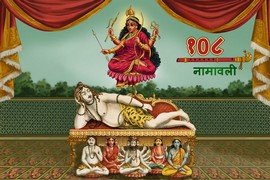
Mantras and Names of Goddess Shodashi are given. The collection of these names is also Ashtottara Shatanamavali of Shodashi
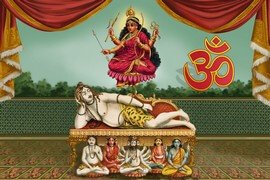
A list of Shodashi Sadhana Mantras including Panchakshara Shodashi Mantra, Shadakshara Shodashi Mantra, Vinshatyakshara Shodashi Mantra and Tripura Gayatri Mantra is given. Devi Shodashi is the third among the ten Mahavidyas.
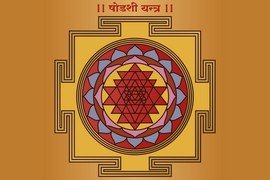
Devi Shodashi Yantra is given with the Shodashi Moola Mantra. Shodashi Yantra along with the Moola Mantra is considered to be a very effective medium for completing Shodashi Sadhana. Devi Shodashi is the third Mahavidya out of the ten Mahavidyas.
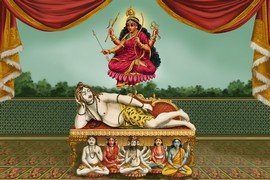
Goddess Shodashi is the Third Mahavidya among the ten Mahavidyas and is considered to be a form of Goddess Parvati. Devotees of Goddess Shodashi also address Her by names like Mahatripura Sundari, Lalita, Balapanchadashi and Rajrajeshwari.
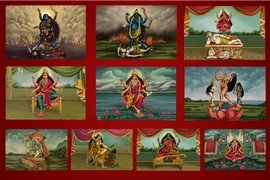
The 10 main forms of Goddess Shakti are worshipped as Dasha Mahavidya. The Dasha Mahavidyas are the presiding powers of different directions. Through the worship and Sadhana of Dasha Mahavidya, spiritual seekers attain various types of Siddhis.
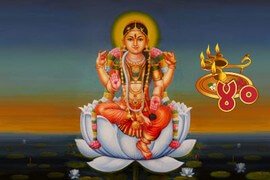
Devi Lalita Chalisa with Hindi lyrics and recitation is given. A hymn consisting of 40 verses is called Chalisa.
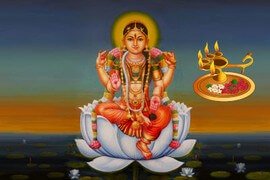
It's a very popular Aarti dedicated to Goddess Lalita, which is sung on various occasions related to Goddess Lalita.
The complete schedule of Durga Puja has been published here. Durga Puja is an important Hindu festival, which is also popular by the names of Durgotsava and Shardotsava. On the auspicious occasion of Durga Puja, special Navadurga forms of Goddess Maa Durga is worshipped.
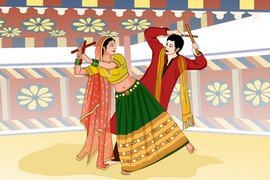
Due to being related to Sharada Ritu, Ashwina Navratri is also called Sharadiya Navratri. Worshippers of Goddess Durga from all over the world wait for this festival, due to which this Navratri is very popular, hence it is also called 'Maha Navratri'. On this page, you will find the days of Sharadiya Navratri festival and other important information.
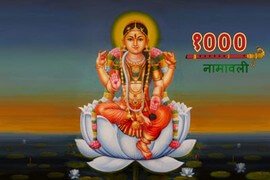
Mantras and Names of Goddess Lalita are given. These names are also known as Sahasranamavali of Goddess Lalita. Goddess Lalita is one of the ten Mahavidyas and this Sahasranamavali is chanted to please Her.