



En




Notes: All timings are represented in 12-hour notation in local time of Lancaster, United States with DST adjustment (if applicable).
Hours which are past midnight are suffixed with next day date. In Panchang day starts and ends with sunrise.
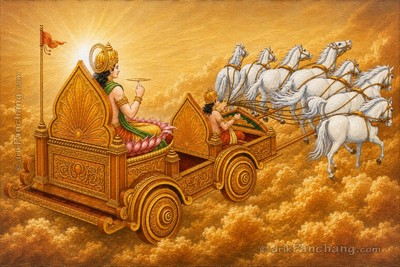
Karka Sankranti marks the southern journey of Lord Surya. Dakshinayana, which is a period of six months, starts with Karka Sankranti. Karka Sankranti is the counterpart of Makar Sankranti and it is considered significant for charitable and religious activities. Karka Sankranti is also known as Shravana Sankranti. The Dharmashastras state that charity, Japa, and ritual bathing performed on the day of Sankranti yield imperishable merit. With Karka Sankranti, Lord Surya enters a water-element-dominant Rashi; therefore, it is also considered the beginning of the rainy season.
Karka Sankranti is a highly significant astronomical event, and on this day Surya Narayana begins His movement from Uttarayana towards Dakshinayana. Consequently, the Surya begins to incline towards the southern direction after crossing the Karka Rekha, i.e., Tropic of Cancer. This day marks the beginning of Dakshinayana. For this reason, it is also known as Dakshinayana Sankranti. Dakshinayana is considered especially favorable for Pitru-related rites. Karka Sankranti is also regarded as a sign of the arrival of the Varsha Ritu, i.e., rainy season. From this day onward, the night of the Devas begins, and Chaturmas or Chaumasa also commences with Karka Sankranti.
On Karka Sankranti, the period of up to 30 Ghati before the exact moment of Sankranti is considered most auspicious for performing religious activities and rituals related to Karka Sankranti. If the duration of 1 Ghati is considered to be 24 minutes, then the duration of 30 Ghati is approximately 12 hours in the Indian geographical context. This period of 30 Ghati is known as Punyakala.
Various activities performed on the occasion of Sankranti, such as taking a sacred bath, offering Naivedya to Lord Surya, giving charity and Dakshina, performing Shraddha rites, and breaking a Vrat, should all be performed during Punyakala. On Karka Sankranti, donating sesame seeds, jaggery, clothes, food grains, umbrellas, Dakshina, as well as arranging a meal for Brahmins, is considered highly meritorious.
During Dakshinayana, devotees worship Lord Vishnu throughout the Chaturmasa period to seek His blessings. Those who wish to perform Pitru Tarpana for their ancestors may do so on the occasion of Karka Sankranti. The primary purpose of worship and fasting on Karka Sankranti is to attain freedom from all negative energies in life. On Karka Sankranti, Lord Vishnu is worshipped in His Varaha Swami form. Chaturmas, which extends from the month of Shravana to Kartika, falls during Dakshinayana. Chaturmas is a period marked by numerous festivals. During this time, Lord Vishnu is worshipped with devotion.
According to the Hindu calendar, there are twelve Sankrantis in a year, which are listed in this article. The transit of the Sun from one zodiac sign to another is known as Sankranti. The days of Sankranti are considered very auspicious to perform charity and fasting
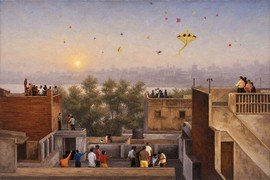
Makar Sankranti is a popular Hindu festival which is dedicated to Lord Surya. Lord Surya illuminates the entire universe. Makar Sankranti is considered extremely auspicious for all kind of religious activities like charity, Homa and taking holy dip, etc.
A detailed description has been given about the four-day Makar Sankranti festivities. Under the four-day Makar Sankranti festival, events like Ganga Sagar Mela, Uttarayan, Vasi Uttarayan, Makaravilakku, Pedda Panduga, Kanuma Panduga and Mukkanuma are celebrated.
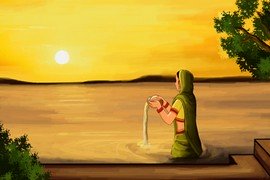
According to the Hindu calendar, there are 12 Sankranti days in a year. These twelve Sankrantis are mainly divided into four categories. These four categories are known as Ayan Sankranti, Vishuva Sankranti, Vishnupadi Sankranti and Shadshitimukhi Sankranti.
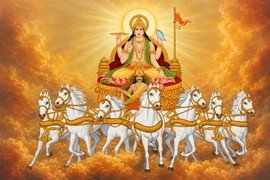
Makara Sankranti Punya Kala, Makara Sankranti Maha Punya Kala and Makara Sankranti Phalam along with other important information related to Sankranti are given on this page. Makara Sankranti is also known as Pongal and Uttarayana
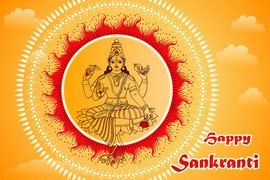
Sankranti Greeting Cards and e-cards are given on this page. These greeting cards include images of Lord Surya on Chariot, Lord Ganesha Flying Kite, Bihu Folk Dance and Ladies celebrating Sankranti Festival, which you can share with your loved ones.
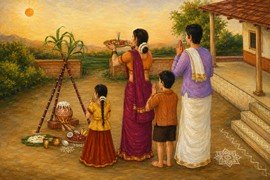
Pongal is a Hindu festival which is observed by people of Tamil Nadu on the first day of Thai Masam. You can check Thai Pongal Sankranti Moment on this page. Thai Pongal is observed as Makar Sankranti in North Indian states which is a popular festival dedicated to the Lord Surya.
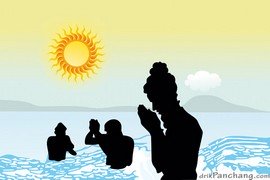
Kumbh Mela is the most important fair for the followers of Hinduism. This fair is organized on the banks of a holy river after a fixed time period. Lakhs of people and saints come from far off places to participate in this fair and take the great holy bath.
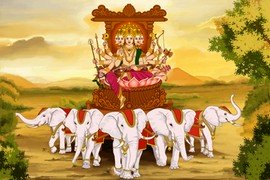
Vishwakarma Puja is performed during Kanya Sankranti. You can know here about the Kanya Sankranti Moment during Vishwakarma Puja . Lord Vishwakarma is the God of architecture and construction. This day is also known as Bhadra Sankranti.
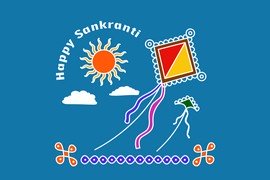
This page is a collection of Rangoli designs for Sankranti. These Rangolis are also known as Pongal Kolam, Sankranti Muggu and Sankranti Alpana. The method of making Rangoli has been described step by step with colorful pictures.
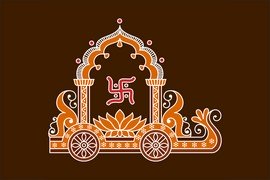
Ratham Rangoli or Chariot Rangoli Designs are provided on this page. Here, a pictorial description has been given on how to make a simple Chariot Rangoli by joining dots. Since these rangolis are made with the help of dots, they are also known as Ratham Dot Rangoli.
is one of the most popular and well-known Aarti dedicated to Lord Surya. Devotees of Lord Surya sing this Aarti to please Him during daily worship.
Names of Lord Surya, also called Ashtottara Shatanamavali, with meaning and video are given on this page.
The given prayer is one of the most popular prayers dedicated to Lord Surya, which is known as Surya Chalisa. Devotees sing it to please Suryadev and seek His blessings.