



En




Notes: All timings are represented in 12-hour notation in local time of Lancaster, United States with DST adjustment (if applicable).
Hours which are past midnight are suffixed with next day date. In Panchang day starts and ends with sunrise.
Ganga Dussehra falls during Dashami Tithi of Jyeshtha Shukla Paksha and currently falls in month of May or June. Ganga Dussehra is also known as Gangavataran which means the descent of the Ganga. Usually Ganga Dusshra is celebrated one day before Nirjala Ekadashi but in some years Ganga Dussehra and Nirjala Ekadashi might fall on the same day.
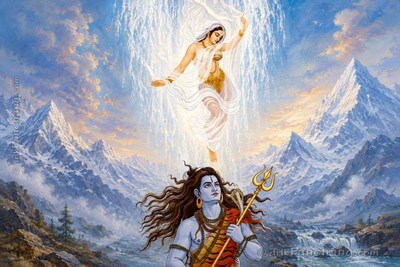
According to the Brahma Purana, Goddess Ganga manifested on Earth from Swarga Loka during the Hasta Nakshatra on the Jyeshtha Shukla Dashami. On the day of Ganga Dussehra, when the ten elements namely the Jyeshtha month, Shukla Paksha, Dashami Tithi, Budhavara, that is, Wednesday, Hasta Nakshatra, Vyatipata Yoga, Gara Karana, Ananda Anandadi Yoga, Surya in Vrishabha, and Chandra in Kanya coincide, this rare combination is considered highly meritorious and spiritually rewarding. If there is a predominance of these auspicious Yogas, then after properly considering the timing of Purva or Para, one should perform Snana, Dana, Japa, Tapa, Vrat, fasting, and other religious observances on the day when the maximum of these Yogas occur. If there is an Adhika Masa during Jyeshtha, then religious acts performed during the Mal Masa are believed to grant greater merit than those performed during the regular month.
Ganga Dussehra is dedicated to Goddess Ganga and this day is commemorated as the day when Ganga was descended to the Earth to accomplish her mission to purge the cursed souls of Bhagiratha's ancestors. Before coming to the Earth, the Goddess Ganga was residing in Kamandalu of Lord Brahma and along with her the Goddess Ganga brought the purity of heaven to the Earth.
On Ganga Dussehra devotees worship Goddess Ganga and take bath in Ganges. Taking bath in Ganges and offering charity or Dan-Punya (दान-पुण्य) on Ganga Dussehra day is considered highly auspicious. It is believed that holy dip in Ganges on Ganga Dussehra day can purge all type of sins. In Sanskrit, Dasha (दश) means ten and Hara (हरा) means destruction. Therefore, bathing in the Ganga on Ganga Dussehra or during these ten days destroys ten types of sins committed by a person, namely three Kayika, i.e., physical sins, four Vachika, i.e., verbal sins, and three Mansika, i.e., mental sins.
Devotees flock to Prayagraj/Allahabad, Garhmukteshwar, Haridwar, Rishikesh and Varanasi to take a holy dip. Ganga Dussehra celebrations are legendary in Varanasi. On Ganga Dussehra day thousands of devotees do Ganga Snan and participate in Ganga Aarti at Dasaswamedh Ghat.
Ganga Dussehra should not be confused with Ganga Jayanti when the Goddess Ganga was reborn.
Ganga Dussehra is celebrated with immense devotion and enthusiasm in the regions where the sacred river Ganga flows, such as Uttar Pradesh, Uttarakhand, Bihar, and West Bengal. Haridwar, Varanasi, Garhmukteshwar, Rishikesh, Prayagraj, and Patna are considered the major pilgrimage sites for this festival. On this occasion, millions of devotees gather on the sacred banks of the Ganga to worship Goddess Ganga and participate in the grand Ganga Aarti. During the Aarti, devotees offer Dipa Dana and worship Goddess Ganga with deep devotion. At Gandhi Ghat in Patna, a grand Ganga Aarti is also organized on the occasion of Ganga Dussehra. In the evening, learned priests perform special Aarti rituals there. At Adalat Ghat, an 1100-meter-long flower garland is offered to Goddess Ganga.
In pilgrimage places such as Mathura, Vrindavan, and Bateshwar, special importance is also given to the worship of Goddess Yamuna along with Goddess Ganga on Ganga Dussehra. On this occasion, devotees take a holy bath in the Yamuna and offer seasonal fruits such as muskmelon, Kakdi, cucumber, and mangoes to Yamuna Ji. People also distribute cooling drinks such as Sharbat, Shikanji, and Lassi to earn religious merit. In many places, kite-flying traditions are also observed on this occasion, and large-scale community kite-flying events are organized.
On the Jyeshtha Shukla Dashami, or if there is an Adhika Masa during Jyeshtha, then on the Shukla Dashami of the Adhika Jyeshtha month, one should bathe according to one's capability either at a place situated on the banks of the Ganga or, if that is not possible, with pure water from a nearby water reservoir or at home, and then wear clean clothes.
After bathing, draw or install an image of Goddess Ganga in a golden or other suitable vessel, depicting Her as three-eyed, four-armed, adorned with ornaments on all limbs, holding a jewel-filled pot, decorated with white garments, and displaying Vara and Abhaya Mudra. Alternatively, one may sit near a previously consecrated idol. Thereafter, while reciting the following Mantra, perform the Shodashopachara Puja of Goddess Ganga along with Avahana, i.e., invocation and other rituals.
ॐ नमः शिवायै नारायण्यै दशहरायै गङ्गायै नमः।
Om Namah Shivayai Narayanyai Dashaharayai Gangayai Namah।
After this, perform Havana by replacing "Namah" in the above names with "Swaha." After completing the Havana, offer Pancha-Pushpanjali to Goddess Ganga while reciting the following Mantra.
ॐ नमो भगवति ऐं ह्रीं श्रीं वाक् काममायामयि
हिलि हिलि मिलि मिलि गंगे मां पावय पावय स्वाहा।
Om Namo Bhagavati Aim Hrim Shrim Vak Kamamayamayi
Hili Hili Mili Mili Gange Mam Pavaya Pavaya Svaha।
After offering five Pushpanjali with the above Mantra, worship Rajarshi Bhagiratha, who brought Goddess Ganga to Earth, and also worship the Himalayas, the place from where Goddess Ganga manifested, with their respective Nama-Mantra.
Thereafter, while chanting Gangayai Namah (गङ्गायै नमः), donate ten fruits, ten Diya, and ten seers of sesame seeds. In addition, offer balls made of Sattu mixed with Ghee and Jaggery into the water. If capable, one should also worship golden images of a Kacchapa, i.e., tortoise, Matsya, i.e., fish, Maduka, i.e., frog, and similar beings, and then immerse them into the water. Additionally, donate 10 kilograms of sesame seeds, 10 kilograms of barley, and 10 kilograms of wheat to 10 Brahmanas.
Beginning from the Jyeshtha Shukla Pratipada until Dashami, recite the Dussehra Stotra with progressive daily increase. Furthermore, one should stay away from another person's spouse and another person's wealth. By performing this worship with proper procedure and reciting the Dussehra Stotra, all kinds of sins are completely destroyed, and the devotee attains rare and highly auspicious merit.
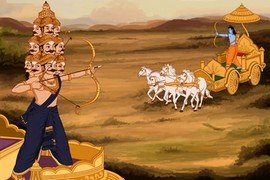
On the day of Vijayadashami, Lord Shri Rama killed Demon Ravana and Goddess Durga killed the buffalo demon Mahishasura. Therefore, this day is celebrated as the victory of Dharma over Adharma. On the occasion of Vijayadashami, rituals like Shami Puja, Aparajita Puja, Simollanghana etc. are performed.
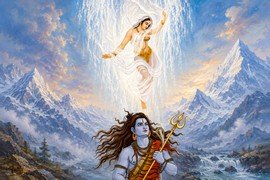

Ganga Dussehra Stotram dedicated to Goddess Ganga is given with Sanskrit lyrics and recitation video. Reciting this Stotram during Ganga Dussehra is considered highly meritorious.
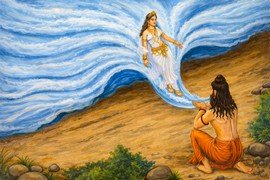
The festival of Ganga Jayanti is related to the rebirth of Gangaji. A sage's Ashram was destroyed by the force of Gangaji, due to which he became angry and drank all the water of the river with his power of penance. With the prayers of the gods, the sage freed Ganga ji again. That is why Ganga ji is also called 'Jahnavi', daughter of sage Jahnu.
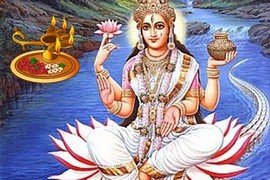
The Aarti of Goddess Ganga is given with Hindi lyrics and recitation video. This is a popular Aarti that is sung daily during Aarti on the banks of Gangaji. This Aarti is sung to please Gangaji.
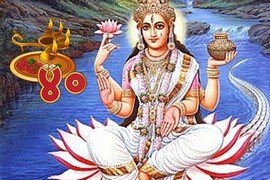
Ganga Chalisa is an emotional prayer written in 40 verses. Reading it increases the feeling of devotion and gratitude towards Mother Ganga. According to Hindu religion, bathing in Ganga destroys even the biggest sins.