



En



Sage Durvasa said to Satyatapa - "O sage! Listen to the merit obtained by properly observing the Shravana Shukla Dwadashi Vrat.
There is an ancient account that, in the Satya Yuga, there was a very brave, valiant, and renowned king named Nriga. King Nriga was fond of hunting. Therefore, due to his inclination for hunting, he would often roam in the forest.
In the course of time, once King Nriga, mounted on a horse, went into a dense and terrifying forest. In his desire for hunting, he went deep into the forest. In that forest, there were various kinds of creatures such as lions, tigers, elephants, and serpents. Apart from these ferocious animals, a group of cruel bandits also lived in that forest.
King Nriga was moving alone in that desolate forest, and no soldiers or attendants were with him. While hunting, King Nriga became exhausted, and after letting his horse graze, he himself rested under a tree. Due to fatigue, he fell asleep and became so deeply immersed in sleep that he lost all awareness, and night fell. Darkness spread in all directions.
As night set in, a group of cruel and wicked hunters entered the forest. That group consisted of fourteen thousand hunters who used to kill innocent animals. They had come into the forest with the intention of hunting deer.
Among those hunters, one of them Vadhika saw King Nriga lying under the tree. He noticed that the king was adorned with various precious jewels and golden ornaments. The hunters observed that the king was in deep sleep and that every part of his body was shining and radiant with rare jewels and gold.
Seeing the king in this condition, that hunter immediately informed his leader about it. Tempted by the gold and precious jewels, the leader of those hunters decided to kill King Nriga. All those cruel hunters, armed with swords and other weapons, approached the king who was lying under the tree.
As soon as the hunters prepared to attack King Nriga, at that very moment, from the king's body emerged a divine goddess-like woman, adorned with sandalwood paste and garlands. That divine Shakti struck with her discus and destroyed all those impure and cruel hunters. After killing those wicked men, the Goddess instantly merged back into the body of King Nriga.
Thereafter, the king awoke from his sleep and saw the dead hunters lying before him and also saw the Goddess entering into his body. Astonished, the king mounted his horse again and proceeded towards the Ashram of Rishi Vamadeva.
At the Ashrama, after offering his respects to Sage Vamadeva, the king expressed his curiosity and said - 'O revered sage! Who was that woman who entered my body, and who were those hunters lying dead? O Lord! Kindly reveal the mystery of this astonishing event to me.'
Sage Vamadeva said - 'O King! In your previous birth, you were born in a Shudra family. At that time, you heard from the Brahmins about the observance of the Dwadashi Vrat and, with full rituals, you faithfully observed that Vrat. O sinless one! It is by the merit of that Vrat that you have obtained royal prosperity in this birth. That divine Goddess is the very Dwadashi Devi who protects you in times of danger by manifesting in a visible form. She alone has destroyed those sinful and cruel hunters. This Dwadashi of the Shravana month is your protector. Due to its immense power, even when sudden danger arises, you remain safe. It is by the grace of this Dwadashi that you have obtained the happiness of kingship. This is merely the fruit of observing one Dwadashi Vrat; if a person observes the Vrat on all Dwadashi throughout the twelve months, then the merit gained is beyond description. By the merit of all Dwadashi Vrat, a person attains a place in Indraloka.'
In this way, after learning the secret of the Dwadashi Vrat from Sage Vamadeva, King Nriga bowed to him and returned to his kingdom and began to observe the Dwadashi Vrat properly. By the effect of the Dwadashi Vrat, after enjoying excellent royal pleasures, he ultimately attained the abode of Lord Vishnu."
॥Thus concludes Shravana Shukla Dwadashi Vrat Mahatmya described in Shri Varaha Purana॥
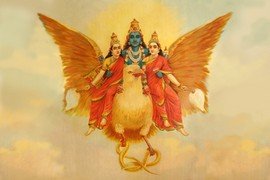
According to the Hindu Panchang, the Shukla Dwadashi of Shravana month is observed as Damodara Dwadashi. This fast is dedicated to Lord Vishnu, who is also known as Damodara in His Krishna Avatara. Observing this fast removes sins and bestows divine grace.
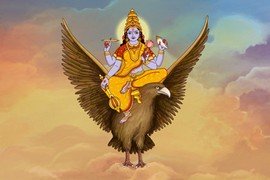
A complete list of Ekadashi dates is given here. Go through the Ekadashi fasting dates list here so that you never miss fasting on Ekadashi. Ekadashi fast is observed with great enthusiasm by the devotees of Lord Vishnu.
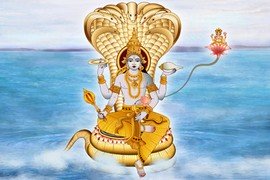
ISKCON devotees can get the complete list of ISKCON Ekadashi fasting dates here. This list will prove highly informative and useful to those who observe the fast of Ekadashi as per the ISKCON.
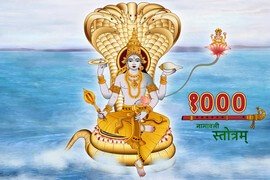
Shri Vishnu Sahasranama Stotram containing 1000 names of Lord Vishnu is given with Sanskrit lyrics and recitation video. This Stotram is recited on various occasions of Vishnu Ji including Ekadashi.
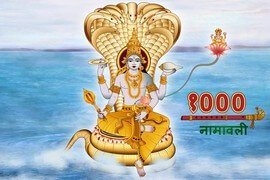
Mantras and names of Lord Vishnu, known as Sahasranamavali is given with meaning and recitation video. These Mantras are chanted on various occasions including Ekadashi.
Shri Vishnu Ashtottarashatanama Stotram described in Padma Purana dedicated to Lord Vishnu, is given with lyrics and recitation video. Devotees of Lord Vishnu recite this Stotram with great devotion.
Above list of Lord Vishnu's sacred names and Mantras is given with their meanings and recitation video. This Shatanamavali is derived from the Padma Purana.
Shri Vishnu Chalisa is given with Hindi lyrics and recitation video. Vishnu devotees recite this Chalisa every day. It is called Chalisa because it consists of 40 Chaupayi(s).
Shri Vishnu Shodashanama Stotram containing 16 names of Lord Vishnu is given with Sanskrit lyrics and recitation video. This Stotram is recited on various occasions of Vishnu Ji including Ekadashi.
Shri Vishnu Namashtakam dedicated to Lord Vishnu is given with lyrics and recitation video. Reciting this Ashtakam containing the eight holy names of Lord Vishnu brings blessings from Him
The given Shri Vishnu Dashavatara Stotram is a very melodious and effective Stotram dedicated to the ten incarnations of Lord Vishnu.
The most popular Jai Jagdish Aarti dedicated to Lord Vishnu is given with Hindi lyrics and recitation video. This Aarti is sung during the daily worship of Lord Vishnu.
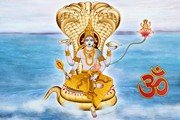
The list of Mantras used in the worship and chanting of Lord Vishnu is available on this page. Some of these Mantras are legendary and some are Vedic. Along with this, the powerful Yantra of Lord Vishnu can also be seen from this page.
Shri Parameshwara Stuti Stotram is a very important Stotram dedicated to Lord Vishnu. Devotees recite this Stuti to obtain the grace of Lord Vishnu.