


En


Notes: All timings are represented in 12-hour notation in local time of Lancaster, United States with DST adjustment (if applicable).
Hours which are past midnight are suffixed with next day date. In Panchang day starts and ends with sunrise.
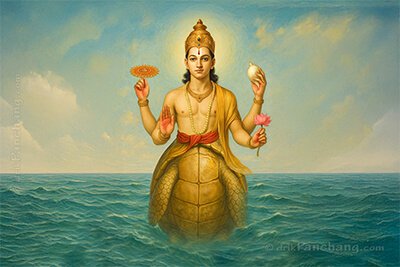
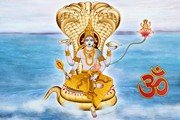
Kurma Jayanti is the birth anniversary of the Kurma Avatara of Lord Vishnu. Kurma was the second incarnation of Lord Vishnu during Satya Yuga. According to the Hindu Panchang, Kurma Jayanti is observed on the Vaishakha Shukla Purnima. In the Kurma Avatara, Lord Vishnu appeared in the form of a tortoise. It is believed that worshipping Lord Kurma brings prosperity and longevity. On this occasion, Tirtha Snana, i.e., bathing in auspicious rivers, and charitable acts also hold special significance.
According to the Padma Purana, when Mount Mandarachala began to sink during the Samudra Manthan, Vishnu Ji incarnated in the form of Kurma and held Mount Mandarachala on His back. The Kurma incarnation is also known as Kurma Avatara or Kachchhapavatara. However, according to the legend described in the Linga Purana, in due course of time when the Earth was sinking into Rasatala, Lord Vishnu incarnated in the Kurma form to protect the Earth and upheld it on His back.
On the auspicious occasion of Kurma Jayanti, special Puja is organized in the temples of Lord Vishnu. On this day, Vaishnava devotees observe a one-day Vrat in honor of Lord Kurma and recite the Kurma Purana and Shri Vishnu Sahasranama. In the Kurma Purana, Lord Kurma imparts knowledge of the four Purushartha, namely Dharma, Artha, Kama and Moksha, to the sages.
The festival of Kurma Jayanti is celebrated on a grand scale at the Kurmanathaswamy Temple located in Srikurmam, Andhra Pradesh. In this temple, Lord Vishnu is worshipped as Shri Kurmanathaswamy and Goddess Lakshmi as Goddess Kurmanayaki. On this day, special Puja and Abhisheka of Lord Kurmanathaswamy are performed according to Vedic rituals. Thereafter, a grand procession of Lord Kurmanathaswamy is taken out through the town.
In the Kurmanathaswamy Temple, Lord Kurma is worshipped through both Vaishnava and Shaiva traditions. This temple, built even before the eleventh century, is based on Kalinga and Dravidian architectural styles and is considered the most ancient temple of Lord Kurma.
Kurma Jayanti is also celebrated grandly by the followers of ISKCON. On the occasion of Kurma Jayanti, ISKCON devotees take a holy bath in sacred rivers on Purnima and worship the Kurma Avatara of Lord Vishnu, while observing a one-day Vrat.
To read a detailed description of the Kurma Avatara of Lord Vishnu, please visit - Kurma Incarnation.
Lord Kurma is the second incarnation of Lord Vishnu among the ten incarnations. In Kurma incarnation, Lord Vishnu appeared in the form of a tortoise. Lord Vishnu took this incarnation to save Mount Mandarachala from drowning during Samudra Manthan.
108 Names of Lord Kurma, also called Ashtottara Shatanamavali with video are given on this page.
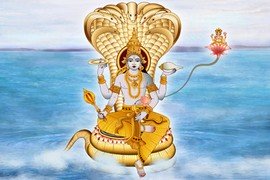
Lord Vishnu is the protector of the entire universe and one of the Trimurti. It is believed that, this visible world is the dream of Lord Vishnu sleeping in Kshirsagar. On this page you can get many information related to Lord Vishnu.
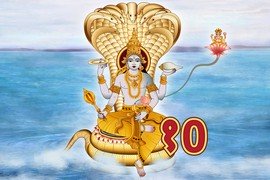
The list of the ten major incarnations of Lord Vishnu and the dates of their birth anniversaries are given on this page. From this page you can also get interesting information about all the incarnations.
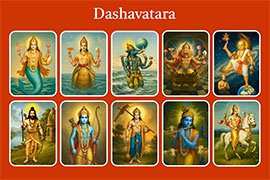
Lord Vishnu keeps taking various incarnations forms from for the welfare of the universe. Here is the ten main incarnations of Lord Vishnu have been described in the religious scriptures as Dashavatara. According to religious scriptures, Kalki incarnation, one of the Dashavatars, is going to appear at the end of the present Kaliyuga.
A complete list of Ekadashi dates is given here. Go through the Ekadashi fasting dates list here so that you never miss fasting on Ekadashi. Ekadashi fast is observed with great enthusiasm by the devotees of Lord Vishnu.
ISKCON devotees can get the complete list of ISKCON Ekadashi fasting dates here. This list will prove highly informative and useful to those who observe the fast of Ekadashi as per the ISKCON.
The list of Mantras used in the worship and chanting of Lord Vishnu is available on this page. Some of these Mantras are legendary and some are Vedic. Along with this, the powerful Yantra of Lord Vishnu can also be seen from this page.