


En



Notes: All timings are represented in 12-hour notation in local time of Lancaster, United States with DST adjustment (if applicable).
Hours which are past midnight are suffixed with next day date. In Panchang day starts and ends with sunrise.
Hanuman Jayanthi is celebrated for 41-days which starts on Chaitra Purnima and ends on the tenth day during Krishna Paksha in Vaishakha month. In Andhra Pradesh and Telangana, devotees begin 41-days Deeksha on Chaitra Purnima and conclude it on Hanuman Jayanthi day.
Telugu Hanuman Jayanti is a distinct regional tradition of celebrating Hanuman Jayanti observed in Telugu-speaking states such as Andhra Pradesh and Telangana. While in North India Hanuman Jayanti is celebrated as a one-day festival on the day of Chaitra Purnima, in the Telugu tradition it is observed in a more elaborate and spiritually profound manner, continuing for forty-one days.
It begins on the day of Chaitra Purnima, when devotees undertake a sacred vow known as Hanuman Deeksha. This Deeksha is a period of discipline and devotion, during which devotees follow a restrained and disciplined way of life. They observe Brahmacharya, maintain physical and mental purity, wake up early in the morning, perform daily worship, and continuously remember Lord Hanuman and Lord Rama. Many devotees wear a Deeksha Mala, which symbolizes their sacred resolve.
During these forty-one days, devotees chant Hanuman Mantras, recite the Hanuman Chalisa, Sundarakanda, and the holy name of Rama, and regularly visit temples. Observing fasts or consuming only Satvika food is also commonly practiced. The main purpose of this period is self-restraint, devotion, and spiritual upliftment, reflecting the divine qualities of Lord Hanuman.
This Deeksha concludes on the Krishna Paksha Dashami Tithi of the Vaishakha month, which is celebrated as Telugu Hanuman Jayanti. On this day, special worship and rituals are performed in Hanuman temples. Devotees offer flowers, betel leaves, Sindura, and other sacred items to Lord Hanuman. After the final worship, the Deeksha is ceremonially concluded through a ritual known as Deeksha Viramana.
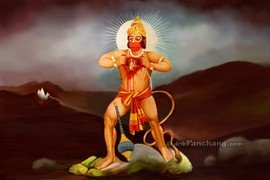
In this article, a detailed description has been given about Lord Hanuman. Lord Hanuman is one of the most popular deities worshipped in Hinduism. Hanuman Ji is also known by the names Mahavira, Bajrangbali, Anjaneya and Pavanputra etc.
Hanuman Jayanti is celebrated to commemorate the birth of Lord Hanuman on the full moon day of Chaitra month. Hanuman Jayanti is also known as Hanumath Jayanti and Hanuman Vratam.
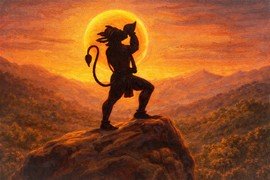

This is one of the most popular Aartis dedicated to Lord Hanuman which is recited on various occasions related to Lord Hanuman. This Aarti is also sung during Dainika Hanuman Puja.
This 40 verse poem praising Lord Hanuman is known as Hanuman Chalisa. Hanuman Chalisa is the most popular hymn dedicated to Lord Hanuman, which is sung everyday by Hanuman devotees.
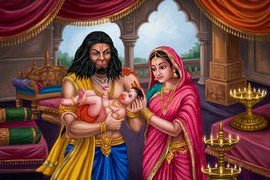
Hanuman Jayanti is celebrated to commemorate the birth of Hanuman, the Vanara god, widely venerated throughout India. The Date and Time of Hanuman Jayanti is given in this article.
Hanumath Jayanthi is observed during Margashirsha Amavasya and falls in January or December. Hanuman Jayanti is celebrated as Hanumath Jayanti in Tamil Nadu. It is believed, Lord Hanuman was born on this day during Moola Nakshatra.
Mantra Names of Lord Hanuman with meaning and video are given on this page.
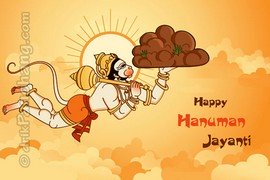
You can send Hanuman Jayanti wishes to your loved ones through these Hanuman Jayanti E-Greetings. In the pictures given in these E-Cards, Lord Hanuman is shown Flying with Mountain, Giving Blessings and Sitting on the Seat of His Tail, and many more...

People worship Lord Hanuman by Shodashopachar Hanuman Puja Vidhi to please Him and seek His blessings. This Puja Vidhi includes sixteen steps of worship like Sankalpa, Aawahana, Dhyana, Asana, Paadya, Arghya etc.
Hanuman Puja Muhurat on Deepavali is given. In some regions of India, Hanuman Ji is worshipped on Kali Chaudas, a day before Diwali Puja. On this occasion, Shri Hanuman Janmotsava is organized in a grand manner in the famous Hanumangarhi temple in Ayodhya.

List of Hanuman Mantras including Hanuman Moola Mantra, Hanuman Gayatri Mantra and Manojavam Marutatulyavegam Mantra are given on this page. These Mantras are chanted to please Lord Hanuman and seek His blessings.
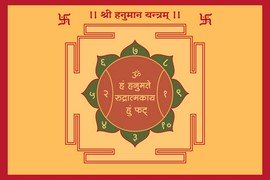
Full size Shri Hanuman Yantra wallpaper is provided here for Hanuman Puja. The above image can be printed and used for Puja. In Hinduism, the consecrated Yantra is worshipped as the manifestation of the related deity.
Shri Hanuman Tandava Stotram is given with recitation video and Sanskrit lyrics. By reciting it, one gets relief from all kinds of troubles like disease, grief, accidents and ghosts etc