



En



King Dasharatha said to Sage Vashishtha - "O great sage! I have listened to the Mahatmya of Phalguna Shukla Chaturthi Vrat from your pious mouth, however, my heart is still not satiated. Therefore, I request you to kindly narrate to me the glorious Mahatmya of the boon-bestower Chaturthi Vrat of Chaitra Shukla Paksha."
Sage Vashishtha said - "O King Dasharatha! Please listen to the Mahatmya of Chaitra Shukla Paksha Chaturthi Vrat. In ancient times, in the renowned city of Shobhabhadra in Bengal region, a virtuous king ruled his kingdom with great righteousness. The name of the king was Chandrapriya. King Chandrapriya was extremely brave and valiant. King Chandrapriya had triumphed over the entire Earth with his valor and might and became the sovereign of the entire world. He ruled his kingdom with exceptional grit and abundance.
His ministers and courtiers revered him and served him eagerly. Even the rulers of other kingdoms were always ready to serve him. King Chandrapriya was steadfast in his righteousness and ensured that all people followed their Dharma in accordance with their respective Varna. He would punish everyone who disobeyed their Varna duties. Every person was happy and content in his kingdom and no one feared robbery or theft, even traders were without fear that their goods would be stolen.
In the course of time, all people of his kingdom got afflicted with various serious diseases and women were afflicted with conditions like infertility. Feeling despondent with the rampant illness, people went to the king and said while asking for the reason for such suffering - 'O great king! You rule this kingdom with your ministers and courtiers by following the righteousness of a king and as commanded by you, we too follow our duties as prescribed by our respective Varnas. Yet, we got afflicted with various diseases and lost our livelihoods and children. We have become devoid of all our wealth and prosperity. O king! Under your rule, the Earth has become barren, the trees fruitless and cows without milk. O wise one! When a kingdom is blessed by a virtuous king like yourself, the citizens of such a kingdom should live a life full of abundance and vitality, but the rampant suffering illustrates a different picture here. The king is regarded as the strength and guardian of its kingdom. Thus, O great king! We request you to please protect us, you are our sole refuge.'"
Sage Vashishtha said - "O Dasharatha! Upon hearing the plight of his people, King Chandrapriya decided to go to the forest to find the solution to end their suffering. He delegated the power to his chief ministers and departed for the forest. When the king was wandering across the forest, the great Sage Ashtavakra arrived there. King Chandrapriya reverently bowed down and worshipped the sage with great devotion and offered him a meal while serving at his feet.
Thereafter, King Chandrapriya said to Sage Ashtavakra - 'O great sage! Your divine Darshan has rendered my worship, meditation, my penance, donation, sacrificial rituals and my entire existence meaningful and fruitful.' Afterwards, the king narrated the entire account of the sufferings of his people to the sage.
Upon listening to the plight of the king, Sage Ashtavakra said - 'O king! Your kingdom is afflicted with a great sin which is the reason why all the people of your kingdom are suffering from such deadly diseases. Your kingdom has become devoid of the glorious Chaturthi Vrat which is the bestower of all four aims of human life known as Purushartha, that is, Dharma (righteousness), Artha (wealth), Kama (desire) and Moksha (liberation). Thus, all citizens of your kingdom have become devoid of Purushartha and would go to the Naraka Loka, along with you, upon death.'
The king said - 'O merciful sage! Please be kind to me and tell me about that glorious Chaturthi Vrat, how it is done, its significance, its adorable deity along with all other details.'
Sage Ashtavakra said - 'O king! The Vrat which is observed on Shukla Paksha and Krishna Paksha Chaturthi Tithi is called Ganeshvara Vrat. Every human being should observe this Vrat to achieve all four aims of life.' Saying thus, the sage narrated the glorious Mahatmya of the Chaturthi Vrat. Upon hearing the divine Mahatmya of the Chaturthi Vrat, King Chandrapriya became exceedingly astonished.
The king respectfully asked another question to the sage - 'O great sage! Please enlighten me with the knowledge of Lord Ganesha to whom this glorious Vrat belongs to. Kindly describe His form and appearance to me. Then, I will singularly focus my mind on the Divine form of Lord Ganesha and devotedly observe the Chaturthi Vrat.'
Sage Ashtavakra said - 'O lord of the Earth! I find myself exceedingly incapable of describing the form of Lord Ganesha. However, please listen to this account which I will narrate to you now, this will enlighten you about the essence of Lord Ganesha. O king! in ancient times, when I was immersed in deep meditation, numerous Apsaras, i.e., celestial nymphs appeared in front of me to interrupt my meditation. When they persistently tried to disrupt my penance, I became extremely furious and while cursing those nymphs I said - 'All of you will descend to the Mrityu Loka, i.e., mortal world, where thieves and robbers will ravish you.' Hearing my curse, they became scared and started to apologise profusely. Their apology mollified my anger and I happily granted them mercy.
Thereafter, I said to those nymphs - 'In Dvapara Yuga, Lord Vishnu will take incarnation in the Yadu Dynasty. In that incarnation, His name would be Shri Krishna and all of you would become His wives; but in the end, your fate would be bound to thieves.' O king! Hearing this, the nymphs disappeared from sight and I resumed my meditation. As a result of my penance, I developed a profound sense of inner wisdom. Thereafter, I inculcated in myself qualities such as Sham, i.e., equanimity and Dam, i.e., discipline and developed absolute control over my senses and learned to suppress my urges. I dedicated my life to various Yoga Sadhanas and attained the highest form of consciousness called Samadhi, but upon experiencing the same illusion of Maya even in that higher state, I was extremely shocked.
O king! I was enduring extreme suffering in my quest to attain peace. At that moment, Sage Ribhu arrived there. I bowed down and worshipped the great Yogi Sage Ribhu and said - 'O great Yogi! I am feeling exceedingly blessed by receiving your divine Darshan. All my worship, meditation, penance and sacrificial rituals have become meaningful by your Darshan.' Upon hearing this, Sage Ribhu said - 'O dear one! Please tell me what is it that you desire? I will certainly fulfill your wishes.'
Thereafter, I reverently bowed down in front of him and asked to enlighten me upon the path of Yoga Shanti, i.e., Yogic peace. The great Sage Ribhu answered thus - 'O dear one! Five kinds of Samyogas, i.e., union with Brahman are explained, namely - Sat, Asat, Sama, Na and Iti. They are achieved by Yoga Sadhana when the person attains the state of Svasamvedya, that is, the state of highest self-awareness. Ayoga, i.e, disidentification or separation is devoid of all kinds of Samyogas and it is achieved by the Nivritti, that is, by renouncing worldly pursuits. The unification of Samyoga and Ayoga is attained by following the path of peace, i.e., Shanti Marga. O wise one! You must pursue to discover Ganaraja, i.e., Lord of Gana and worship Him to attain the highest state of peace. Gakara signifies Samyoga and Nakara signifies Ayoga, and the Lord of both these entities is Ganesha. Earlier, I followed many Yogas due to confusion and dedicated myself to Sahaja Yoga, which astounded me with its innate liberty. Thereafter, I sought refuge in Lord Shiva with the singular pursuit of practicing Yoga.
Lord Shiva instructed me to immerse myself in the worship of the Master of Gana, Lord Ganesha. Then, I devotedly worshipped Lord Ganesha with Ekakshara Vidhana and sang hymns in His praise, and as a result attained peace. Saying thus, Sage Ribhu bestowed upon me the one-syllable Ekakshara Ganesha Mantra, i.e., Gam (गं). I immersed myself in chanting this Mantra and attained inner peace.''"
Sage Vashishtha further said - "O King Dasharatha! Thus, narrating the account, Sage Ashtavakra initiated King Chandrapriya by bestowing upon him the twelve-syllable Mantra of Lord Ganesha and disappeared from sight. Afterwards, King Chandrapriya immersed himself in the devotion of Lord Ganesha. O king! When the Chaturthi Tithi of Chaitra Shukla Paksha arrived, the king and all the citizens of his kingdom observed the Chaturthi Vrat with devotion. The king also announced in his entire territorial kingdom to observe the Chaturthi Vrat. Following the king's command, every human being began observing the Vrat of Shukla Paksha and Krishna Paksha Chaturthi Tithis, and got rid of their diseases. Every person of the kingdom regained their health and was blessed with progeny and wealth.
King Chandrapriya devotedly worshipped Lord Ganesha. Later, he conferred his kingdom upon his son and retired to the forest along with his wife. In due course, King Chandrapriya received Lord Ganesha's Darshan in His abode Svananda Dham and ultimately attained oneness with Brahman, i.e., became Brahmabhuta. All the people of the kingdom received Darshan of Lord Ganesha due to the blessings of Chaturthi Vrat and attained oneness with Brahman upon death, i.e., becoming Brahmalina."
Sage Vashishtha further said to King Dasharatha - "O king! I will now tell you another story regarding Chaitra Shukla Paksha Chaturthi Vrat, please listen attentively, this Mahatmya is regarded as the destroyer of all sins and bestower of all kinds of Siddhis. In ancient times, in the Malava Pradesh, a sinner lived who was the descendant of a Shudra. That sinful man was extremely greedy and killed all kinds of species living in the forest as well as the travelers passing through the forest. He was so vile that it was impossible to count his sins. Once, he hid in a tree and killed every traveler who passed through the forest. With some divine intervention, a snake slithered on to the tree and bit him. Afflicted with the snakebite and feeling scared, he returned to his home.
O king! As soon as the man arrived at his home, the poison began to spread through his body and he became unconscious. O king! Fortunately, it was the day of Chaitra Shukla Paksha Chaturthi Tithi. Due to his pain, the vile man could not eat any food or drink any water on that day and died the next day on Panchami Tithi. With the blessings of the Vrat that he observed inadvertently, he went to the abode of Lord Ganesha, Swanandakapura. O king! Thus, many sinners like him attained liberty upon death and it is impossible to tell the story of each and every one for us. Listening and reading the glorious Mahatmya of Chaitra Shukla Paksha Chaturthi Tithi Vrat fulfills all desires of the person."
॥Thus concludes the Chaitra Shukla Chaturthi Mahatmya as described in the Shri Mudgala Purana॥

According to the Hindu calendar, Shukla Paksha Chaturthi of Chaitra month is observed as Vasudeva Chaturthi. On this day, Lord Ganesha is worshipped in the form of Lord Vasudeva. Vasudeva Vinayaka Chaturthi is also known as Vasudeva Chaturthi.
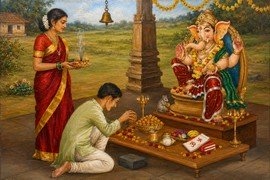
The complete detailed Shodashopachara Puja Vidhi of Lord Ganesha is described including Dhyanam, Avahanam, Pushpanjalih and Swagatam Mantras. In the given Puja Vidhi, audios of Mantras are also given so that one can learn the correct pronunciation.
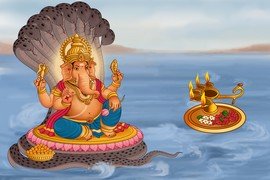
Most popular Aarti dedicated to Lord Ganesha is given with lyrics and recitation video. Devotees sing this Aarti to please Lord Ganesha and seek his blessings.
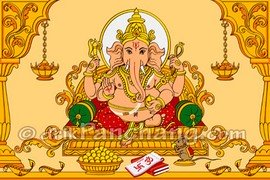
In the Hindu calendar, there are two Chaturthi in every lunar month. The Chaturthi of Shukla Paksha that comes after Amavasya is called Ganesha Chaturthi. In Kerala, Ganesha Chaturthi is celebrated in Chingam Masam during Shukla Paksha Chaturthi and might fall in Shravana month.
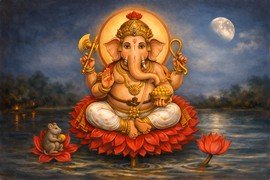
In the Hindu calendar, there are two Chaturthi in every lunar month, out of which the Chaturthi of Krishna Paksha that comes after the full moon is called Sankashti Chaturthi. The fast of Sankashti Chaturthi is more popular in western and southern region of India, especially in Maharashtra and Tamil Nadu.
This is a very melodious and popular Aarti dedicated to the Vinayaka form of Lord Ganesha. This Aarti is sung on various occasions related to Lord Ganesha.
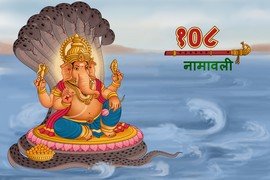
Ashtottara Shatanamavali of Ganesha is a collection of 108 divine names of Lord Ganesha. One can recite these names to seek the blessings of Lord Ganesha.
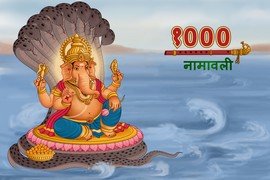
Sahasranamavali of Lord Ganesha containing these Mantras and names is given with meaning and recitation video.
Gakara Sahasranamavali of Ganesha containing these Mantras and names is given. In this Namavali, all the names of Lord Ganesha start with the letter "G"
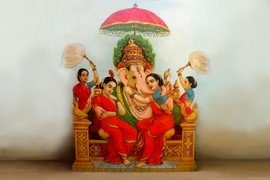
Lord Ganesha is one of the most popular deities in Hindu Dharma. He is revered as Pratham Pujya i.e. He is worshipped first among all the deities. He is worshipped to remove all kinds of obstacles.
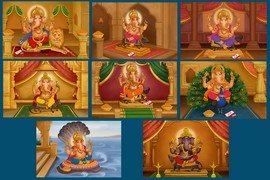
The divine eight incarnations of Lord Ganesha are collectively known as Ashta Vinayaka. Vakratunda, Ekadanta, Mahodara and Gajanana are some popular forms of Ashta Vinayaka.
Ganesha Anga Puja is usually performed on Ganesha Chaturthi and other festivals related to the Lord Ganesha. Each vital body part of God Ganesha is worshipped with Mantras in Anga Puja.
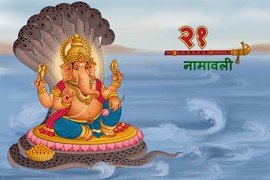
Ganesha Twenty One Names Puja is also known as Eka-Vimshati Name Puja which is dedicated to the Lord Ganesha who is lord of knowledge and wisdom.
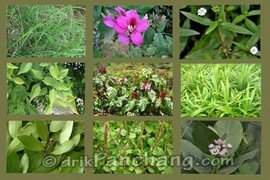
List of 21 Patra for Ganesha Chaturthi Puja is given here. There are 21 types of Patras i.e. leaves which are used for worshipping Lord Ganesha on special occasions.
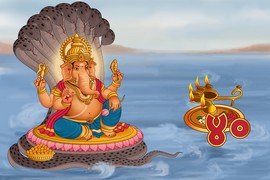
'Ganesha Chalisa' is a hymn composed of 40 Chaupais in the praise of Lord Ganesha. One can get rid of all the obstacles by reciting Ganesha Chalisa.
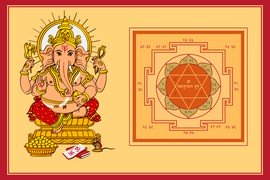
Some of the most important Ganesha Mantras are listed here. A powerful Ganesha Yantra is also given which one can keep at one's home or office at the place of worship.
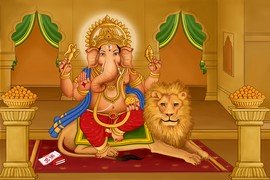
'Vakratunda Mahakaya' Mantra is one of the most significant and popular Mantras of Lord Ganesha. Lord Ganesha gets easily pleased by chanting this Mantra.
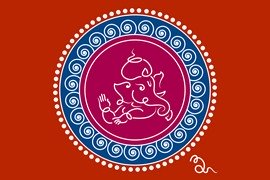
Simple and beautiful Ganesha Rangoli designs are given on this page. These Rangoli can be used on various special occasions related to Lord Ganesha.
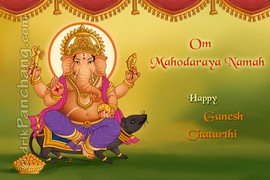
Here you can send E-cards of Lord Ganesha to your loved ones. There are so many beautiful and artistic E-cards which are available on this page.