



En



Once upon a time, in a certain town, there lived a very wealthy Setha or Dhanika, that is, a rich merchant. He was a devoted devotee of Lord Shiva. By the grace of Lord Shiva, there was no shortage of anything in his household. He was extremely rich and prosperous. However, despite being endowed with all material comforts, he had a problem that was not being resolved. Because of this problem, all those means of happiness seemed futile to him. The merchant was childless, and due to being childless, he felt a sense of emptiness in all his wealth. He constantly thought that since there was no heir to his entire wealth, what was the use of it? With the desire to obtain a son, he observed a fast every Monday, i.e., Somavara with proper Vidhi-Vidhana, means ritual procedures. Every day, in the evening, he would regularly light a Diya in front of Lord Shiva in the temple. The merchant would daily pray to Lord Shiva - "O Lord of the helpless, O Master of the destitute! O Lord Shiva! What sin have I committed that I am not blessed with the happiness of a son? O Lord! Please show Your grace upon me and grant me a son."
One day, hearing the sorrowful plea of that merchant, Mata Parvati said to Lord Shiva - "O Lord! This merchant remains absorbed in Your devotion with a pure heart, observes the Somavara Vrat regularly, and worships You with full devotion. Therefore, O Lord! His wish should be fulfilled." Hearing the words of Mata Parvati, Lord Shiva said - "O Devi! This mortal world is a field of actions, and every being born here must experience happiness and sorrow according to their deeds. No one in this world is free from the fruits of actions. Just as a farmer reaps the kind of crop he sows, similarly, in this field of action, everything is obtained according to one's deeds. Due to his past accumulated karma, this merchant does not have the fortune of a son."
Out of compassion and affection for His devotee, Mata Parvati again requested Lord Shiva - "O Lord! This merchant is Your devoted follower and worships You with faith. You always show mercy to Your devotees and fulfil all their wishes. You are the God of gods. If Your devotee is in distress, You must certainly remove it. If You Yourself do not remove the suffering of Your devotees, then why would people worship You and observe fasts?" Hearing the words of Mata Parvati, Lord Shiva said - "O Devi! This merchant remains constantly worried and distressed due to being childless. Apart from this, he has no other suffering in life. Even though he does not have the destiny of a son, I grant him a son; however, that son will be Alpayu, i.e., short-lived. His lifespan will be only twelve years, after which he will die. Though it is not in his fate, I grant him the happiness of a son for these years." The merchant overheard this conversation between Lord Shiva and Mata Parvati in the temple. Neither did he become happy nor sad upon hearing it. He continued observing the fast and worshipping Lord Shiva as before.
After some time, the merchant's wife became pregnant. In the tenth month, she gave birth to a very handsome son. After many years, the birth of the son brought great joy to the merchant's household, and auspicious songs were sung everywhere. However, the merchant was inwardly distressed about the fact that his son would live only for twelve years. Therefore, he did not express much joy and considered it appropriate to keep the secret of his son's short lifespan hidden.
Gradually, time passed and the merchant's son turned eleven years old. The merchant's wife urged him to get their son married, but the merchant said - "I will not get him married now; first I will send him to the holy city of Kashi to gain knowledge." With this decision, the merchant invited his brother-in-law, that is, the boy's maternal uncle, gave him a great amount of wealth, and said - "Take my son to Kashi for education, and wherever you halt along the way, organize Yajnas and feasts for Brahmins to the best of your ability." Following the merchant's instructions, the uncle and nephew proceeded on their journey, conducting Yajnas and Brahmin feasts along the way. On their way, they reached a town and decided to stay there. In that town, the king's daughter was to be married. The entire town was filled with the festivity of the princess's wedding. However, the prince from another kingdom who had come to marry the princess was blind in one eye. This fact had not been disclosed by the prince's father to the princess's family. He feared that if they saw the prince, they might cancel the marriage. At that moment, the prince's father noticed the handsome son of the merchant and thought - "Why not present this boy as the prince for the ceremonial rituals? This way, no one will discover the truth."
The king discussed this matter with the boy's maternal uncle and gained his consent. The merchant's son was then dressed in royal attire and adorned like a groom and was taken for the ceremonial processions. The rituals were successfully completed, and everyone was delighted to see such a handsome groom. Then the prince's father thought - "Why not conduct the actual marriage with this boy as well? Otherwise, if the truth is revealed, everything will be exposed."
He repeatedly requested the boy and his uncle - "If you allow the marriage rituals to be completed, I will be extremely grateful. I will give you abundant wealth and will remain indebted to you forever. Please show mercy." Hearing his request, the uncle and nephew agreed, and the entire marriage ceremony was completed properly. However, the merchant's son felt from the beginning that this deception was not right. Therefore, before leaving, he wrote a message on the edge of the princess's veil - "Your marriage has taken place with me, but the prince with whom you will be sent is blind in one eye. I am going to Kashi for education as per my father's command. I am not a prince but the son of a merchant." After writing this, the boy left with his uncle. Later, when the princess read the message, she refused to leave with the prince, saying - "I have not been married to him. He is not my husband. The one I married has gone to Kashi for study." Upon learning the truth, the king did not send his daughter away, and the prince's father returned with the wedding procession.
Meanwhile, the merchant's son had reached the holy land of Kashi with his uncle. There, the boy immersed himself in study while his uncle performed religious rituals. When the boy turned twelve years old, he organized a Yajna. At that time, the boy said - "Uncle, today my health does not seem to be well." The uncle told him to go and rest in the room. The boy went to lie down, and after some time, he passed away. When his uncle checked on him after a while, he found that his nephew had died. He became extremely distressed. Seeing his nephew dead, he felt immense sorrow, but he thought - "If I begin to mourn now, the Yajna will remain incomplete." Therefore, he quickly completed the Yajna, respectfully bid farewell to the Brahmins, and then began mourning his nephew.
By divine coincidence, at that very time, Mata Parvati and Lord Shiva were passing by. Hearing the intense cries, Mata Parvati said - "O Lord! Some helpless being is crying in distress. Please relieve his suffering." Lord Shiva and Mata Parvati arrived there and saw a boy lying dead. Recognizing him, Mata Parvati said - "This is the same merchant's son who was granted as a boon by You. What has happened to him?" Lord Shiva said - "O Devi! According to the boon, this boy was short-lived. His lifespan has ended." Mata Parvati pleaded - "O Lord! Please grant him more life, otherwise his parents will die of grief. Nothing is impossible for You." Upon her repeated request, Lord Shiva restored the boy to life. By His grace, the boy became healthy again. Thereafter, Shiva and Parvati departed towards Mount Kailasha.
After this, the uncle and nephew, performing Yajnas and feeding Brahmins, were returning home. On the way, they passed through the same town where the marriage had taken place. The king recognized his son-in-law and took him to the palace, where he was warmly welcomed. The king sent his daughter along with him, giving abundant wealth and servants. When they reached near their town, the uncle said - "I will go ahead and inform them of your arrival so that arrangements can be made for the bride's welcome."
When the uncle reached home, he saw that the merchant and his wife were sitting on the roof. They had taken a vow that if their son returned safely, only then would they come down; otherwise, they would jump and end their lives. The uncle immediately informed them of the good news. At first, the merchant did not believe it, but the uncle assured him under oath - "By the grace of Lord Shiva, your beloved son has returned safely, along with a royal bride and great wealth."
The merchant and his wife joyfully welcomed their son and inquired about his well-being. Thereafter, the merchant lived happily with his family. In the same way, whoever observes the Somavara Vrat with devotion and listens to or recites this Katha, all their wishes are fulfilled, and they receive the boundless grace of Lord Shiva and Mata Parvati.
॥Iti Shri Shiva Somavara Vrat Katha Sampurnah॥
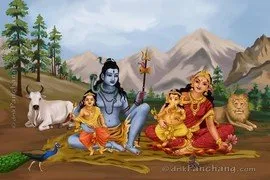
Shiva Somavara Vrat dedicated to Lord Shiva is described in detail. Apart from the details of the fast, the Vrat Pooja Vidhi, Udyapana Vidhi and diet related to the fast etc. have also been described. This fast is observed to seek blessings of Lord Shiva.
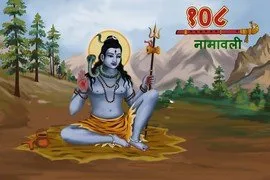
108 Shiva Names mentioned in Shakta Pramod Grantha are the most popular 108 Names of Lord Shiva. Each name when combined with Om Namah becomes independent Mantra in itself and can be used for chanting as well as to perform Shiva Ashtottara Shatanamavali Homa.
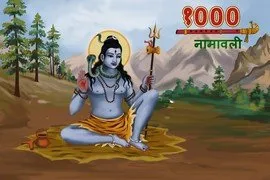
Mantra and Names of Lord Shiva with meaning and recitation video are given on this page.
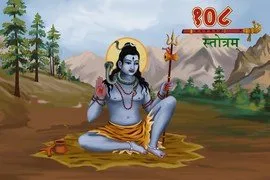
Shri Shiva Ashtottarashatanama Stotram is given with lyrics and video. Reciting this Stotram is considered to be very auspicious and fruitful.

Shri Shiva Sahasranama Stotram containing 1000 names of Lord Shiva is given with Sanskrit lyrics and recitation video. This Stotram is recited on various occasions of Lord Shiva including Shivaratri.
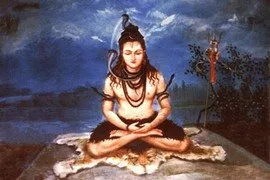
Shiva Panchakshara Stotram composed by Shri Adi Shankaracharya is given with Sanskrit lyrics and recitation video. This Stotra is based on the Panchakshara Mantra of Lord Shiva.
This popular Ashtakam of Lord Shiva is given with Sanskrit lyrics and video. This Shivashtakam was composed by Shri Shankaracharya Ji.
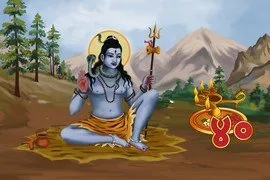
Lord Shiva Chalisa is provided with lyrics and recitation video. Devotees of Lord Shiva recite this Chalisa to please Him and seek His blessings.
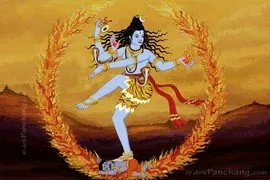
Om Namah Shivaya i.e. the Mula Mantra of Lord Shiva is the most powerful Mantra of Lord Shiva. Om Tryambakam, the death defeating Mantra of Lord Shiva. Om Tatpurushaya, the Rudra Gayatri Mantra of Lord Shiva are few powerful Mantra to please and seek blessings of Lord Shiva.
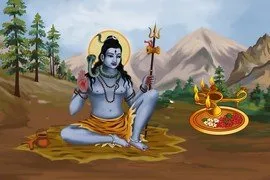
Lord Shiva Aarti is provided with lyrics and recitation video. It's a widely known and melodious Aarti dedicated to Lord Shiva.
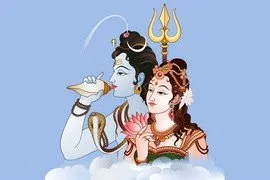
All Masik Shivaratri that occur during a year are listed. According to the Hindu calendar, Krishna Paksha Chaturdashi of every month is celebrated as Masik Shivaratri. Devotees of Lord Shiva observe a one-day fast on this occasion.
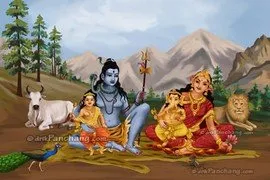
Lord Shiva is one of the three main deities worshipped in Hinduism, namely Brahma, Vishnu & Mahesha, who are collectively known as Trimurti. Lord Shiva is the destroyer of the universe and is also known by the names of Bholenath, Lord Shankara, etc.
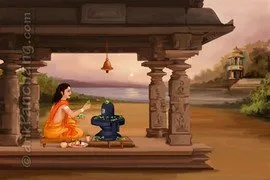
A detailed Shodashopachara Shiva Puja Vidhi dedicated to Lord Shiva is provided. In the presented Puja Vidhi, all the sixteen steps of Shodashopachara Puja Vidhi including Dhyana, Avahana, Padya, Arghya, and Achamaniya are described with Mantras.
Shivashtakam is given with Sanskrit lyrics and recitation video. This is the most popular and melodious Ashtakam of Lord Shiva, listening to which gives a feeling of peace.
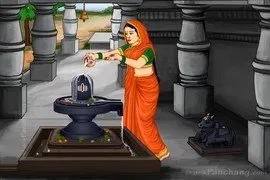
Somnath, Mallikarjuna, Mahakal, Omkareshwar, Kedarnath, Bhimshankar, Vishwanath, Trimbakeshwar, Vaidyanath, Nageshwar, Rameshwar and Ghushmeshwar, all the twelve Jyotirlingas of Lord Shiva are described in detail with the story of their origin.