



En





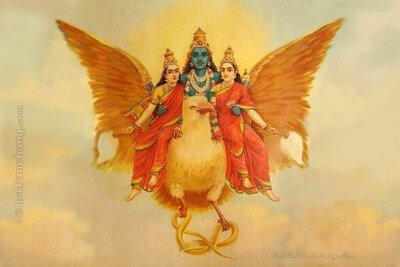
According to the Hindu Panchang, when Ekadashi prevails at sunrise, followed by a diminished Dwadashi and Trayodashi appears until next sunrise, meaning all three Tithis occur within the same day and night, is observed as Trisparsha Dwadashi. More...
Notes: All timings are represented in 12-hour notation in local time of Lancaster, United States with DST adjustment (if applicable).
Hours which are past midnight are suffixed with next day date. In Panchang day starts and ends with sunrise.
According to the Hindu Panchang, the Dwadashi Tithi of Shukla Paksha in the Magha month is celebrated as Bhishma Dwadashi. This Dwadashi is also known by other names such as Amalaki Dwadashi, Santana Dwadashi and Varaha Dwadashi. A person who devoutly observes the Magha Shukla Dwadashi fast becomes a leader among people in this world, attains all forms of wealth and prosperity and ultimately achieves oneness with Lord Vishnu at the end of life.
The Nirnaya Sindhu states - "Magha Shukla Dwadashi is known as Bhishma Dwadashi. The Hemadri text also cites a verse from the Padma Purana describing Dwadashi as highly auspicious and capable of removing all sins. One should observe this fast on Purva Viddha Dwadashi."
Both the Padma Purana and the Matsya Purana mention a fast known as Bhima Dwadashi Vrat. The observance of this fast begins on Magha Shukla Dashami and continues for three days. The Bhima Dwadashi Vrat is also referred to as Kalyanini Vrat. While the Padma Purana does not specifically state whether it belongs to the Shukla or Krishna Paksha, the Matsya Purana clearly identifies Magha Shukla Dwadashi as the day of Bhima Dwadashi.
However, both the Narada Purana and Bhavishya Purana prescribe that on Magha Shukla Dwadashi, one should worship Lord Madhava. Madhava is one of the many sacred names of Lord Vishnu. Hence, this Dwadashi is also known as Madhava Dwadashi.
According to the Narada Purana, on this day one should observe a fast and perform Abhisheka of Lord Madhava with one seer of milk. Thereafter, offer eight oblations of Ghee into the sacred fire while reciting the Namaste Madhavaya। (नमस्ते माधवाय।) Mantra. Then, with focused devotion, worship Lord Madhava three times with sandal paste, flowers and Akshata, and keep vigil throughout the night, remaining absorbed in His worship.
In the morning, after completing daily rituals, one should perform worship of Lord Madhava again. To attain freedom from sins, offer one seer of Til, along with garments and Dakshina to a Brahmin while reciting the following Mantra -
माधवः सर्वभूतात्मा सर्वकर्मफलप्रदः।
तिलदानेन महता सर्वान् कामान् प्रयच्छतु॥
Madhavah Sarvabhutatma Sarvakarmaphalapradah।
Tiladanena Mahata Sarvan Kaman Prayachchhatu॥
Meaning - "O Lord Madhava, the Soul of all beings and the Bestower of the fruits of all actions! May You, being pleased by this great offering of sesame seeds, fulfill all my desires."
After offering sesame seeds and charity to the Brahmin with devotion, meditate upon Lord Madhava and serve food to Brahmins as per capacity. According to Narada Purana, Sage Sanaka states, "A person who performs this fast with devotion and offers sesame seeds in charity according to the prescribed method attains the complete merit equivalent to performing one 100 Vajapeya Yajnas."
According to the Hindu Panchang, the Bhishma Dwadashi Vrat is observed on the Shukla Dwadashi of the Magha month. For the full merit of this Vrat, devotees recite and listen to the Bhishma Dwadashi Vrat Katha. In the Varaha Purana, observing Varaha Dwadashi on Magha Shukla Dwadashi is also mentioned.
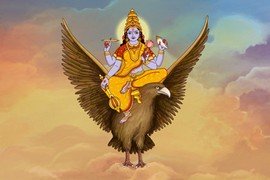
A complete list of Ekadashi dates is given here. Go through the Ekadashi fasting dates list here so that you never miss fasting on Ekadashi. Ekadashi fast is observed with great enthusiasm by the devotees of Lord Vishnu.
ISKCON devotees can get the complete list of ISKCON Ekadashi fasting dates here. This list will prove highly informative and useful to those who observe the fast of Ekadashi as per the ISKCON.
Shri Vishnu Sahasranama Stotram containing 1000 names of Lord Vishnu is given with Sanskrit lyrics and recitation video. This Stotram is recited on various occasions of Vishnu Ji including Ekadashi.
Mantras and names of Lord Vishnu, known as Sahasranamavali is given with meaning and recitation video. These Mantras are chanted on various occasions including Ekadashi.
Shri Vishnu Ashtottarashatanama Stotram dedicated to Lord Vishnu is given with Sanskrit lyrics and recitation video. This Stotram is taken from Vishnu Manjari.
Mantras and Names of Lord Vishnu with meaning and recitation video are given. These Names are also known as Ashtottara Shatanamavali of Lord Vishnu.
Shri Vishnu Chalisa is given with Hindi lyrics and recitation video. Vishnu devotees recite this Chalisa every day. It is called Chalisa because it consists of 40 Chaupayi(s).
Shri Vishnu Shodashanama Stotram containing 16 names of Lord Vishnu is given with Sanskrit lyrics and recitation video. This Stotram is recited on various occasions of Vishnu Ji including Ekadashi.
Shri Vishnu Namashtakam dedicated to Lord Vishnu is given with lyrics and recitation video. Reciting this Ashtakam containing the eight holy names of Lord Vishnu brings blessings from Him
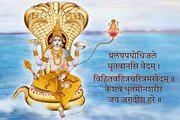
The given Shri Vishnu Dashavatara Stotram is a very melodious and effective Stotram dedicated to the ten incarnations of Lord Vishnu.
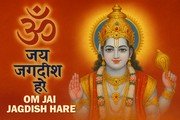
The most popular Jai Jagdish Aarti dedicated to Lord Vishnu is given with Hindi lyrics and recitation video. This Aarti is sung during the daily worship of Lord Vishnu.
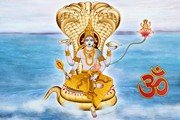
The list of Mantras used in the worship and chanting of Lord Vishnu is available on this page. Some of these Mantras are legendary and some are Vedic. Along with this, the powerful Yantra of Lord Vishnu can also be seen from this page.
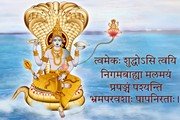
Shri Parameshwara Stuti Stotram is a very important Stotram dedicated to Lord Vishnu. Devotees recite this Stuti to obtain the grace of Lord Vishnu.