



En


While describing the glory of the Shri Jagannath Ratha Yatra in the Utkala Khanda of the Vaishnava Khanda of the Skanda Purana, Jaimini Rishi says - "With devotion, worship Balabhadra, Shri Krishna, and Devi Subhadra by offering the prescribed ritual offerings. Thereafter, amidst a grand celebration, lead all the divine forms southwards, that is, towards the southern direction. Whoever beholds Shri Krishna, Balabhadra, and Devi Subhadra while They proceed southwards attains all the merits acquired by witnessing the sacred ceremonial bath (Snana Darshana). Upon reaching near the temple, perform the Aarti of Lord Jagannatha along with Balabhadra and Subhadra, and then lead Them into the temple. Thereafter, one should not behold Them in any manner.
According to the Hindu Panchang, when the Purnima of the Shukla Paksha of the Jyeshtha month occurs with the Chandra and Brihaspati occupying the same degree in Jyeshtha Nakshatra, when the day is Thursday, and when there is also an auspicious Yoga, that Purnima is known as Mahajyeshthi Purnima, which destroys all sins. Mahajyeshthi Purnima is supremely meritorious and enhances the Lord's pleasure. On this Tithi, by worshipping Lord Jagannatha and beholding His ceremonial bath, i.e., Snana, Abhisheka, and other sacred rituals, a person becomes free from all sins.
When the Papanashini Teej falling in the Shukla Paksha of the month of Vaishakha coincides with Rohini Nakshatra, the king should, with sacred Sankalpa, respectfully appoint an Acharya. Thereafter, one or three skilled carpenters who are knowledgeable in woodworking should prepare three beautiful chariots, furnished with elegant seats, for Lord Shri Krishna, Balabhadra, and Devi Subhadra according to the aforesaid procedure. After the beautifully crafted chariots have been completed, the king should consecrate them according to the Mantras and the scriptural procedure, just as before. The entire route should also be properly sanctified.
On both sides of the route, decorative Mandalas should be created using flower bouquets, garlands, beautiful garments, Chamara, flowering creepers, and various appropriate flowers. The ground along the route should be properly levelled. There should be no mud, so that the Lord's chariot may proceed comfortably. At every step along both sides of the route, incense burners that fill the directions with fragrance should be placed. The path should be sprinkled with sandalwood-scented water. Drums, Dhola, and other musical instruments should be played. Gold and silver banners adorned with artistic designs should be installed, and flags should flutter upon them. Numerous Vaijayanti garlands should beautify the ground. Many well-trained and magnificently adorned elephants and horses should be presented. Having thus assembled all the necessary materials, the king should celebrate the grand festival with the utmost devotion.
When the Dwitiya Tithi of the Shukla Paksha in the month of Ashadha coincides with Pushya Nakshatra, the Lord should be worshipped during Arunodaya, that is, the period just before sunrise. Together with Brahmins, Vaishnavas, ascetics, and Yati, the king should fold his hands and humbly submit the following prayer to the Supreme Lord of Lords before the commencement of the journey - 'O Lord! Just as You instructed King Indradyumna in ancient times, kindly undertake Your victorious journey by chariot towards the Gundicha Mandapa in accordance with that command. May all the ten directions become sanctified by Your gracious and compassionate glance, and may all living beings, both stationary and moving, be blessed. You have assumed this incarnation out of compassion for all creatures. Therefore, O Lord! Kindly place Your sacred feet upon the earth and proceed with delight.'
Thereafter, groups of people should sing auspicious songs. The Lord's victory should be proclaimed, and the Mantra beginning with "Jitam Te Pundarikaksha" (जितं ते पुण्डरीकाक्ष०) should be chanted aloud. Sutas, Magadha, and others should joyfully sing the sacred glories of the Lord. Rows of golden ceremonial fans mounted on golden staffs should gently sway on both sides of the Lord. The fragrance of Krishna Agaru incense should perfume all directions and the sky above. The sounds of cymbals, hand-cymbals, Kartals, flute, Veena, Madhurika, and other musical instruments should continuously resound during the victorious procession of Lord Jagannatha. When the festival thus commences, Brahmins, Kshatriyas, and Vaishyas should slowly carry Balabhadra, Lord Shri Krishna, and Devi Subhadra forward with measured steps.
While proceeding along the route, the Lord should occasionally be given rest upon soft cotton cushions, and then the Rath Yatra should continue. Thereafter, after turning the splendid chariot, Balabhadra, Shri Krishna, and Devi Subhadra should be respectfully seated upon the beautifully decorated chariot adorned with an elegant canopy. After seating Them upon soft cotton cushions, They should be devoutly adorned with various garments, ornaments, garlands, and other decorations. They should also be worshipped with numerous ritual offerings. Those who, with devotion, behold Shri Jagannatha while He is seated upon the chariot during the procession attain residence in the divine abode of the Lord.
How can the glory of that festival of Lord Shri Hari ever be adequately described? Merely by chanting His Holy Name, the sins accumulated over a hundred births are destroyed. By beholding those Supreme Lord Shri Krishna, Balabhadra, and Devi Subhadra while They proceed upon the Rath Yatra towards the Mahavedi, a person becomes freed from the sins accumulated over millions of births. Even when the path of the chariot becomes muddy due to rainfall, that very path, sanctified by the divine glance of Shri Krishna, becomes capable of destroying all sins. Those noble Vaishnavas who offer Sashtanga Pranama to the Lord upon that muddy chariot path become freed from the sins accumulated since beginningless time.
Those who sing hymns of praise before Lord Vasudeva while proclaiming His victory triumph over every kind of sin. Those noble persons who dance and sing there attain Moksha through the association of exalted Vaishnavas. Whoever chants the Holy Names of the Lord while walking alongside the procession, and while journeying towards Gundicha Nagar lovingly looks towards Lord Shri Krishna and repeatedly chants, Jaya Krishna, Jaya Krishna, Jaya Krishna, never again experiences the suffering of dwelling in the mother's womb. Whoever stands before the chariot and fans Lord Purushottama with a Chamara, a Bijana (ceremonial fan), flower bouquets, or garments attains Moksha and dwells in Brahmaloka.
Those who recite the sacred Sahasranama while circumambulating the chariot become equal to Lord Vishnu and reside in Vaikuntha Dham. Whoever performs acts of charity and other virtuous deeds for the sake of Lord Shri Krishna receives imperishable merit, for even the smallest offering made in His name becomes equal in merit to Meru Dana, i.e., the donation of Mount Meru. Those who remain before the Lord, continuously beholding His divine countenance, offering obeisance at every step, and rolling in the dust or mud of the sacred path instantly attain Moksha and proceed to the supreme abode of Lord Shri Vishnu.
Thus, Lord Shri Krishna, seated upon the magnificent chariot together with Balabhadra and Devi Subhadra, journeys forth while illuminating all four directions. The breeze that touches His divine limbs destroys the sins of all living beings. He is exceedingly compassionate and the nourisher and protector of His devotees. Even in the hearts of those who are ignorant and lacking faith, Lord Vishnu annually commences this journey in the form of Shri Jagannatha so that faith may arise within them.
Thus, upon reaching Gundicha Nagar, the Lord resides for seven days on the banks of Vindu Tirtha. For in ancient times, the Lord granted King Indradyumna the following boon - 'Every year I will reside upon the banks of your sacred Tirtha. While I remain there, all other sacred Tirthas will also dwell within them. Those who bathe there according to the prescribed rites and, for seven days, behold Me, Balarama, and Subhadra while We reside in the Gundicha Mandapa will attain Sayujya Moksha with Me.'
Therefore, after bathing in that supremely sacred Tirtha, which destroys all sins, alone bestows the merits of all sacred pilgrimage sites, and greatly enhances the pleasure of Lord Shri Vishnu, and after duly offering Tarpana to the Pitris and the Devas, whoever beholds, worships, and offers obeisance to Lord Narasimha situated upon its banks, and thereafter proceeds once again to the Mahavedi to worship and bow before the Lord with devotion as before, whether man or woman, attains Sayujya Moksha with Lord Vishnu.
Magha Nakshatra belongs to the Pitris, i.e., ancestors; therefore, it is especially dear to them and bestows great satisfaction upon them. Shraddha offered by sons under this Nakshatra grants exceptional contentment to the Pitris. If a person devoutly performs Shraddha at the exceedingly sacred spot situated between Lord Narasimha and Lord Nilakantha, near Lord Vishnu on the banks of the aforesaid sacred lake containing the essence of all Tirthas, he liberates one hundred generations of his lineage. If, during the Shukla Paksha of the month of Ashadha, the Panchami Tithi, Magha Nakshatra, and the arrival of Lord Jagannatha at the Mahavedi all coincide at Indradyumna Sarovara, this rare conjunction is known as Chatushpadayoga, which bestows imperishable satisfaction upon the Pitris. Likewise, whoever performs Shraddha for the benefit of the Pitris at Indradyumna Sarovara, said to have originated from the Ashvamedha sacrifice, either on the Amavasya of the month of Bhadrapada or on any of the four Yugadi Tithis, performs a Shraddha that destroys all sins. For seven days, one should observe silence, bathe three times daily, and during all three Sandhyas, worship the Lord, who is ceremonially established upon the Kalasha, according to the prescribed ritual procedure.
Light a Diya with cow's Ghee or sesame oil and place it before the Lord, protecting it continuously. Observe silence during the day, and at night remain awake while chanting Mantras related to the Lord. After completing these observances for seven days, rise early on the eighth day and perform the consecration ceremony. By observing this excellent Vrat according to the prescribed procedure, a person attains all four Purushartha, i.e., Dharma, Artha, Kama, and Moksha.
After carefully protecting the chariots for seven days, on the eighth day all the chariots should once again be turned southwards and redecorated with garments, garlands, flags, Chamara, and other ornaments. On the morning of the Navami Tithi of the Shukla Paksha in the month of Ashadha, all the sacred Deity forms should once again be seated upon the chariots. This southward journey of Lord Vishnu is extremely rare. People should participate in this procession with devotion. Just as the first journey is sacred, so too is this second journey. Both are equally capable of bestowing Moksha.
The procession and the re-entry into the temple together constitute a single grand festival of the Lord. The entire celebration continues for nine days. Only those who have completely observed this threefold festival receive its full spiritual merit. Those who behold Lord Shri Krishna, Balabhadra, and Devi Subhadra while They return southwards upon the chariot from the Gundicha Mandapa become eligible for Moksha; that is, they attain the divine abode of Lord Vishnu, Vaikuntha.
O revered sages! Thus, have I described to you the glory of the Mahavedi Mahotsava, merely hearing or reciting which purifies a person. Whoever rises every morning, recites or attentively listens to this sacred narration, and even places an image of the Lord upon a chariot and devoutly observes this Rath Yatra, also, by the grace of Lord Vishnu, attains residence in Vaikuntha Dham through the merits of the Gundicha Mahotsava."
॥Thus concludes the Mahatmya of the Jagannatha Puri Ratha Yatra॥
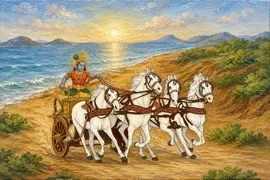
According to the Hindu lunar calendar, the Jagannath Ratha Yatra festival is celebrated on the Shukla Paksha Dwitiya of the Ashada month. Every year Lord Jagannatha sets out on his annual visit and stays for a few days in the Gundicha Mata Temple built by Queen Gundicha.
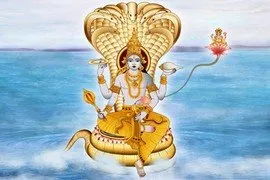
Lord Vishnu is the protector of the entire universe and one of the Trimurti. It is believed that, this visible world is the dream of Lord Vishnu sleeping in Kshirsagar. On this page you can get many information related to Lord Vishnu.
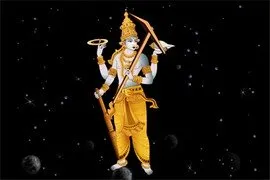
Lord Balarama is the incarnation of Lord Vishnu. Balaram Ji was incarnated in the Dvapara Yuga as the elder brother of Lord Krishna. Balarama Ji is also known by the names Haladhara, Balabhadra, Sankarshana and Dau Bhaiya etc.
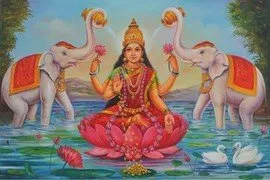
Goddess Lakshmi is one of the three main goddesses (Trimurti) of Hinduism, Goddess Lakshmi, Parvati and Saraswati. Goddess Lakshmi is the Goddess of wealth and prosperity. She is the consort of Lord Vishnu and daughter of Maharishi Bhrigu.
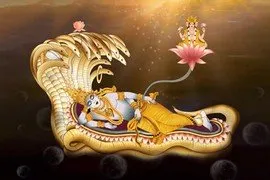
Ekadashi of Shukla Paksha of Ashadha month is called Devshayani Ekadashi. According to Hindu beliefs, Lord Vishnu's sleeping period begins from this day. That's why this Ekadashi is known as the Devshayani Ekadashi or Hari Shayani Ekadashi.
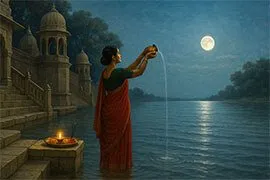
The Purnima Tithi of Jyeshtha month is considered very special. Jyeshtha Purnima is also celebrated as Vata Purnima. On this day, married women observe a fast for the long life of their husbands. Jyeshtha Purnima is considered special for the worship of Shri Vishnu-Lakshmi.