


En


Devarshi Narada says - "O King! Kamsa thought that Vasudeva Ji might flee out of fear, and therefore he sent many soldiers. According to Kamsa's command, ten thousand armed soldiers surrounded the residence of Vasudeva Ji. Vasudeva Ji and Devaki had eight sons, who were born successively at intervals of one year. Thereafter, Devaki also gave birth to a daughter, who was the eternal Maya of the Lord Himself. The first son who was born was named Kirtimana. Vasudeva took him in his arms and brought him before Kamsa. Seeing Vasudeva keeping his word, Kamsa felt compassion. Kamsa said - 'Vasudeva! Take this child back with you; I have no fear of him. But I shall certainly kill your eighth child, without any doubt.'"
Shri Narada says - "O King! When Kamsa said this, Vasudeva returned home with his son; however, he did not consider the wicked man's words to be true in the least. At that time, descending from the sky, I went to Kamsa. Ugrasena's son Kamsa bowed his head and duly welcomed and honored me and asked me about the purpose of the Gods. Hear now what answer I gave him at that time. I said - 'Nanda and the other cowherds are incarnations of the Vasu, and Vrishabhanu and others are incarnations of the Gods. O King Kamsa! In this land of Vraja, the Gopis are in fact the Vedic Rik verses themselves residing here in feminine form. In Mathura, Vasudeva and the other Vrishni Vanshi are originally Gods. Devaki and all the other women are certainly celestial maidens. When counted seven times, all numbers become eight. If counted according to the number of your slayer, even this first child may be considered the eighth, because the gods move in a Vamato Gati, i.e., contrary direction.'"
Shri Narada says - "O King of Mithila! After speaking thus to him, when I departed, Kamsa became extremely enraged at the Gods. At that very moment he resolved to slay the Yadavas. He bound Vasudeva and Devaki in chains and imprisoned them, and he dashed that first-born child of Devaki against a stone slab and killed him. Kamsa remembered the events of his previous birth; therefore, out of fear of Lord Vishnu and also due to his wicked nature, he killed each child of Devaki as soon as it was born. He did not feel the slightest hesitation in doing so. Because of these evil deeds of Kamsa, the king of the Yadu dynasty, King Ugrasena, became furious. He assisted Vasudeva and tried to prevent Kamsa from committing atrocities. Seeing Kamsa's wicked intentions openly, the great Yadava warriors rose against him. Standing behind Ugrasena, sword in hand, they began to protect him. When Kamsa's private soldiers saw Ugrasena's followers ready for battle, they too prepared to confront them. In the royal assembly hall itself, a battle broke out between the two sides. At the royal gate also, fierce fighting began between the warriors of both parties. They struck one another with swords. In this conflict, ten thousand men were killed. Thereafter, Kamsa took a mace in his hand and began crushing his father's army. By the mere touch of his mace, the heads of many men were shattered; the feet of many were severed, their nails split, their arms cut off, and they became helpless and despondent. Some fell face downward, others on their backs, and in a moment, they lay fallen with their weapons. Many warriors vomited blood, fainted, and passed into the jaws of death. So much blood flowed there that the entire assembly hall became drenched in blood.
O King of Kings! Thus, the wicked and intoxicated Kamsa, in fury, struck down his formidable enemies and imprisoned his own father. That evil man removed Ugrasena from the royal throne, bound him with ropes, and imprisoned him along with his friends. Seizing all the wealth of Madhu and Shurasena, Kamsa himself ascended the throne and began ruling the kingdom. All the distressed Yadavas immediately fled to various lands in the four directions and, residing there, waited for a suitable opportunity.
Devaki's seventh pregnancy brought both joy and sorrow to them, for Anantadeva Himself had descended into her womb. Yogamaya drew that embryo from Devaki by the process of Sankarshana and transferred it into the womb of Rohini in Vraja. When this occurred, the people of Mathura lamented and said - 'Alas! Where has Devaki's pregnancy gone? How has it miscarried?' Five days after that embryo had gone to Vraja, on Bhadrapada Shukla Shashthi, under the Swati Nakshatra, on a Wednesday, Anantadeva was born from the womb of Rohini, the wife of Vasudeva. The child was born at midday, in Tula Lagna, surrounded by five planets situated in exalted positions. At the time of His birth, when the gods were showering flowers and the clouds were scattering drops of rain, the manifested Anantadeva illuminated Nanda's house with the radiance of His limbs. Nandaraya Ji performed the Jatakarma rite for the child and donated one million cows to the Brahmins. Inviting the cowherds, he organized a great auspicious festival accompanied by the music of expert singers skilled in fine arts. Devala, Devarata, Vashishtha, Brihaspati, and I, Narada, along with Shri Krishna Dvaipayana Vyasa, also arrived there and were greatly pleased by the offerings of Padya and other honors presented by Nanda.
Nandaraya asked - 'O great sages! Who is this beautiful child, equal to whom none other appears? O great sage! How was He born in only five days? Kindly explain this to me.'
Shri Vyasa said - 'O Nanda! Your fortune is extraordinary. In the form of this child, the eternal deity Sheshanaga has arrived. First, He manifested in the womb of Devaki in Mathura through Vasudeva. Thereafter, by the will of Lord Krishna, He was transferred from Devaki's womb into the womb of the auspicious Rohini. O Nandaraya! He is rare even for Yogis, yet you have directly beheld Him. I, the great sage Vedavyasa, have come here solely to behold Him; therefore, show us all this Supreme Deity who has assumed the form of a child.'"
Shri Narada says - "O King! Thereafter, Nanda, astonished, showed them Shesha in the form of the infant. Beholding Shesha, seated in the cradle, Vyasa, son of Satyavati, bowed to Him and offered prayers.
Shri Vyasa said - 'O Lord! O Supreme Lord of the Lords and fulfiller of all desires, I bow to You. You are Anantadeva, Sheshanaga, Balarama; I bow to You. You are the sustainer of the earth, complete in form, self-effulgent, bearer of the plough, adorned with a thousand hoods, and Sankarshana Deva; I bow to You. O consort of Revati! You are Baladeva and the elder brother of Shri Krishna. You are Halayudha and the destroyer of Pralambasura. O Purushottama! Protect me. You bear a banner marked with the symbols of strength, Balabhadra, and the palm tree; I bow to You. Clad in blue garments, fair in complexion, beloved son of Rohini, I bow to You. You are the enemy of Dhenuka, Mushtika, Kumbhanda, Rukmi, Kripakarna, Kuta, and Balvala. You diverted the current of the Kalindi and drew Hastinapura toward the Ganga. You are the destroyer of Dvivida, the Lord of the Yadavas, and the ornament of Vraja Mandala. You slew the brothers of Kamsa and are the Lord who undertook pilgrimage. You are also the Guru of Duryodhana. O Lord! Protect the world, protect it. O Supreme Ananta, never deviating from Your own glory, victory to You, victory to You. Your fame pervades all directions. You are the foremost among the Surendra (Lords of Lords), Munindra (Sages), and Phanindra (Serpents). Wielder of the club, bearer of the plough, mighty One, I bow to You. Whoever in this world constantly recites this hymn shall attain the supreme abode of Shri Hari. In this world, he shall obtain complete strength to destroy his enemies. He shall always be victorious and shall become the possessor of abundant wealth."
Shri Narada says - "O King! Thereafter, Parashara's son, the broad-minded sage Badarayana, Satyavati's son Shri Krishna Dvaipayana Vedavyasa, along with those sages, bowed a hundred times to Balarama and circumambulated Him, and then went to the bank of the Saraswati River." Thus, in the Shri Garga Samhita, within the Goloka Khanda, in the dialogue between Shri Narada and Bahulashva, the account of the birth of Balabhadra is completed.
॥Iti Shri Balarama Jayanti Vrat Katha Sampurnah॥
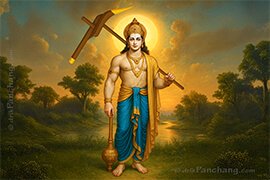
The birth anniversary of Lord Balarama is celebrated as Balarama Jayanti. Lord Balarama is the eighth incarnation of Lord Vishnu. Balarama Jayanti is also known as Baladeva Chhath, Mor Chhath, etc.
Lord Balarama is the incarnation of Lord Vishnu. Balaram Ji was incarnated in the Dvapara Yuga as the elder brother of Lord Krishna. Balarama Ji is also known by the names Haladhara, Balabhadra, Sankarshana and Dau Bhaiya etc.
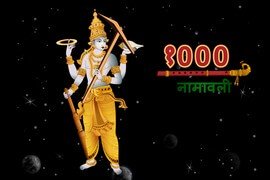
Mantra and Names of Lord Balaram are given. These names are also known as Sahasranamavali of Lord Balarama.
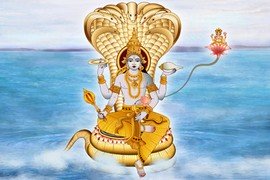
Lord Vishnu is the protector of the entire universe and one of the Trimurti. It is believed that, this visible world is the dream of Lord Vishnu sleeping in Kshirsagar. On this page you can get many information related to Lord Vishnu.
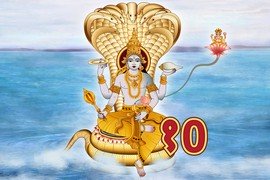
The list of the ten major incarnations of Lord Vishnu and the dates of their birth anniversaries are given on this page. From this page you can also get interesting information about all the incarnations.
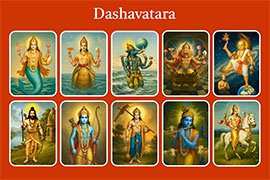
Lord Vishnu keeps taking various incarnations forms from for the welfare of the universe. Here is the ten main incarnations of Lord Vishnu have been described in the religious scriptures as Dashavatara. According to religious scriptures, Kalki incarnation, one of the Dashavatars, is going to appear at the end of the present Kaliyuga.
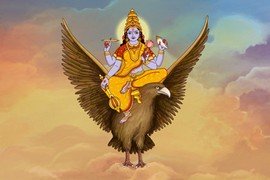
A complete list of Ekadashi dates is given here. Go through the Ekadashi fasting dates list here so that you never miss fasting on Ekadashi. Ekadashi fast is observed with great enthusiasm by the devotees of Lord Vishnu.
ISKCON devotees can get the complete list of ISKCON Ekadashi fasting dates here. This list will prove highly informative and useful to those who observe the fast of Ekadashi as per the ISKCON.
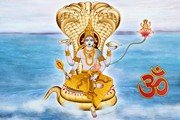
The list of Mantras used in the worship and chanting of Lord Vishnu is available on this page. Some of these Mantras are legendary and some are Vedic. Along with this, the powerful Yantra of Lord Vishnu can also be seen from this page.