


En



In the Uttara Parva of Bhavishya Purana, Chapter 55 describes the Katha and procedure of observing Shri Krishna Janmashtami Vrat. According to the narration found in the Purana, King Yudhishthira said - "O Achyuta! Kindly describe in detail the procedure of observing the Vrat associated with Your birth anniversary, i.e. Janmashtami Vrat."
Lord Shri Krishna said - "O King! When Kansa was slain in Mathura, Mata Devaki took Me into her lap and began to weep. Father Vasudeva Ji also embraced Me and Baladeva and joyfully said - 'Having found both my sons safe and sound, my life has become successful today. By good fortune, all of us are together today.'
Seeing Our parents extremely delighted, many people gathered there and said to Me - 'O Lord! By slaying this wicked Kansa, You have performed a truly great deed. All of us had been greatly afflicted by his atrocities. Kindly tell us when You appeared from the womb of Mata Devaki. We shall celebrate that day as a great festival. Repeated salutations to You! We have all taken refuge in You. Kindly be pleased with us.'
At that time, Father Vasudeva also said to Me - 'Tell them the day of Your birth.'"
Then, while revealing the significance of Janmashtami Vrat before the residents of Mathura, I said - "O residents of the city! You should make the day of My birth famous throughout the world by the name of Janmashtami. Every religious person should certainly observe Janmashtami Vrat.
सिंहराशिगते सूर्ये गगने जलदाकुले।
मासि भाद्रपदेऽष्टम्यां कृष्णपक्षेऽर्धरात्रके।
वृषराशिस्थिते चन्द्रे नक्षत्रे रोहिणीयुते॥
Simharashigate Surye Gagane Jaladakule।
Masi Bhadrapadeashtanyam Krishnapaksheardharatrake।
Vrisharashisthite Chandre Nakshatre Rohiniyute॥
That is, when Surya was situated in Simha Rashi and Chandra was situated in Vrishabha Rashi, I was born at midnight on Ashtami Tithi of Krishna Paksha in the month of Bhadrapada under Rohini Nakshatra. I was born from the womb of Mata Devaki through Vasudeva. This day shall become famous throughout the world as Janmashtami. This Vrat first became renowned in Mathura and, in due course of time, became famous in all the worlds. By observing this Vrat, peace shall prevail in the world, happiness shall be attained and people shall remain free from diseases."
Maharaja Yudhishthira said - "O Lord! Now kindly describe the procedure of this Vrat by observing which You become pleased."
Lord Shri Krishna said - "O Maharaja! By observing this one Vrat alone, the sins accumulated over seven births are destroyed. On the day preceding the Vrat, one should cleanse the teeth and undertake the prescribed rules of the Vrat. On the day of the Vrat, after bathing at midday and completing other purificatory rites, one should prepare a Sutika Griha, i.e. a maternity chamber, for Mata Bhagavati Devaki. It should be beautifully decorated with Padmaraga gems, Vanamala and other ornaments. Like Gokula, the Sutika Griha should be adorned with Gopas, Gopis, bells, Mridanga, Shankha and auspicious Kalashas. For protection, a sword, a black goat, a pestle and other such objects should be placed at the entrance of the Sutika Griha.
Auspicious symbols such as Swastika should be drawn on the walls. Goddess Shashthi should be installed along with Naivedya and other offerings. In this manner, after decorating the Sutika Griha according to one's capacity, an image of ascetic Mata Devaki in a semi-reclining posture, together with Me, should be installed upon a couch in the centre.
Images are of eight types - made of gold, silver, copper, brass, clay, wood, gems or in painted form. A fully auspicious image made from any one of these materials should be installed. An image of My infant form drinking the milk of Mata Devaki should be placed beside her upon the couch. An image of Mata Yashoda along with a young girl should also be installed there. On the upper walls of the Sutika Mandapa, images or paintings of Deities, Grahas, Nagas, Vidyadharas and others showering flowers should be depicted. Vasudeva Ji should also be portrayed outside the Sutika Griha holding a sword and shield.
Vasudeva Ji is an incarnation of Maharishi Kashyapa, while Mata Devaki is an incarnation of Goddess Aditi. Baladeva is an incarnation of Sheshanaga. Daksha Prajapati also incarnated as Nanda Baba. Mata Yashoda is an incarnation of Goddess Diti, while Garga Muni is an incarnation of Lord Brahma. Kansa is none other than an incarnation of Kalanemi. The guards of Kansa should be depicted sleeping near the Sutika Griha. Images of cows, elephants and of Apsaras and Gandharvas engaged in dancing and singing should also be made. On one side, Kaliya Naga should be depicted in the deep waters of the Yamuna.
Having thus enthroned Goddess Devaki in the beautifully decorated new Sutika Griha, she should be worshipped with devotion by offering fragrance, flowers, Akshata, incense, coconut, pomegranate, cucumber, citron, betel nut, orange, jackfruit and all other fruits available according to the place and season. Thereafter, one should pray to Mata Devaki by following Prarthana Mantra -
गायद्भिः किन्नराद्यैः सततपरिवृता वेणुवीणानिनादै-
र्भृङ्गारादर्शकुम्भप्रमरकृतकरैः सेव्यमाना मुनीन्द्रैः।
पर्यङ्के स्वास्तृते या मुदिततरमनाः पुत्रिणी सम्यगास्ते
सा देवी देवमाता जयति सुवदना देवकी कान्तरूपा॥
Gayadbhih Kinnaradyaih Satataparivrita Venuvinaninadai-
Rbhringaradarshakumbhapramarakritakaraih Sevyamana Munindraih।
Paryanke Svastrite Ya Muditataramanah Putrini Samyagaste
Sa Devi Devamata Jayati Suvadana Devaki Kantarupa॥
Meaning - "Victory to Goddess Devaki, the beautiful-faced Mother of the Devas and manifestation of Aditi, who possesses an enchanting form and sits joyfully upon a properly spread couch as the mother of Krishna. She is surrounded by Kinnaras and others who continuously sing praises accompanied by the sounds of flute and Veena, and is served by eminent sages holding ceremonial vessels, mirrors, auspicious Kalasha and Chavara in their hands."
At that time, one should meditate upon Goddess Lakshmi, seated upon a lotus and pressing the feet of Mata Devaki. Goddess Lakshmi should be worshipped with the following Mantra -
नमो देव्यै महादेव्यै शिवायै सततं नमः।
Namo Devyai Mahadevyai Shivayai Satatam Namah।
Thereafter, all the Deities should be worshipped separately with the following Nama Mantras -
ॐ देवक्यै नमः।
ॐ वसुदेवाय नमः।
ॐ बलभद्राय नमः।
ॐ श्रीकृष्णाय नमः।
ॐ सुभद्रायै नमः।
ॐ नन्दाय नमः।
ॐ यशोदायै नमः।
Om Devakyai Namah।
Om Vasudevaya Namah।
Om Balabhadraya Namah।
Om Shrikrishnaya Namah।
Om Subhadrayai Namah।
Om Nandaya Namah।
Om Yashodayai Namah।
Some devotees offer Arghya to Chandra after moonrise and meditate upon Shri Hari. They should meditate upon Shri Hari by doing Dhyana with the following Mantras -
अनघं वामनं शौरिं वैकुण्ठं पुरुषोत्तमम्।
वासुदेवं हृषीकेशं माधवं मधुसूदनम्॥
वाराहं पुण्डरीकाक्षं नृसिंहं ब्राह्मणप्रियम्।
दामोदरं पद्मनाभं केशवं गरुडध्वजम्॥
गोविन्दमच्युतं कृष्णमनन्तमपराजितम्।
अधोक्षजं जगद्बीजं सर्गस्थित्यन्तकारणम्॥
अनादिनिधनं विष्णुं त्रैलोक्येशं त्रिविक्रमम्।
नारायणं चतुर्बाहुं शङ्खचक्रगदाधरम्॥
पीताम्बरधरं नित्यं वनमालाविभूषितम्।
श्रीवत्साङ्कं जगत्सेतुं श्रीधरं श्रीपतिं हरिम्॥
Anagham Vamanam Shaurim Vaikuntham Purushottamam।
Vasudevam Hrishikesham Madhavam Madhusudanam॥
Varaham Pundarikaksham Nrisimham Brahmanapriyam।
Damodaram Padmanabham Keshavam Garudadhvajam॥
Govindamachyutam Krishnamanantamaparajitam।
Adhokshajam Jagadbijam Sargasthityantakaranam॥
Anadinidhanam Vishnum Trailokyesham Trivikramam।
Narayanam Chaturbahum Shankhachakragadadharam॥
Pitambaradharam Nityam Vanamalavibhushitam।
Shrivatsankam Jagatsetum Shridharam Shripatim Harim॥
After meditating upon Lord Shri Hari with the above Mantras, the image should be bathed, i.e., offered Snana while chanting the following Mantra -
योगेश्वराय योगसम्भवाय योगपतये गोविन्दाय नमो नमः।
Yogeshvaraya Yogasambhavaya Yogapataye Govindaya Namo Namah।
Thereafter, Anulepana, Arghya, Dhupa, Deepa and other offerings should be presented while chanting the following Mantra -
यज्ञेश्वराय यज्ञसम्भवाय यज्ञपतये गोविन्दाय नमो नमः।
Yajneshvaraya Yajnasambhavaya Yajnapataye Govindaya Namo Namah।
Thereafter, Naivedya should be offered while chanting the following Mantra -
विश्वाय विश्वेश्वराय विश्वसम्भवाय विश्वपतये गोविन्दाय नमो नमः।
Vishvaya Vishveshvaraya Vishvasambhavaya Vishvapataye Govindaya Namo Namah।
The Mantra for offering Deepa is as follows -
धर्मेश्वराय धर्मपतये धर्मसम्भवाय गोविन्दाय नमो नमः।
Dharmeshvaraya Dharmapataye Dharmasambhavaya Govindaya Namo Namah।
In this manner, Chandra along with Rohini, and Vasudeva, Devaki, Nanda, Yashoda and Baladeva should be worshipped upon the altar. By performing this worship, one becomes free from all sins.
At the time of moonrise, Arghya should be offered to Chandra with the following Mantra -
क्षीरोदार्णवसम्भूत अत्रिनेत्रसमुद्भव।
गृहाणार्घ्यं शशाङ्केन्दो रोहिण्या सहितो मम॥
Kshirodarnavasambhuta Atrinetrasamudbhava।
Grihanarghyam Shashankendo Rohinya Sahito Mama॥
At midnight, Vasordhara should be offered with jaggery and Ghee, and Goddess Shashthi should be worshipped. At the same time, rites such as the naming ceremony should also be performed. On the morning of Navami, a festival should also be celebrated for Bhagavati Devaki just as it is celebrated for Me. Thereafter, Brahmins should be fed, and Dakshina should be offered according to one's capacity while saying, "Krishno Me Priyatam" (कृष्णो मे प्रीयताम्). The following Mantra should also be recited -
यं देवं देवकी देवी वसुदेवादजीजनत्।
भौमस्य ब्रह्मणो गुप्त्यै तस्मै ब्रह्मात्मने नमः॥
Yam Devam Devaki Devi Vasudevadajijanat।
Bhaumasya Brahmano Guptyai Tasmai Brahmatmane Namah॥
Thereafter, the Brahmins should be respectfully bid farewell, and they should say - "Shantirastu Shivam Chastu." (शान्तिरस्तु शिवं चास्तु।)
O Dharmanandana! The man or woman devoted to Me who celebrates this festival of Goddess Devaki every year attains sons, progeny, good health, wealth and grains, a prosperous household, long life, sovereignty and all other desired fruits. In the region where this festival is celebrated, there is no fear of the afflictions of birth and death, repeated worldly existence, drought or other calamities. The clouds shower rain at the proper time.
O son of Pandu! In the house where this Devaki Vrat is observed, there is no untimely death or miscarriage. Moreover, that household remains free from widowhood, misfortune and quarrels. One who observes this Vrat even once attains Vishnuloka. Those who faithfully observe this Vrat enjoy all worldly pleasures and, at the end of life, attain an exalted place in Vishnuloka." Thus ends the Mahatmya of Shri Krishna Janmashtami Vrat as described in the Bhavishya Purana.
॥Iti Shri Krishna Janmashtami Vrat Katha Sampurnah॥
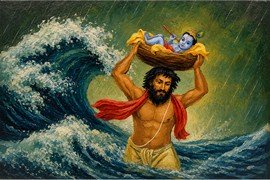
Krishna Janmashtami Date, Puja Muhurat, Parana and Nishita Puja timings are given. Krishna Janmashtami is a festival commemorating the birth of Lord Krishna. Lord Krishna was the ninth incarnation of Vishnu's Dashavatara.
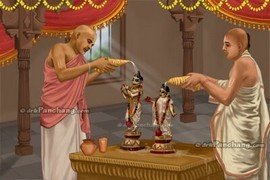
The birth anniversary of Lord Shri Krishna is celebrated as Krishna Janmashtami. Special rituals and huge festivities are organized in Krishna temples on Krishna Janmashtami. A one-day fast is also observed by the devotees.
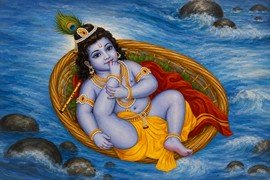
A detailed analysis of the Birth and death timings of Lord Krishna is done along with the detailed Panchang. Appropriate evidence has been given to remove all the misconceptions related to the time of birth of Lord Krishna.
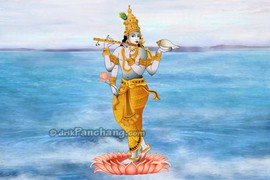
Lord Krishna is one of the most popular deities worshipped in Hinduism. Krishna is the ninth incarnation of Lord Vishnu. Lord Vishnu incarnated as Shri Krishna to protect the people of Braj from the atrocities of Kansa.
Shri Krishna Jayanti is known as Ashtami Rohini in South Indian regions. It is celebrated as the birthday of Lord Krishna. Ashtami Rohini is also known as Sri Jayanthi and Gokulashtami which is observed based on Solar Calendar.
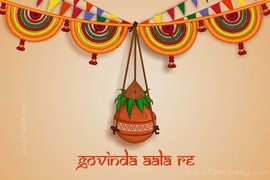
Dahi Handi is a famous sportive event organized in the cities of Maharashtra and Goa. Dahi Handi is celebrated on the next day of Krishna Janmashtami. Dahi Handi festival marks the Makhan Chori Leela of Lord Krishna.
This is a very popular Aarti dedicated to Lord Krishna, provided with lyrics and video.
This is a 40 verses prayer dedicated to Lord Krishna, given with lyrics and recitation video. This prayer is known as Shri Krishna Chalisa.
Names and Mantras of Lord Krishna, known as Shri Krishna Ashtottara Shatanamavali, are given on this page with meaning and recitation video.
This popular Stotram known as Shri Krishna Ashtakam is given with lyrics and recitation video. It is recited to please Lord Krishna.
A detailed Shodashopachara Krishna Puja Vidhi is given to be performed on Krishna Janmashtami. In this Puja Vidhi, all the essential rituals of Shodashopachara Puja are described step by step along with the Mantras.
Many such devotional messages related to Krishna Janmashtami are given, which you can share with your loved ones.
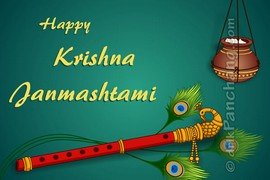
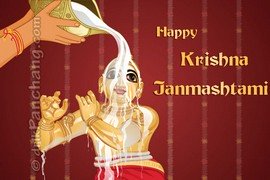
Free Krishna Janmashtami greeting cards with various beautiful images like Charming Baby Krishna, Krishna Snana on Janmashtami, Krishna Playing Flute and Krishna with Dahi Handi, etc. are available to send to your loved ones.
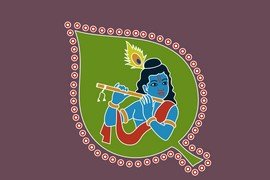
The method of making beautiful Rangoli on Janmashtami or Gokulashtami is described step by step through pictures. With the help of these pictures, you can make beautiful rangoli or send these pictures to your loved ones.