



En



Sanatkumara said to Lord Shiva - "O Lord! I have listened to the glory of Ravivara, i.e., Sunday, which bestows great joy. Now, kindly describe the glory of the Shravana Somavara Vrat observed during the month of Shravana."
Lord Shiva said - "O Sanatkumara! Ravi, i.e., Surya, is My eye. Therefore, the glory of Ravivara is exceedingly great. Even greater, however, is the glory of Somavara, i.e., Monday, which is associated with My name along with Goddess Uma. I will describe its glory to the best of My ability; listen to it attentively.
Chandrama is known as Soma and is regarded as the king of the Brahmins. Soma also denotes the sacred Somalata, which is the principal means of performing Vedic Yajnas. Now listen attentively as I explain the various reasons behind the name Soma. Since this day represents My own form, it is known as Somavara. Somavara bestows every kind of kingdom and prosperity; therefore, it is considered excellent. It grants the merits of all Yajnas and bestows excellent rewards upon those who observe this Vrat. O Vipra! I will now describe the complete procedure for observing the Somavara Vrat. Listen with complete attention.
Although observing the Somavara Vrat is considered auspicious during all twelve months of the year, anyone who is unable to observe it throughout the year should certainly observe it during the month of Shravana. Observing this Vrat during Shravana bestows the same merit as observing it throughout the entire year.
On the first Monday of the Shukla Paksha during the month of Shravana, one should make the following Sankalpa - "I will faithfully observe the Somavara Vrat according to the prescribed rules. May Lord Shiva be pleased with me through the observance of this Vrat." After making this Sankalpa, one should commence the Vrat according to the prescribed procedure. Whether there are four or five Mondays during the month of Shravana, the Vrat should be observed on all Mondays.
After making the Sankalpa in the morning, Lord Shiva should also be worshipped at night. In the evening, He should be worshipped with Shodashopachara Puja. After completing the worship, one should listen to this sacred Somavara Vrat Katha with one-pointed concentration. Now I will narrate the Katha associated with this Somavara Vrat. Listen to it attentively.
From the first Monday of the month of Shravana, one should formally undertake the vows of this sacred observance and begin this excellent Vrat. After taking a ritual bath in the morning, one should purify oneself and wear clean white garments. Thereafter, the observer of the Vrat should purify the mind by renouncing lust, anger, pride, hatred, slander and all such negative qualities. Afterwards, Lord Shiva should be worshipped with the Mula Mantra, Namah Shivaya (नमः शिवाय) or the Tryambaka Mantra, offering white flowers such as Malati and Mallika, along with other desirable flowers and appropriate ritual offerings.
Thereafter, one should meditate in the following manner - "I meditate upon Lord Sharva, Bhavanashana and Mahadeva, who destroy the sorrows of worldly existence. I meditate upon Lord Ugra, Ugranatha, Bhava and Shashimauli. I constantly meditate upon Lord Shiva, who is Rudra, Nilakantha, Shiva and Bhavahari, the remover of worldly bondage."
After worshipping Lord Shiva, the Lord of all Devas, with these beautiful offerings, listen to the merits attained according to one's wealth and capacity in observing this Vrat. Those who worship Lord Shiva along with Goddess Parvati on Mondays attain the eternal and imperishable realms, from which there is no rebirth.
Now I will briefly describe the merit obtained by observing Nakta Vrat, that is, partaking of a single meal at night during the Somavara Vrat. By observing Nakta Vrat on Mondays, even the sins accumulated over seven births, sins that cannot be destroyed even by the Devas and Asuras, are completely eradicated. There should be no doubt about this. One who observes a complete fast instead of Nakta Vrat also quickly attains the excellent merit of this sacred Vrat.
Whoever desires a son is blessed with sons. Whoever desires wealth obtains wealth. Whatever desire a person contemplates is certainly fulfilled. By the merit of this Vrat, one enjoys all desired pleasures in this world for a long time and, thereafter, ascends a divine celestial chariot to Rudraloka, where he is honored and revered.
The mind is fickle, wealth is transient, and life itself is impermanent. Realising this truth, one should diligently perform the Udyapana of this Vrat. During the Udyapana, one should have an image of Lord Uma-Maheshwara, seated upon Vrishabha, made of gold or silver according to one's means. One should not be miserly while spending wealth for this sacred purpose.
Thereafter, a beautiful Lingatobhadra Mandala should be prepared. In the center of the Mandala, a Kalasha covered with Shweta, i.e., white cloth should be established by doing Kalasha Sthapana. Upon the Kalasha, a vessel made of copper or bamboo should be placed, and above it, the idol of Lord Shiva along with Goddess Uma should be installed. Thereafter, Lord Shiva should be worshipped according to the prescribed rites with the Mantras described in the Shrutis, Smritis and Puranas. A beautiful floral Mandapa should be constructed, and an elegant Vitana, i.e., canopy should be erected above it. During the night, one should remain awake, joyfully singing devotional hymns, playing musical instruments and engaging in other auspicious devotional activities.
According to the procedures prescribed in one's Grihya Sutra, the sacred fire should be established. Thereafter, a Homa should be performed while reciting the eleven sacred names of Lord Shiva, such as Sharva and Bhavanasha. One hundred and eight oblations should be offered using Palasha and other sacred sacrificial sticks. While reciting the "Apyayasva" Mantra, oblations of Vrihi, i.e., rice, sesame seeds and other sacred offerings should be made. Oblations of Bilva leaves should also be offered while chanting either the Tryambaka Mantra or the Shadakshara Mantra, i.e., six-syllabled Mantra, Om Namah Shivaya (ॐ नमः शिवाय). After completing the Swishtakrita and the other concluding rites, the Purnahuti should be offered. Thereafter, the Acharya should be worshipped and a cow should be donated to him. Subsequently, eleven worthy and Veda-learned Brahmanas should be served food and presented with eleven Kalashas along with bamboo vessels.
After worshipping Lord Shiva and all the articles offered during His worship, they should be respectfully presented to the Acharya. Thereafter, one should pray - "May this Vrat of mine be completed successfully, and may Lord Shiva be pleased with me."
Afterwards, one should joyfully partake of food along with relatives and family members. Whoever observes this Vrat according to the prescribed rites attains all desired fruits. After enjoying the finest worldly pleasures, such a devotee reaches Shivaloka, where he is honored with great reverence. In ancient times, this sacred Somavara Vrat was also observed by Lord Shri Krishna.
Likewise, noble kings, righteous believers and pious devotees also observed this Vrat. Whoever listens to the Mahatmya of the Shravana Somavara Vrat also obtains the merit of observing this sacred Vrat." Thus concludes the Mahatmya of the Somavara Vrat as described in the Shravana Masa Mahatmya of the Shri Skanda Purana.
॥Iti Shravana Somavara Vrata Katha Sampurnah॥
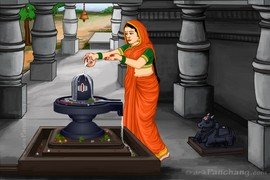
All Mondays or Somwar which fall during Shravana month are considered highly auspicious for fasting to seek blessing of Lord Shiva and known as Shravana Somwar. Most states follow regional calendars due to which dates of Sawan Somwar might differ by 2 weeks.
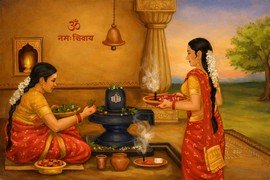
Lord Shiva is worshipped on Maha Shivaratri day. It is believed that Lord Shiva was born as Linga at midnight on this day. Lord Shiva is worshipped in all the four Prahar of the night on Maha Shivaratri. Nishita Kaal Puja Time for Maha Shivaratri is given on this page.
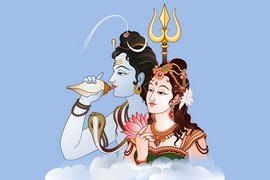
All Masik Shivaratri that occur during a year are listed. According to the Hindu calendar, Krishna Paksha Chaturdashi of every month is celebrated as Masik Shivaratri. Devotees of Lord Shiva observe a one-day fast on this occasion.
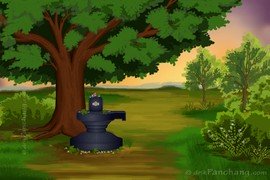
In North India, Shivaratri which falls during the auspicious month of Shravana is known as Sawan Shivaratri. Except Hindi belt in North India, in rest of India Sawan begins one or two days after Sawan Shivaratri.
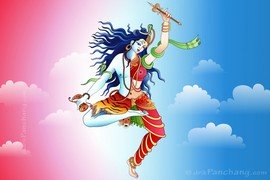
Pradosh Vrat, also known as Pradosham in South India, is observed to seek blessings of Lord Shiva. According to the Hindu calendar, this fast is observed on the Trayodashi Tithi of both Shukla and Krishna Paksha of the lunar month. Pradosham days for whole year are listed on this page.
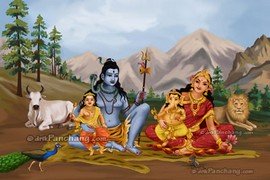
Lord Shiva is one of the three main deities worshipped in Hinduism, namely Brahma, Vishnu & Mahesha, who are collectively known as Trimurti. Lord Shiva is the destroyer of the universe and is also known by the names of Bholenath, Lord Shankara, etc.
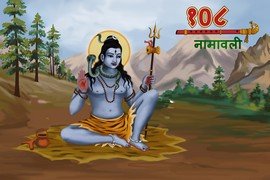
108 Shiva Names mentioned in Shakta Pramod Grantha are the most popular 108 Names of Lord Shiva. Each name when combined with Om Namah becomes independent Mantra in itself and can be used for chanting as well as to perform Shiva Ashtottara Shatanamavali Homa.
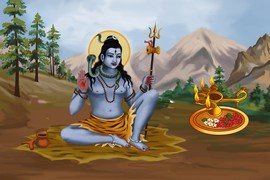
Lord Shiva Aarti is provided with lyrics and recitation video. It's a widely known and melodious Aarti dedicated to Lord Shiva.
Lord Mahadev Aarti is given with lyrics and recitation video. It is a very popular Aarti dedicated to the Mahadeva form of Lord Shiva.
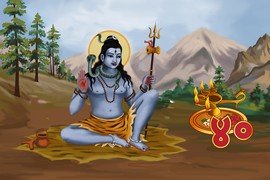
Lord Shiva Chalisa is provided with lyrics and recitation video. Devotees of Lord Shiva recite this Chalisa to please Him and seek His blessings.

Various types of Lord Shiva Rangoli designs and Shiva Linga Rangoli designs are given. The method of making beautiful Rangoli is also described step by step through pictures. With the help of these pictures, one can make Rangoli very easily.
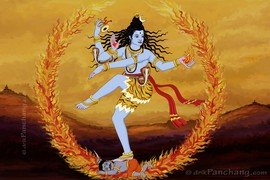
Om Namah Shivaya i.e. the Mula Mantra of Lord Shiva is the most powerful Mantra of Lord Shiva. Om Tryambakam, the death defeating Mantra of Lord Shiva. Om Tatpurushaya, the Rudra Gayatri Mantra of Lord Shiva are few powerful Mantra to please and seek blessings of Lord Shiva.
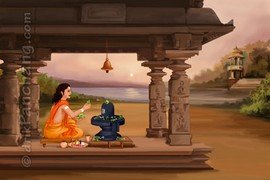
A detailed Shodashopachara Shiva Puja Vidhi dedicated to Lord Shiva is provided. In the presented Puja Vidhi, all the sixteen steps of Shodashopachara Puja Vidhi including Dhyana, Avahana, Padya, Arghya, and Achamaniya are described with Mantras.
Shivaratri Shodashopachara Puja Vidhi consisting of all the main steps of worship like Sankalpa, Dhyana, Avahana, Asana, Arghya etc. has been provided along with Mantra. With the help of this Puja Vidhi, you can take full advantage of Maha Shivaratri by performing worship in a proper manner.
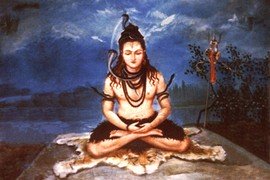
Shiva Ramashtakam is given with lyrics and recitation video. It is a very melodious and effective Ashtakam dedicated to Lord Shiva.
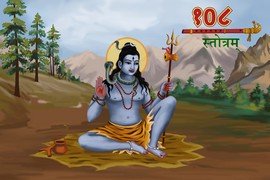
Shri Shiva Ashtottarashatanama Stotram is given with lyrics and video. Reciting this Stotram is considered to be very auspicious and fruitful.
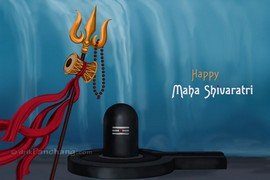
Maha Shivaratri Greeting Cards with pictures of Shiva Mukha Lingam, Swayambhu Shiva Lingam Abhishek, Lord Shiva on Mount Kailash and Shiva Grinding Bhang are given. You can send Maha Shivaratri greetings to your loved ones through these beautiful pictures.